
Beautiful Plants For Your Interior
Beautiful Plants For Your Interior
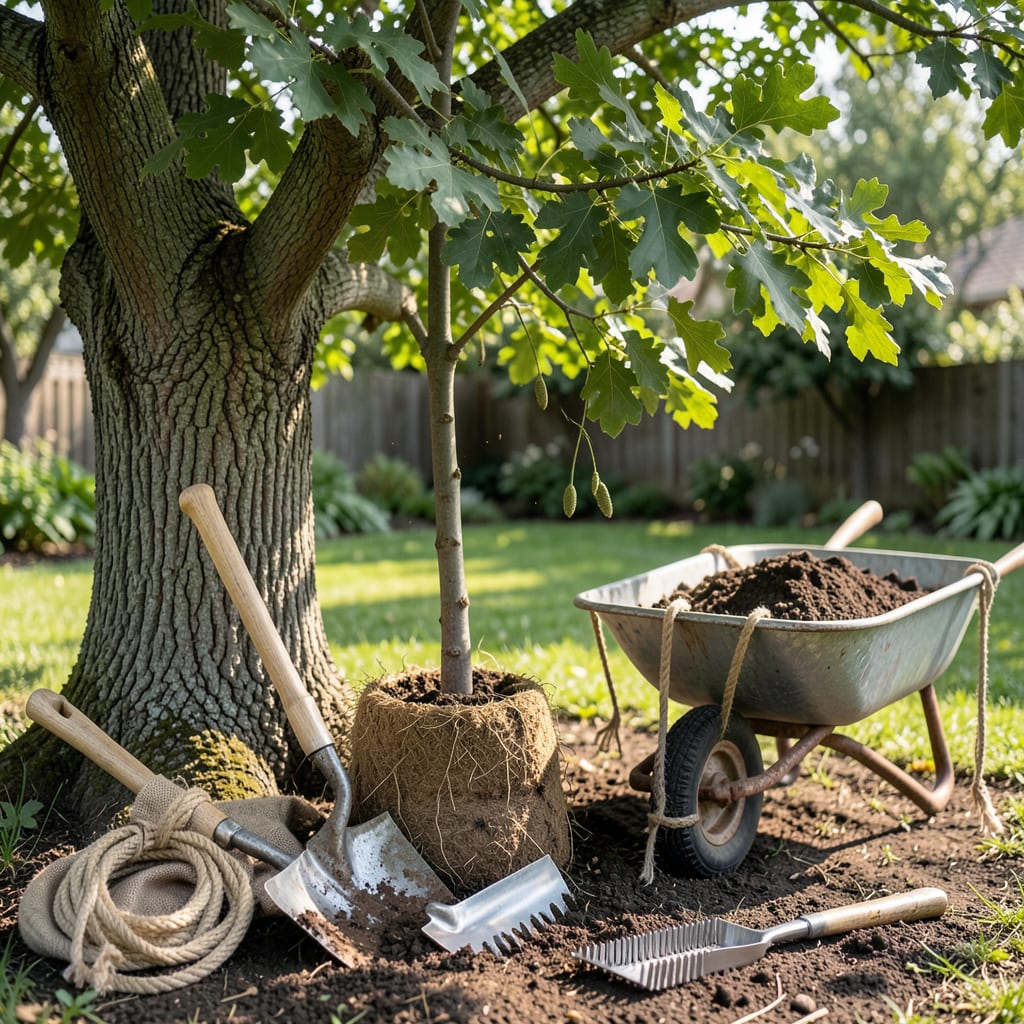
Transplanting a tree typically costs between $300 and $3,000, with most homeowners paying around $1,200. Prices vary based on tree size, species, distance moved, and whether professional arborists or specialized equipment are required.
Moving a tree isn’t just about digging it up—it’s a delicate process that requires precision. 🌳 The price range reflects the complexity: a small ornamental tree might cost a few hundred dollars, while a mature oak could require heavy machinery and multiple crew members. I’ve seen projects where root ball size alone doubled the cost because it needed custom wrapping and transport. Seasonal timing also plays a role—transplanting during dormancy periods often reduces stress on the tree and can lower labor costs.
💡 In This Article
The size of the tree is the single biggest cost driver. A 6-8 foot ornamental tree with a 24-inch root ball might cost $300-$600 to move, while a 30-foot mature oak requiring a 5-foot root ball can easily exceed $2,500.
The root ball diameter typically equals 10-12 inches per inch of trunk diameter—meaning a 4-inch trunk needs a 40-48 inch root ball, which exponentially increases digging and transport complexity. 🌳
Species sensitivity dramatically affects pricing. Delicate trees like Japanese maples or flowering cherries require specialized root pruning 6-12 months before moving to stimulate new feeder roots, adding $200-$500 in prep costs.
Evergreens need extra moisture retention measures during transport, while deep-rooted species like hickories may require hydraulic tree spades that cost $1,000+ per day to rent. Soil conditions matter too—clay soils add 20-30% more labor time compared to loamy soils.
Distance and accessibility create hidden costs. Moving a tree less than 100 feet on flat terrain might add $100-$300, but relocating it across a property with slopes can require cranes or skid steers at $150-$300/hour. Urban transplants often need permit fees ($50-$200) and traffic control measures.
I’ve seen projects where underground utility locating added $400 before digging even began. ✨
Seasonal timing impacts both cost and survival rates. Transplanting during early spring (March-April) or fall (October-November) when trees are dormant can reduce stress and lower watering requirements by 40%. Summer moves require mist systems or shade tents adding $300-$800, while frozen winter ground may necessitate hydraulic augers at $250/day.
Professional arborists often charge 10-15% premiums for off-season work.
Labor intensity varies by technique. Hand-dug transplants for small trees (2-3 inch caliper) take 2-3 hours with a 2-person crew ($400-$600). Mechanical spade transplants for large specimens (8+ inch caliper) require 4-6 crew members and 4-8 hours, pushing costs to $1,500-$3,000.
The most expensive component? Post-transplant care—many fail to budget for the $200-$500 needed for mulching, staking, and 3-6 months of deep watering. 💧
Equipment needs escalate quickly with size. A 36-inch tree spade rental costs $800-$1,200/day, while a 90-inch spade for mature trees jumps to $2,000-$3,000/day. Burlap root ball wrapping adds $50-$200 depending on size, and wire baskets for structural support cost $100-$400.
For urban transplants, traffic control barriers and street closure permits can add $500-$1,500 to the total. ⚡
Hidden costs often surprise homeowners. Soil amendments like mycorrhizal fungi ($30-$100) improve root establishment but aren’t always included in base quotes. Emergency transplants (due to construction) carry 50% rush fees. And don’t forget replacement guarantees—some arborists charge 10-20% more to guarantee survival for 1-2 years, which is wise for $2,000+ specimens.
I always recommend getting 3-4 quotes since pricing varies wildly based on local competition and equipment availability.
Early spring (March-April) and fall (October-November) offer the best savings. These dormant periods reduce tree stress and labor costs by 10-20% since arborists have fewer emergency jobs. Summer moves cost more due to required misting systems and higher failure rates.
For trees over 10 feet tall, DIY isn’t recommended—the root balls weigh hundreds of pounds and require specialized equipment. Small trees (6-8 feet) are manageable with rented tools ($150-$300/day), but improper technique risks killing the tree. Always call 811 before digging!
These guarantees (typically 1-2 years) protect your investment if the tree dies from transplant shock. Expect to pay 10-20% more upfront, but it’s worth it for $1,500+ specimens. Without one, you’ll pay full price to replace a failed transplant. Always verify what’s covered (e.g., watering mistakes may void the guarantee).
Most trees handle moves under 100 feet well with proper root ball protection. Longer distances require burlap-wrapped root balls and hydrated transport, adding $200-$500. For moves over 1/4 mile, consider propagating cuttings at the new site instead—it’s often cheaper and more successful.
Permits ($50-$200), underground utility locating ($300-$800), and post-transplant care ($200-$500) often aren’t included in base quotes. Soil amendments like mycorrhizal fungi ($30-$100) improve survival but may be upsold. Always ask for an all-inclusive quote to avoid surprises.
