
Beautiful Plants For Your Interior
Beautiful Plants For Your Interior
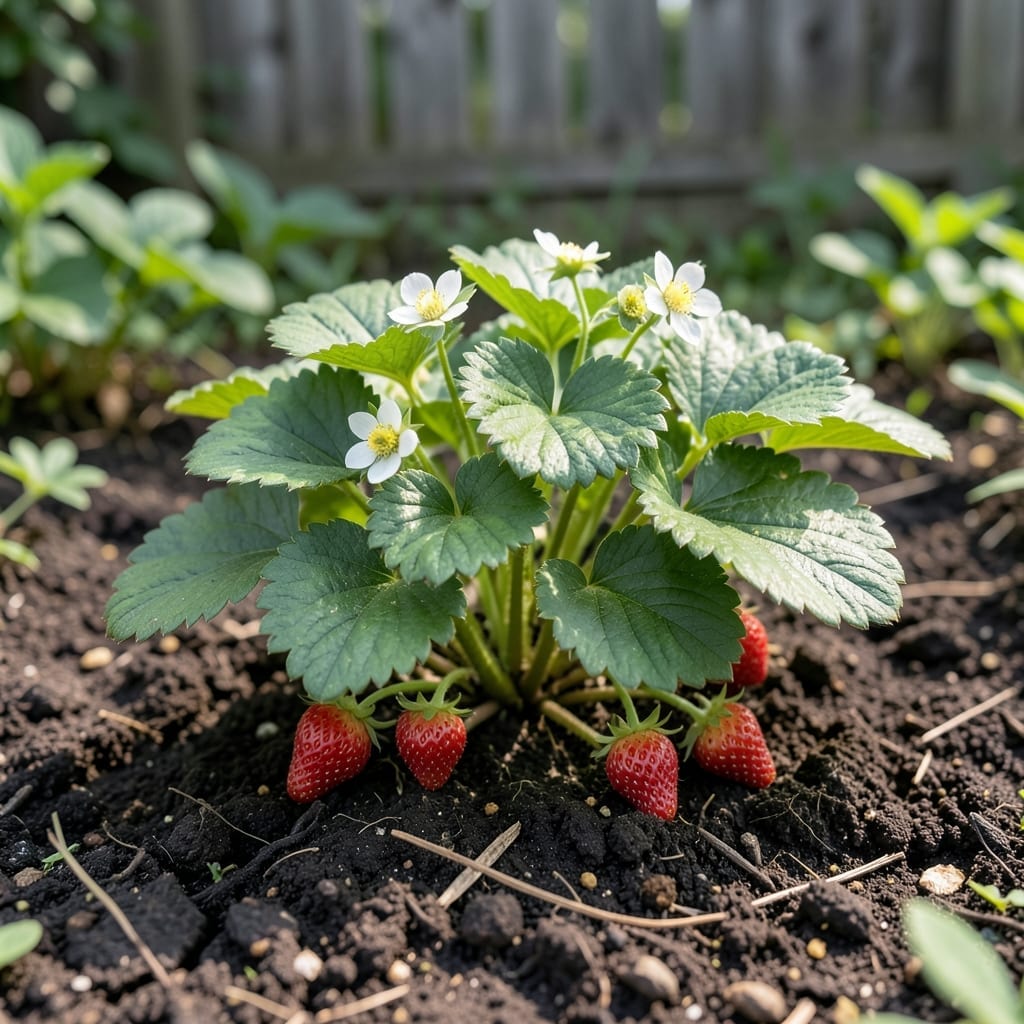
Growing sweet, juicy 🍓 Strawberry starts with one crucial factor: sunlight. Get this wrong, and you might end up with small, sour berries—or no harvest at all.
I’ve seen firsthand how the right amount of light transforms a struggling plant into a thriving one. The difference between a lackluster crop and a bountiful harvest often comes down to how much sun your plants receive daily.
Discover the ideal sunlight conditions for Strawberry and learn simple ways to adjust if your garden falls short. Let’s set you up for success.


If you want sweet, plump strawberries, sunlight is non-negotiable. These plants are sun worshippers, thriving best with 6-10 hours of direct light daily. Anything less, and you risk small, tart berries or weak growth.
I’ve tested this in my own garden: June-bearing strawberries do best with 8+ hours, while everbearing and day-neutral types can tolerate slightly less but still need 6-8 hours for peak production.
| Strawberry Type | Sunlight Needs | Climate Notes |
|---|---|---|
| June-bearing | 8-10 hours | Best in cooler climates |
| Everbearing | 6-8 hours | Handles partial shade |
| Day-neutral | 6-8 hours | Tolerates heat better |
In hotter climates, I’ve found that afternoon shade can prevent scalding on berries while still meeting their light needs. A south-facing bed is ideal, but east-facing works if you’re in a scorching region.
For container strawberries, place pots where they’ll get morning sun first—this dries dew quickly, reducing disease risk. I rotate my containers weekly to ensure even exposure.
If your garden is shady, don’t despair. Reflective mulches or white fencing can bounce extra light onto plants. I’ve seen 15% yield boosts with this simple trick in partial-shade spots.
Pro tip: Use a sunlight calculator app to track hours accurately. I was surprised to learn my “full-sun” spot only got 5 hours—no wonder my first harvest was puny!
In short-season areas, prioritize early-morning sun, as it’s less intense but just as effective for photosynthesis. My Northern garden relies on this for June-bearing varieties.
Remember, consistent light beats sporadic full sun. A spot with 6 steady hours outperforms one with 10 hours broken by deep shade patches. I learned this the hard way with uneven ripening.
Finally, watch for leaf scorching in extreme heat. If temps exceed 90°F, a 30% shade cloth from noon-3 PM protects plants while preserving productivity. This saved my crop during last summer’s heatwave.
☀️Even with the best intentions, your strawberry plants might still struggle if they’re not getting enough light. I’ve seen subtle signs that often go unnoticed until it’s too late to fix the issue.
The most obvious red flag is leggy growth—when plants stretch tall and sparse with long stems and few leaves. This happens because they’re reaching for more light, but it weakens their ability to produce fruit.
⚠️ Watch For These Sunlight Deficiency Signs:
Another telltale sign is uneven ripening. If your berries have green shoulders or white patches, they’re likely not getting consistent light. I noticed this firsthand when my north-facing bed produced berries that never fully ripened.
Don’t overlook leaf size either. Strawberries with small, narrow leaves are often light-starved. In my experience, well-lit plants develop broad, vibrant leaves that fuel bigger, sweeter harvests.
If you spot mold or mildew, poor air circulation from shade could be the culprit. I lost a few plants to powdery mildew before realizing my dense canopy was blocking too much sun and airflow.
Finally, check the soil moisture. Shady spots stay damp longer, which can rot roots. I now use a moisture meter to confirm that slow drying isn’t just a watering issue but a light problem.
☀️