
Beautiful Plants For Your Interior
Beautiful Plants For Your Interior
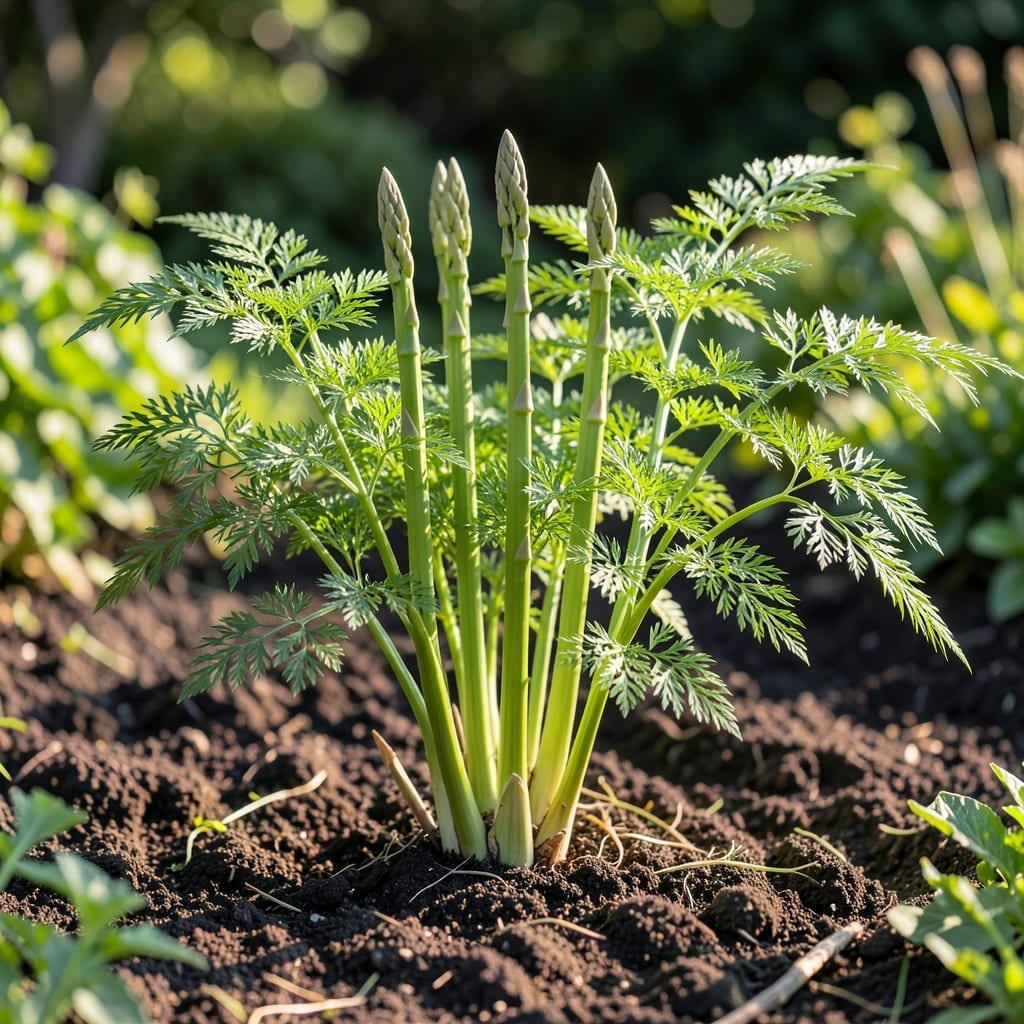
Patience is the secret ingredient for growing Asparagus 🥬, a perennial that rewards your wait with years of harvests. This isn’t your typical quick-grow veggie.
From planting crowns to that first satisfying snap of a spear, the journey takes 2-3 years. But trust me, the payoff is worth every day.
Let me walk you through exactly what to expect at each stage, so you can plan your garden timeline with confidence. The wait makes that first bite even sweeter.


If you’re planting asparagus crowns, the first year is all about root establishment. You won’t harvest a single spear, but this is when the plant builds its underground foundation for future growth.
I know it’s hard to resist, but picking spears too early weakens the plant. Instead, let those first spears grow into ferny foliage, which feeds the roots through photosynthesis.
| Stage | Timeframe | Key Focus |
|---|---|---|
| Planting Crowns | Early Spring | Set crowns 6-8 inches deep |
| Year 1 | Full growing season | Root establishment only |
| Year 2 | Second season | Fern growth, no harvest |
| Year 3 | Spring | First harvest (light picking) |
| Year 4+ | Annual harvest | Full production (6-8 weeks) |
In Year 2, the plant focuses on top growth. The ferns can reach 4-5 feet tall, and while it’s tempting to harvest, resist! This is when the crown stores energy for next year’s harvest.
By Year 3, you can finally start harvesting, but keep it light and short. Limit your first harvest to just 2-4 weeks to avoid stressing the plant. The spears will be thinner, but they’re a sign of success!
From Year 4 onward, your asparagus bed enters its prime production. With good care, a well-established patch can produce spears for 15-20 years. That’s the beauty of this perennial!
I’ve found that consistent watering and rich, well-draining soil are key to hitting these milestones. Mulching helps retain moisture and keeps weeds at bay, which is especially important in the early years.
If you’re growing from seeds instead of crowns, add an extra year to the timeline. Seed-grown asparagus takes 3 years before the first harvest, but the wait is just as rewarding.
Remember, asparagus is a marathon, not a sprint. The long timeline is why many gardeners shy away, but those who commit are rewarded with decades of fresh, homegrown spears every spring 🌱
In my experience, the first harvest is always the most exciting. After years of care, seeing those tender green spears push through the soil feels like a true gardening achievement ✂️
While you can’t rush asparagus maturity, you can optimize conditions to help it reach milestones faster. I’ve found that proper site preparation makes the biggest difference in those early years.
Start with well-draining soil enriched with compost. Asparagus hates waterlogged roots, so raised beds work well in heavy clay areas. Plant crowns 6-8 inches deep in trenches with 12-18 inch spacing between plants.
I always emphasize that watering consistency is more important than quantity. Aim for 1-2 inches weekly, especially during the first two years when roots are establishing.
Another game-changer is early spring feeding. Apply a balanced fertilizer just as spears begin to emerge. This gives the plant a nutrient boost right when it needs it most.
Remember, while these tips help, asparagus still needs its full timeline. The plant’s energy goes toward root and crown development first – that’s non-negotiable for long-term productivity.
In my garden, the beds that get morning sun and afternoon shade in hot climates seem to establish slightly faster. The plants aren’t stressed by intense heat, allowing them to focus on growth ✂️