
Beautiful Plants For Your Interior
Beautiful Plants For Your Interior
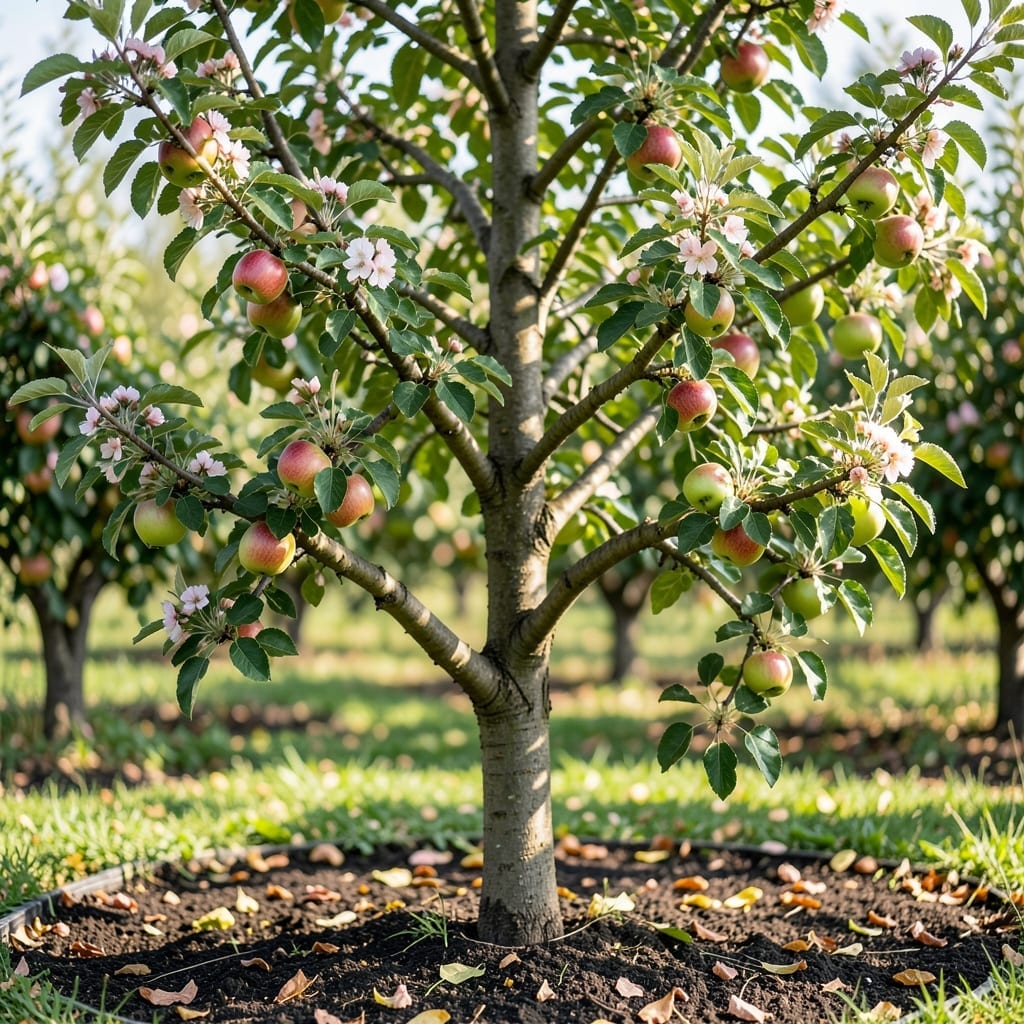
Patience is key when growing Apple Trees. That first crisp, homegrown bite feels like forever coming, but the wait is part of the journey.
The timeline varies more than you might think. From dwarf to standard varieties, your 🍎 tree’s path to bearing fruit depends on factors like rootstock and care.
I’ll walk you through what to expect and how to speed up the process. Whether you’re planting this fall or already tending young trees, this guide has you covered.
If you’re wondering how long for apple tree to bear fruit, the answer depends largely on the variety you’ve planted. Dwarf apple trees are the fastest, often producing fruit in just 2-3 years with proper care.
Semi-dwarf varieties follow next, typically bearing fruit in 3-5 years. These are popular for home orchards because they’re easier to manage than full-size trees. They strike a great balance between size and productivity.
| Variety | Years to Fruit | Mature Height | Notes |
|---|---|---|---|
| Dwarf | 2-3 years | 6-10 ft | Ideal for containers |
| Semi-Dwarf | 3-5 years | 12-16 ft | Best for small yards |
| Standard | 5-8 years | 20-30 ft | Needs ample space |
| Fuji | 4-6 years | Varies | Sweet, late harvest |
| Gala | 3-5 years | Varies | Early producer |
Standard apple trees take the longest, often 5-8 years to bear fruit. These are the classic orchard trees that can grow 20-30 feet tall. They require more space but can produce abundant harvests for decades.
Even within these categories, specific apple tree varieties have different timelines. For example, Gala apples often bear fruit in 3-5 years, while Granny Smith trees might take 5-7 years. The rootstock used also plays a significant role in determining fruiting time.
I’ve found that dwarf varieties like Columnar apples are excellent for small spaces. They can start producing fruit in as little as 2 years and typically reach only 8-10 feet tall. These are perfect for container gardening on patios.
Remember that these timelines are estimates. Your tree might produce a few apples earlier or take a bit longer. The first fruits are often called “first set” and may be smaller or fewer in number than in subsequent years.
For the fastest results, I recommend dwarf varieties on precocious rootstocks. These combinations are bred to bear fruit earlier. Just be sure to provide excellent care, as these trees need consistent watering and feeding to support early fruiting.
No matter which variety you choose, proper planting techniques and ongoing care are crucial. A well-planted tree in good soil with adequate sunlight will always reach its fruiting potential faster than one struggling in poor conditions.
In my experience, the wait is always worth it. There’s nothing quite like picking that first homegrown apple from a tree you’ve nurtured from a young sapling 🌳
While variety plays a big role in how long for apple tree to bear fruit, several other factors can speed up or delay your harvest. Climate tops the list—apple trees thrive in USDA zones 4-8 and need a certain number of chilling hours to produce well.
Soil quality is another game-changer. Apple trees prefer well-draining, loamy soil with a pH of 6.0-7.0. Poor soil can stunt growth and push back fruiting by years. I always recommend a soil test before planting to ensure optimal conditions.
Pollination is critical—most apple trees need cross-pollination from a different variety. Without it, you might see beautiful blooms but no fruit. I plant at least two compatible varieties within 50 feet of each other for best results.
Pruning and training young trees properly can also encourage earlier fruiting. I focus on creating a strong central leader and well-spaced branches. This structure supports more fruit-bearing wood as the tree matures.
Watering practices matter more than many realize. Deep, infrequent watering encourages strong root development. I water my apple trees weekly with about 1-2 inches of water, adjusting for rainfall.
Finally, avoid over-fertilizing, especially with nitrogen. While it promotes leafy growth, too much can delay fruiting. I use a balanced 10-10-10 fertilizer and follow the 1 lb per year of tree age rule, maxing out at 10 lbs.
With the right conditions and care, you might see first fruits a year or two earlier than the average timeline for your variety 🌳