
Beautiful Plants For Your Interior
Beautiful Plants For Your Interior
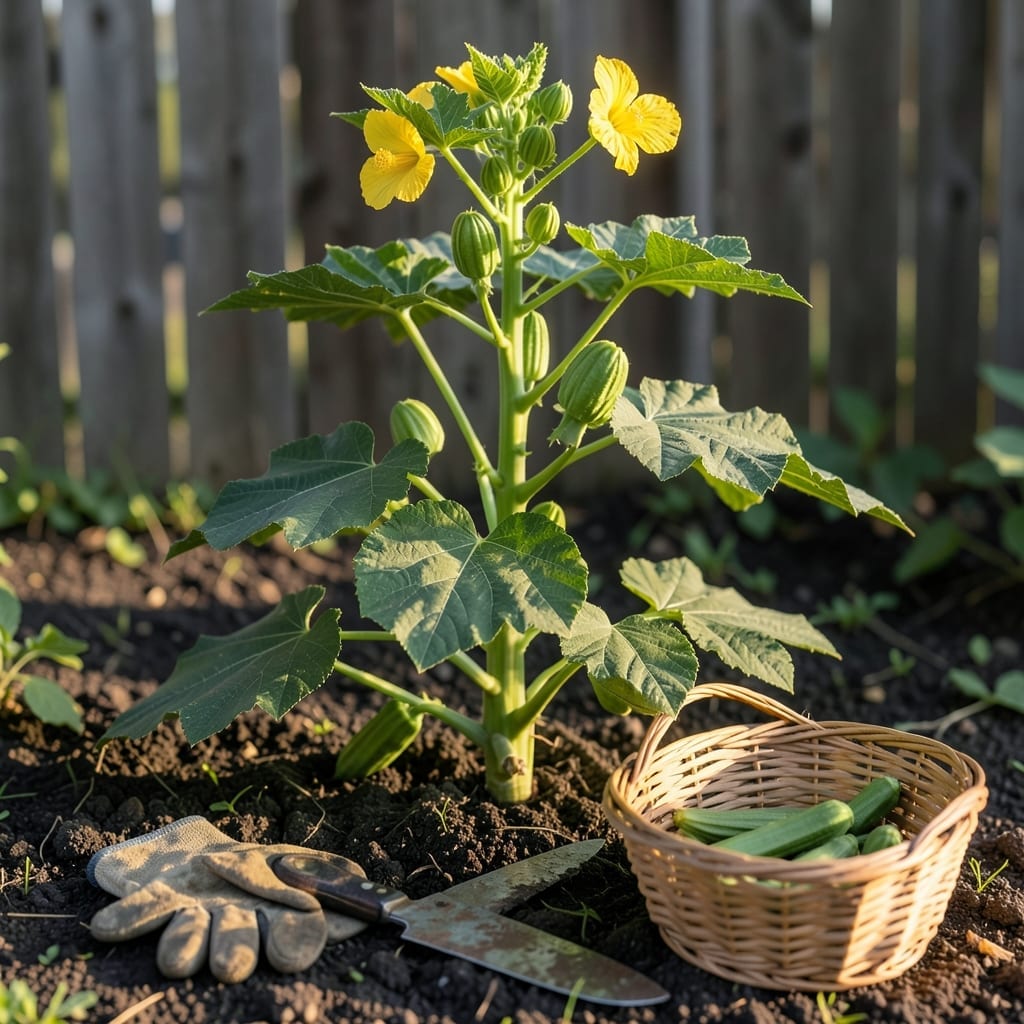
If you’ve ever grown Okra 🌱, you know it’s one of the most rewarding warm-season crops for gardeners. This fast-growing vegetable can go from seed to harvest in what feels like the blink of an eye.
But exactly how quickly can you expect those first pods to appear? The timeline might surprise you, especially when you consider how different varieties and growing conditions play a role.
Let me walk you through what to expect from planting to that first satisfying harvest, so you can plan your garden with confidence this season.

When I first planted okra, I was amazed at how quickly it grew from seed to harvest. Most varieties take just 50 to 70 days to mature, making it one of the fastest vegetables for a summer garden.
Understanding the growth stages helps you plan better. From germination to flowering to pod development, each phase has its own timeline that varies slightly by variety and conditions.
| Variety | Days to Maturity | Key Feature |
|---|---|---|
| Clemson Spineless | 55-60 days | Classics with smooth pods |
| Emerald | 50-55 days | Early producer, tender pods |
| Burgundy | 60-70 days | Striking red pods |
| Jambalaya | 50-55 days | Compact, great for containers |
The germination stage typically lasts 5 to 12 days if soil temperatures are warm, ideally between 75°F and 90°F. I always check my soil thermometer before planting.
Once seedlings emerge, they grow quickly. In about 3 to 4 weeks, you’ll see the first true leaves appear. This is when I start thinning plants to 12-18 inches apart for proper airflow.
The flowering stage begins around 35 to 45 days after planting. These bright yellow blossoms are beautiful and signal that pods will soon follow. Each flower typically produces a pod within 3 to 4 days.
For pod development, expect another 15 to 25 days after flowering. I check my plants daily once pods start forming, as they grow incredibly fast and can become tough if left too long.
Harvest time arrives when pods reach 3 to 4 inches long. This usually happens at the 50 to 70 day mark, depending on the variety. I use clean pruners to avoid damaging the plant.
Remember that climate impacts growth speed. In hotter regions, okra may mature faster, while cooler areas might extend the timeline slightly. I’ve noticed my plants in full sun always outpace those in partial shade.
To maximize your harvest, plant succession crops every 2 to 3 weeks. This ensures a continuous supply of fresh pods throughout the growing season.
With proper care and ideal conditions, you can enjoy multiple harvests from each plant. I’ve found that well-drained soil and consistent watering make a significant difference in growth speed and pod quality.
If you want to speed up okra growth, you need to control the key factors that influence its timeline. From my experience, soil temperature is the most critical element for fast germination and growth.
The optimal soil temperature for okra is between 75°F and 90°F. Anything below 60°F can delay or even prevent germination entirely. I always use a soil thermometer to check before planting.
Sunlight exposure directly impacts growth speed. Okra needs 6 to 8 hours of direct sunlight daily. In my garden, plants in full sun always grow faster and produce more pods than those in partial shade.
Watering consistency is another crucial factor. Okra needs about 1 to 2 inches of water per week. I water deeply in the morning to allow foliage to dry, which prevents disease while promoting steady growth.
Soil quality makes a noticeable difference. Okra thrives in well-draining soil rich in organic matter. I amend my beds with compost before planting, which gives seedlings a strong start and supports rapid growth.
A common mistake that can delay maturity is over-fertilizing. While okra benefits from balanced nutrition, too much nitrogen can lead to excessive leaf growth at the expense of pods. I use a 10-10-10 fertilizer every 4 to 6 weeks during the growing season.
Finally, plant spacing affects growth rate. Crowded plants compete for resources, slowing development. I space my okra 12 to 18 inches apart, which allows for good airflow and faster maturation. ☀️