
Beautiful Plants For Your Interior
Beautiful Plants For Your Interior
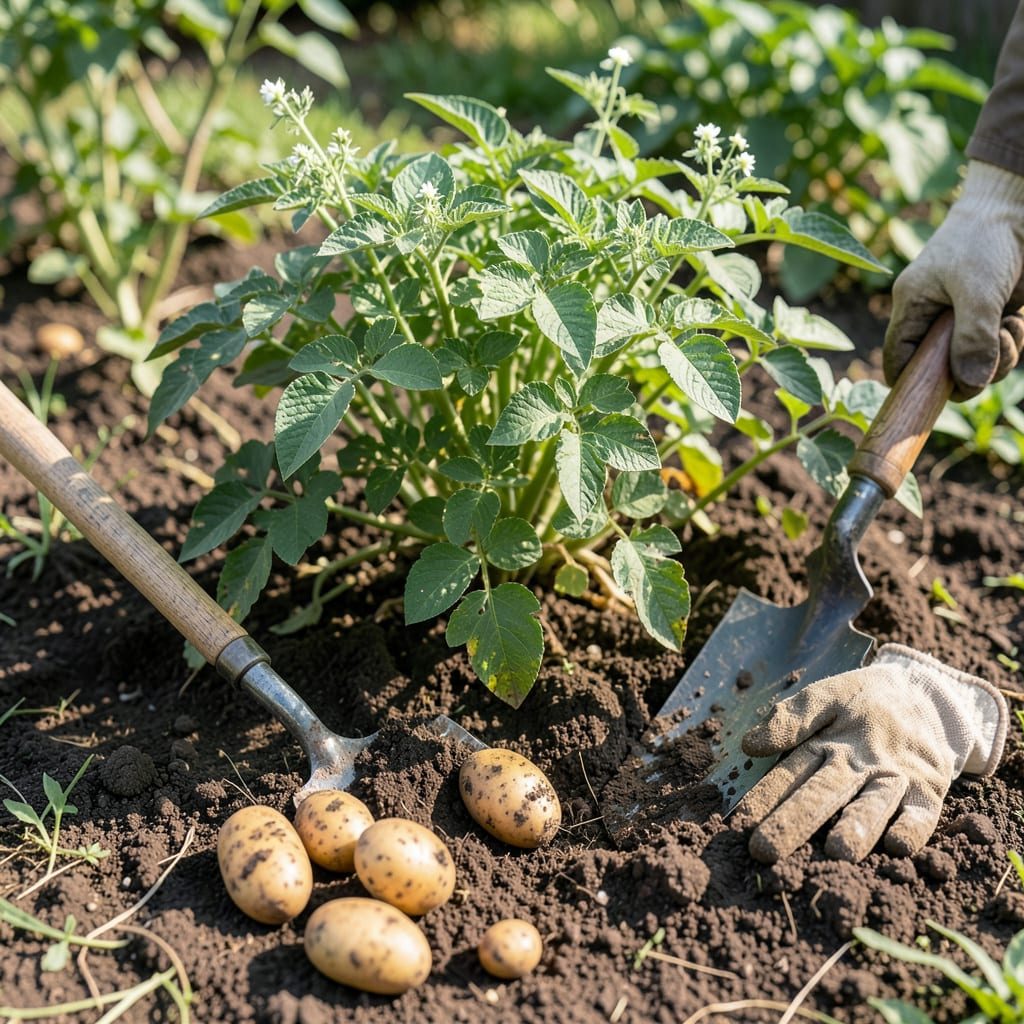
I remember the first time I grew 🥔 Potato and wondered when to dig them up. Timing is everything with this crop, and getting it right means the difference between tiny tubers and a full harvest.
Whether you planted in March or April, watching for foliage changes and tuber size will tell you when they’re ready. Let me show you the key signs to look for.


I’ve learned that potato harvest times vary greatly by type. Early varieties like Yukon Gold or Red Pontiac can be ready in as few as 70 days, while late-season types may take 120 days or more.
Your growing conditions play a huge role too. Cooler climates slow growth, while warm soil (around 60-70°F) speeds it up. Consistent moisture is key—too much or too little can delay maturation 🌱
| Variety | Days to Maturity | Best For |
|---|---|---|
| Early (e.g., Yukon Gold) | 70-90 days | New potatoes, quick harvest |
| Mid-Season (e.g., Kennebec) | 90-110 days | All-purpose, storage |
| Late (e.g., Russet) | 110-120+ days | Baking, long storage |
I always check the seed packet for the days-to-maturity range, but I also watch the plants. Early potatoes often show flowers around 60 days, which is my cue to start checking for new potatoes.
For mid-season varieties, I look for yellowing foliage as a sign they’re nearing readiness. This usually happens around 90-100 days after planting, depending on the weather. Late varieties take patience—they often need the full 120 days to size up properly.
Soil temperature matters more than you might think. If your soil is below 45°F, potatoes will grow painfully slow. I use a soil thermometer to confirm it’s warm enough before planting and during the season.
Moisture levels also impact the timeline. Too much water can rot tubers, while drought stress stunts growth. I aim for 1-2 inches of water per week, adjusting for rain 💧
If you’re in a short-season area, stick to early varieties. In warmer climates, you might get away with mid or late types. I’ve had success with Russets in my Zone 6a garden, but they need a long, warm season.
Another factor is planting method. Containers tend to dry out faster, which can slow growth. In-ground beds with rich, loamy soil usually give the best results. I always amend my soil with compost before planting.
Finally, remember that harvest timing affects flavor and storage. New potatoes can be harvested early for tender, waxy texture, while mature potatoes need the full time for starch development. I love digging a few new potatoes for immediate use while letting the rest grow to full size 🪴
I always keep an eye on my potato plants for these tell-tale signs of readiness. The first clue is flowering, which often appears around 60-70 days for early varieties. This signals that tubers are forming underground.
Another clear indicator is when the foliage begins to yellow and wilt. This usually happens as the plant redirects its energy to tuber development. For me, this is the most reliable sign that harvest time is near.
I also check the skin set by gently rubbing a tuber with my finger. If the skin stays intact, it’s ready. If it scrapes off easily, the potatoes need more time to mature.
For new potatoes, I start checking when plants first flower. These can be harvested 2-3 weeks after flowering begins. They’ll be smaller but tender and flavorful with thin skins.
With mid-season varieties, I look for 50% foliage yellowing. This typically occurs around 90-100 days after planting. The tubers should be golf ball-sized or larger at this stage.
For late varieties, I wait until all foliage dies back. This can take 110-120 days or more. The skin will be thick and firmly attached, perfect for long-term storage 🌱
I’ve seen many gardeners unknowingly delay their potato harvest with simple mistakes. Overwatering is a big one—it can cause tuber rot and stunt growth. I learned this the hard way my first season.
Poor soil conditions also slow things down. Heavy clay soil or lack of organic matter makes it hard for tubers to expand. I always amend my beds with compost before planting 🌱
⚠️ Avoid These Errors: Overwatering, planting too shallow, poor soil prep, or ignoring pests can all extend your harvest timeline by weeks.
Another common issue is planting too shallow. Potatoes need 6-8 inches of soil above the seed piece. If they’re too close to the surface, they’ll produce small, green tubers exposed to light.
Inconsistent watering stresses plants too. I aim for 1-2 inches weekly, more in hot weather. Drought stress can halt tuber development entirely, while waterlogging causes rot.
Finally, ignoring pests like Colorado potato beetles can defoliate plants, reducing their ability to feed the tubers. I check leaves weekly and hand-pick pests when I spot them 🪴
You can, but they’ll be very small. Wait until flowers appear for new potatoes, which are ready 2-3 weeks after blooming. These are tender but don’t store well
Late varieties often need 110-120 days. If it’s a mid-season type, check for yellowing leaves—this signals they’re nearing readiness. Cool weather can also delay maturity.
Gently feel the soil near the base. If tubers feel golf ball-sized or larger, they’re likely ready. Also check if the skin resists scraping when rubbed
Overmature potatoes may develop thick skins and split. In wet conditions, they can rot. For storage types, harvest after foliage dies but before hard frost hits
