
Beautiful Plants For Your Interior
Beautiful Plants For Your Interior
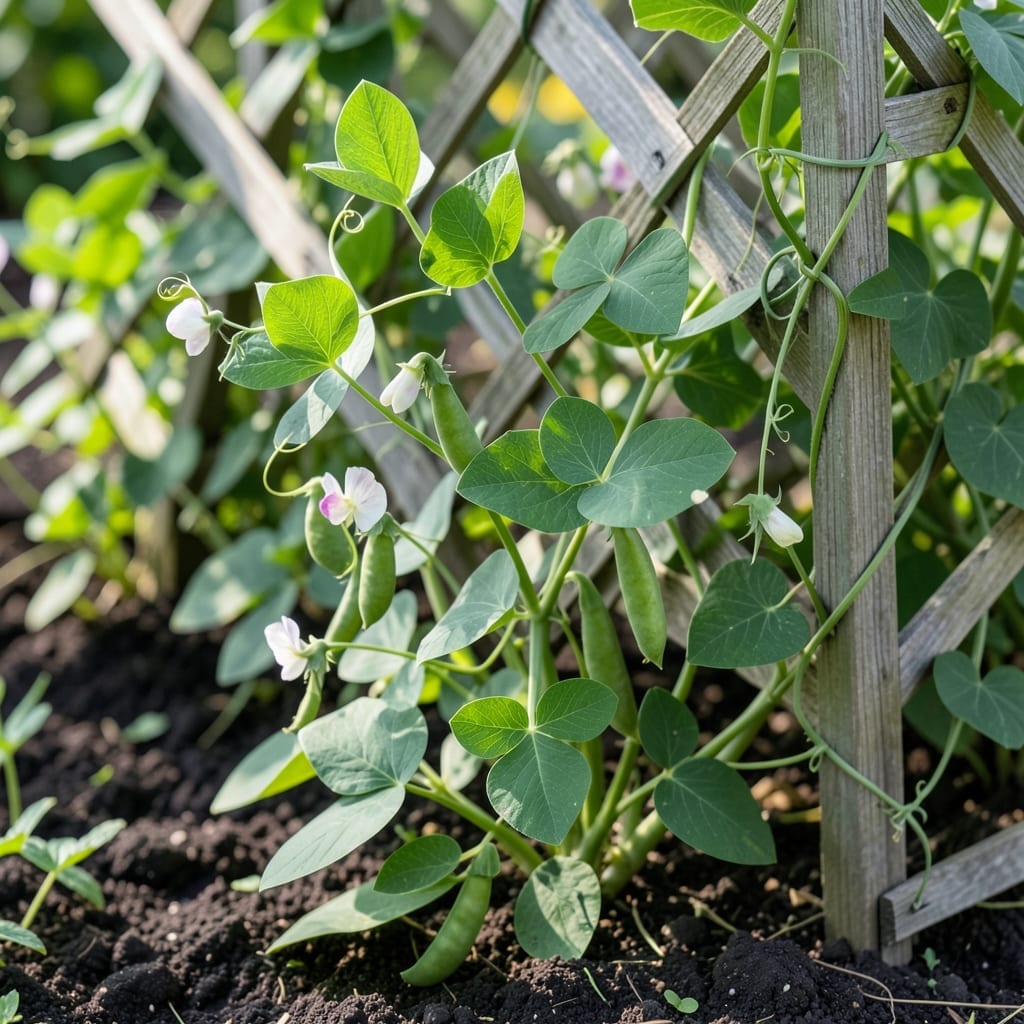
Planning your garden layout starts with knowing how tall your plants will grow, and the 🌱 Pea is no exception. Understanding their mature height helps you space rows properly and choose supports.
Some varieties reach just 1-2 feet, while others climb 6 feet or more. This range makes peas versatile for different garden setups, from containers to trellises.
I’ve grown multiple types and learned that the right support makes all the difference. Whether you’re working with limited space or have room to let them climb, knowing the potential height is the key to success.
Discover how to match your pea variety to the perfect support system for a thriving garden. Let’s get started.


When I plan my garden, knowing how high peas grow is essential for proper spacing. Different pea varieties have distinct mature heights, which impacts trellising and companion planting decisions.
From my experience, snap peas tend to be the tallest, often reaching 5-7 feet, while snow peas stay more compact at 2-4 feet. Dwarf varieties are perfect for small spaces.
| Variety | Mature Height | Notes |
|---|---|---|
| Shelling Peas | 3-5 ft | Classic garden peas, need support |
| Snap Peas | 5-7 ft | Edible pods, tallest variety |
| Snow Peas | 2-4 ft | Flat pods, moderate height |
| Dwarf Peas | 18-24 in | Bush type, no trellis needed |
I’ve found that shelling peas typically reach 3-5 feet, making them a good middle-ground option. They require sturdy support but won’t overwhelm your garden space.
For vertical gardening, snap peas are my top choice. Their 5-7 foot height allows me to maximize space by growing them on tall trellises along fences or walls.
Snow peas are more manageable at 2-4 feet. I often plant these in containers on my patio, using tomato cages for support.
The real space-savers are dwarf pea varieties. At just 18-24 inches tall, they’re perfect for small gardens or front borders where I don’t want tall plants.
When selecting supports, I always consider the mature height plus an extra foot. This gives the plants room to grow without topping out too quickly.
For snap peas, I recommend 7-foot trellises as a minimum. Anything shorter and the vines will flop over, making harvesting difficult and reducing air circulation.
With dwarf varieties, a simple 3-foot stake or small tomato cage usually suffices. I’ve even grown them successfully with just a few branches stuck in the ground.
Remember that these heights are averages. Your pea plants might grow taller with ideal conditions or stay slightly shorter in less-than-perfect environments.
Once you know how high peas grow, the next step is providing proper support. Tall varieties like snap peas can reach 7 feet, while dwarf types stay under 2 feet. Support prevents sprawling and promotes better air circulation.
For 5-7 foot varieties, I recommend sturdy trellises or bamboo poles tied in a teepee formation. Smaller types do well with short stakes or wire cages. Always install supports at planting time.
I’ve found that netting supports work best for snow peas, as their tendrils grasp easily. For heavy-yielding varieties, use thicker materials to prevent collapse under weight.
Wind protection is crucial for tall peas. I anchor my trellises with garden stakes and tie them to nearby fences when possible. This prevents toppling during storms.
Remember that consistent training helps plants climb properly. Gently weave new growth through supports weekly. This habit saves time and prevents tangled vines.
With proper support, your peas will grow tall and productive. I’ve seen 30% better yields from well-supported plants compared to unsupported ones. It’s worth the effort! 🌱