
Beautiful Plants For Your Interior
Beautiful Plants For Your Interior
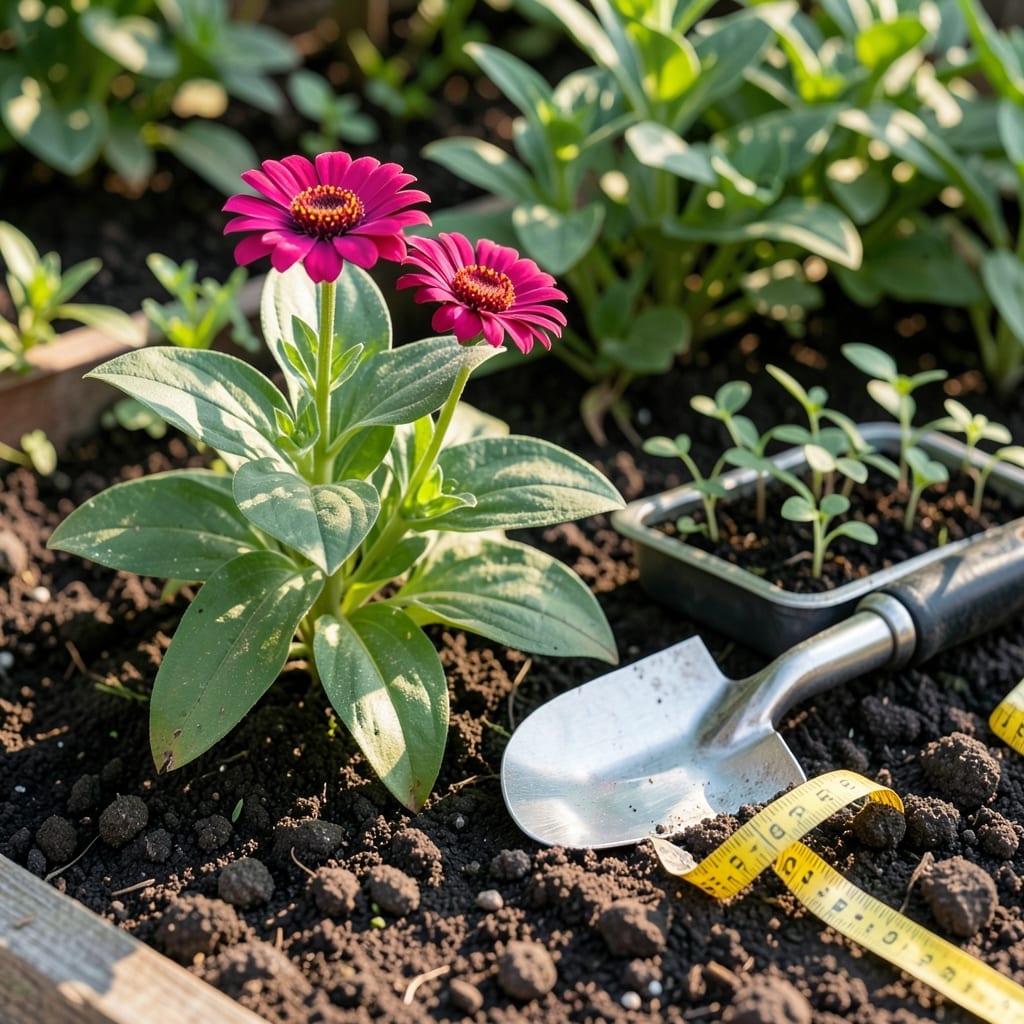
I remember the first time I planted zinnias and ended up with a tangled jungle instead of a vibrant garden. Proper spacing makes all the difference for these cheerful bloomers.
The 🌼 Zinnia thrives when given room to breathe, preventing disease and encouraging more blooms. Whether you’re planting dwarf or towering varieties, getting the distance right is key.
Let me share the perfect spacing secrets that transformed my zinnia patch from crowded to spectacular. Your garden will thank you.

I’ve learned that zinnia spacing isn’t one-size-fits-all. The perfect distance depends on the variety’s mature size, whether you’re planting in rows or clusters, and even your garden’s airflow.
Dwarf zinnias, like ‘Thumbelina’ or ‘Crystal’, stay compact at 6-12 inches tall. These little powerhouses need just 4-6 inches between plants to thrive without crowding each other out. 🌼
| Variety | Mature Height | Spacing |
|---|---|---|
| Dwarf | 6-12 inches | 4-6 inches apart |
| Semi-Dwarf | 12-24 inches | 8-12 inches apart |
| Tall | 2-4 feet | 12-18 inches apart |
| Giant | 3-4 feet | 18-24 inches apart |
For semi-dwarf zinnias like ‘Benary’s Giant’, which reach 12-24 inches, I space them 8-12 inches apart. This gives their sturdy stems room to branch out while maintaining that lush, full look.
Tall varieties, such as ‘State Fair’ or ‘California Giants’, can tower up to 4 feet. These need 12-18 inches between plants to prevent toppling and ensure good air circulation, which wards off fungal diseases. 🌿
If you’re planting in rows, I recommend adding an extra 2-3 inches between plants. This accounts for the linear growth pattern and makes it easier to walk between rows for maintenance.
For container gardening, stick to dwarf or semi-dwarf varieties. A 12-inch pot can comfortably hold 2-3 dwarf zinnias, while a 24-inch container works well for 3-4 semi-dwarf plants. Always ensure containers have drainage holes to prevent root rot.
I’ve found that overcrowding zinnias leads to weak stems and fewer blooms. If you’re unsure, it’s better to space them farther apart than too close. You can always fill gaps with fast-growing annuals like marigolds or nasturtiums. ✂️
Another pro tip: Stagger your planting in a triangular pattern rather than straight rows. This maximizes space and creates a more natural, abundant look in your garden beds.
Finally, remember that soil quality affects spacing too. In rich, well-draining soil, zinnias can grow larger, so you might need to adjust spacing upward. In poorer soil, they may stay smaller, allowing for slightly tighter spacing.
I’ve made my share of zinnia spacing mistakes over the years, and I want to help you avoid them. The most common error is planting too closely, which leads to weak stems and powdery mildew from poor airflow.
Another frequent misstep is ignoring mature size. Those tiny seedlings will grow much larger, and cramming them together stifles their potential. Always check the seed packet for the variety’s expected height and spread. 🌼
⚠️ Spacing Pitfalls to Avoid
Overcrowding leads to disease and fewer blooms. Under-planting wastes space and looks sparse. Always measure twice before digging!
I’ve also seen gardeners neglect soil prep before planting. Zinnias thrive in well-draining soil, so if your ground is heavy clay, amend it with compost to improve drainage and root development.
Don’t forget about sunlight needs. Zinnias require full sun (6+ hours daily). Planting them in shady spots results in leggy, weak plants that flop over and produce fewer flowers. ☀️
Watering mistakes are common too. Overwatering zinnias causes root rot, while underwatering stresses the plants. Aim for 1 inch of water per week, delivered at the base to keep foliage dry.
Lastly, avoid planting at the wrong time. Zinnias are frost-sensitive, so wait until after your last frost date. In my zone, that’s mid-April, but check your local USDA zone for timing. 🌱