
Beautiful Plants For Your Interior
Beautiful Plants For Your Interior
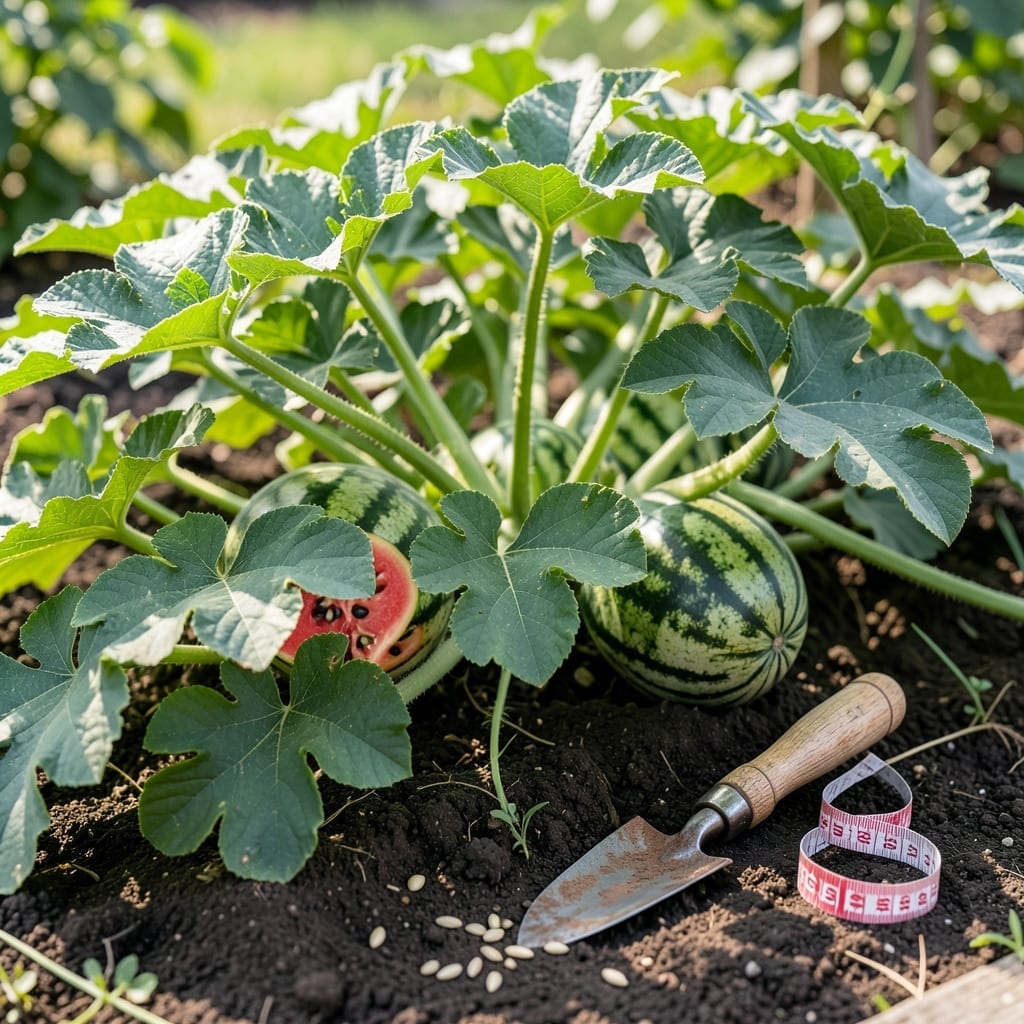
Proper spacing is the key to growing those juicy, oversized 🍉 watermelons we all love. Without it, you risk a tangled mess of vines with small, underdeveloped fruits.
Whether you’re planting your first garden or looking to maximize your harvest this spring, nailing the seed spacing makes all the difference. It affects air circulation, disease prevention, and ultimately, the size of your watermelons.
I’ve seen gardeners struggle with overcrowding and poor yields, but it doesn’t have to be that way. The solution is simpler than you might think.
Discover the optimal spacing for different watermelon varieties and learn how to set your garden up for success from the very first seed.
Getting watermelon seed spacing right is crucial for healthy vines and big, sweet fruits. I always start by considering the variety type—vining watermelons need more room than bush types to sprawl properly.
For most standard vining watermelons, I plant seeds 1 inch deep and space them 2-3 feet apart in rows that are 6-8 feet apart. This gives each plant enough room to grow without competing for nutrients.
| Variety | In-Row Spacing | Row Spacing |
| Standard Vining | 2-3 feet | 6-8 feet |
| Bush Types | 1-2 feet | 4-5 feet |
| Mini Watermelons | 1 foot | 3-4 feet |
If you’re using the hill planting method, I recommend planting 4-5 seeds per hill with hills spaced 6 feet apart in all directions. Once seedlings emerge, thin to the 2 strongest plants per hill.
Air circulation is another key factor I consider. Proper spacing allows for better airflow, which helps prevent fungal diseases like powdery mildew that can ruin your crop.
For bush watermelon varieties, which are more compact, I reduce the spacing to 1-2 feet between plants and 4-5 feet between rows. These types are perfect for smaller gardens.
Soil type also plays a role in my spacing decisions. In rich, well-draining soil, I can push plants a bit closer together. But in poorer soils, I give them extra space to compete less for nutrients.
Remember that overcrowding leads to smaller fruits and more disease problems. I’ve learned this the hard way—my first watermelon patch was too dense, and the fruits were disappointingly small.
For those with limited space, consider trellising vining watermelons. I’ve had success growing them vertically with 1 foot between plants, though the fruits need support as they develop.
Finally, always check the seed packet for variety-specific recommendations. Some heirloom types may need different spacing than modern hybrids. I keep a gardening journal to track what works best in my space.
Proper spacing means healthier plants and bigger harvests every time 🌱
I’ve seen many gardeners make the same spacing mistakes with watermelons, leading to stunted growth and small fruits. Overcrowding is the most common issue, as it restricts airflow and invites disease.
Another frequent error is planting too close to fences or other structures, which limits vine spread. Proper spacing ensures each plant gets enough sunlight and nutrients to thrive. 🌱
⚠️ Watch Out!
Avoid planting seeds closer than 2 feet apart in rows or less than 6 feet between rows. This causes competition for resources and increased disease risk.
Under-spacing can also lead to poor pollination, as bees struggle to navigate dense foliage. I always recommend marking your planting spots in advance to maintain consistency.
Improper row orientation is another pitfall. North-south rows allow for better sunlight distribution throughout the day, while east-west rows can create shading issues.
For bush varieties, you might get away with slightly tighter spacing, but vining types need more room. I’ve found that 3-4 feet between plants works well for most standard watermelons.
Lastly, don’t forget to thin seedlings if they sprout too closely together. It’s tough to pull healthy sprouts, but it’s necessary for stronger plants and bigger harvests. ✂️