
Beautiful Plants For Your Interior
Beautiful Plants For Your Interior
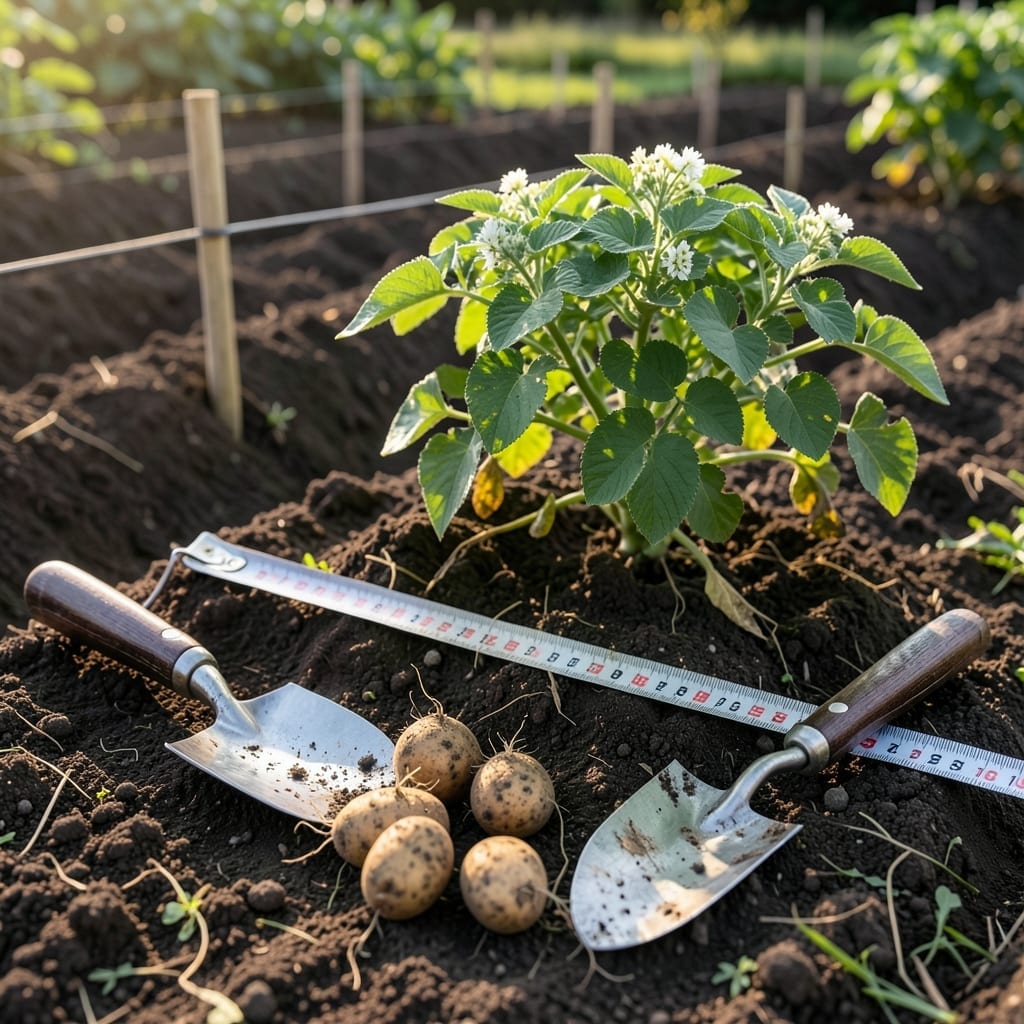
Proper potato spacing is the secret to maximizing your harvest—plant them too close and you’ll get small, stunted 🥔 tubers, but space them too far apart and you’re wasting precious garden real estate.
I’ve learned through trial and error that getting this right means the difference between a mediocre yield and a bigger, more abundant crop. Whether you’re working with limited space or have acres to fill, the principles remain the same.
Discover how simple adjustments in your planting layout can transform your results this growing season.

Getting the spacing right is crucial for healthy potato plants and a bountiful harvest. I always start by considering my growing method, as this directly impacts how far apart I should place my seed potatoes.
In my experience, in-ground planting requires different spacing than raised beds or containers. Each method has its own rules for plant and row spacing to ensure proper growth and easy harvesting.
| Method | Plant Spacing | Row Spacing | Depth |
|---|---|---|---|
| In-Ground Rows | 10-12 inches | 30-36 inches | 4-6 inches |
| Raised Beds | 12-15 inches | 24-30 inches | 6-8 inches |
| Hilling Method | 12 inches | 36 inches | 4 inches |
| Containers | 6-8 inches | N/A | 8-10 inches |
For in-ground rows, I recommend 10-12 inches between plants with 30-36 inches between rows. This gives each plant enough room to develop full-sized tubers while allowing for easy access during hilling.
In raised beds, I’ve found that 12-15 inches between plants works well, with rows about 24-30 inches apart. The improved drainage in raised beds means I can plant slightly closer together than in traditional garden soil.
When using the hilling method, I maintain 12-inch spacing between plants and 36 inches between rows. This extra space makes it easier to mound soil around the stems as the plants grow, which encourages more tuber formation.
For container gardening, I reduce the spacing to 6-8 inches between plants. Since containers limit root spread, closer spacing is acceptable, but I make sure each plant has at least 2-3 gallons of soil volume.
The depth of planting also matters. I always plant my seed pieces 4-6 inches deep in ground rows, slightly deeper in raised beds, and up to 10 inches in containers to accommodate the limited space.
Remember that proper spacing isn’t just about the plants—it’s also about air circulation and disease prevention. Crowded plants are more susceptible to fungal diseases like late blight. 🌱
Finally, I always mark my planting spots with small sticks or labels to maintain consistent spacing throughout my garden. This simple step saves me from accidentally overcrowding my potatoes as I work.
Even experienced gardeners can make spacing mistakes with potatoes that cost them at harvest time. I’ve seen firsthand how small errors in planting distance can lead to stunted growth or disease outbreaks that ruin a crop.
One of the most common issues is overcrowding plants in an attempt to maximize space. While it might seem efficient, this actually reduces tuber size and increases competition for nutrients. 🌱
The solution to overcrowding is simple: stick to the recommended 10-12 inch spacing for most varieties. I use a measuring stick to ensure consistency, especially when planting multiple rows.
Shallow planting is another frequent mistake. Potatoes need to be planted 4-6 inches deep to prevent tubers from turning green. I always check my depth with a ruler to be sure.
Inconsistent spacing creates problems during hilling and harvesting. I mark my rows with string lines to maintain straight, evenly spaced plantings. This makes the entire growing process more manageable. ☀️
Variety-specific needs are often overlooked. Larger varieties like Russets need more space than smaller fingerlings. I always check the seed packet for specific recommendations.
Finally, row orientation matters more than many realize. I plant my rows north to south for maximum sunlight exposure. This simple adjustment can significantly improve plant health and yield. 🌿