
Beautiful Plants For Your Interior
Beautiful Plants For Your Interior
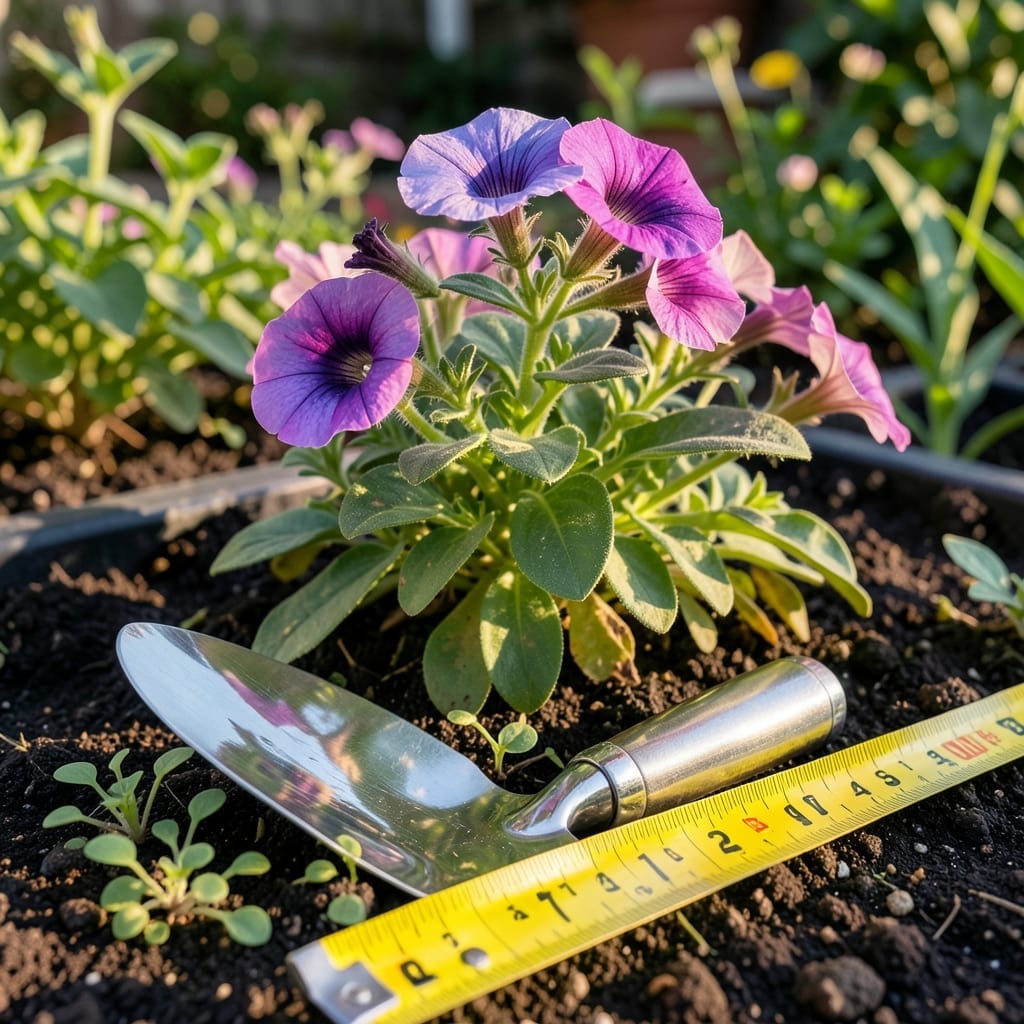
Proper spacing is the key to vibrant, healthy 🌸 Petunia blooms that burst with color all season long. Plant them too close, and you risk disease; too far apart, and your garden loses its lush appeal.
I’ve seen both mistakes play out in gardens, and the difference proper spacing makes is dramatic. Whether you’re planting in containers or directly in the ground, getting this right sets the stage for success.
Discover exactly how to space your Petunias for maximum impact and health. Let me walk you through the simple but most important guidelines.


Getting petunia spacing right starts with knowing your variety. Grandifloras with their large, showy blooms need more room than compact multifloras or trailing types. I always check the seed packet or plant tag first.
Each type has unique growth habits that directly impact how far apart you should plant them. Spreading petunias can cover more ground, while upright varieties stay contained. This affects airflow and disease prevention too.
| Variety | Spacing In-Ground | Spacing in Containers |
|---|---|---|
| Grandiflora | 12-18 inches | 10-12 inches |
| Multiflora | 10-12 inches | 8-10 inches |
| Spreading/Wave | 18-24 inches | 12-18 inches |
| Milliflora | 8-10 inches | 6-8 inches |
For grandiflora petunias, I recommend 12-18 inches apart in garden beds. Their large flowers need space to prevent powdery mildew from damp foliage. In containers, you can tighten this to 10-12 inches.
Multiflora petunias are more compact, so 10-12 inches in beds works well. In pots, 8-10 inches gives them room to bush out without crowding. These bloom profusely with less maintenance.
The real spreaders are Wave petunias. I plant them 18-24 inches apart in ground beds. They’ll fill in beautifully. In hanging baskets or containers, 12-18 inches lets them cascade dramatically.
For tiny milliflora petunias, 8-10 inches in beds and 6-8 inches in containers works perfectly. Their small size means you can pack more color into small spaces.
Remember that soil quality affects spacing too. Rich, well-draining soil lets you plant slightly closer. Poor soil means giving them more room to compete for nutrients.
I always consider sun exposure as well. In full sun, petunias can handle tighter spacing. In partial shade, they’ll stretch toward light, so give them a bit more space.
Finally, think about your garden design. For a lush, full look, you might push spacing to the closer end. For low-maintenance beds, give them more room to grow without constant pruning.
🌸
Even experienced gardeners make petunia spacing errors that can sabotage their blooms. The most common mistake I see is overcrowding plants to achieve instant color. This leads to poor airflow and fungal issues.
Another frequent issue is ignoring mature plant size. Those tiny seedlings will grow much larger, and planting them too close means constant pruning or stunted growth.
⚠️ Warning: Planting petunias too close causes disease spread and weak stems. Always follow variety-specific spacing guidelines to prevent these issues.
I’ve also seen gardeners skip soil preparation. Petunias need well-draining soil to thrive. Compacted or waterlogged soil will rot roots, no matter how perfect your spacing is.
Misjudging sunlight is another pitfall. Petunias need 6+ hours of sun. If your bed gets less, space plants farther apart to reduce competition for light.
Don’t forget about container constraints. In pots, roots can’t spread outward, so reduce spacing slightly but ensure each plant has enough room to grow without being root-bound.
Finally, neglecting seasonal changes can cause problems. In hot climates, petunias may need more space for airflow. In cooler areas, you might get away with slightly tighter spacing.
🌸