
Beautiful Plants For Your Interior
Beautiful Plants For Your Interior
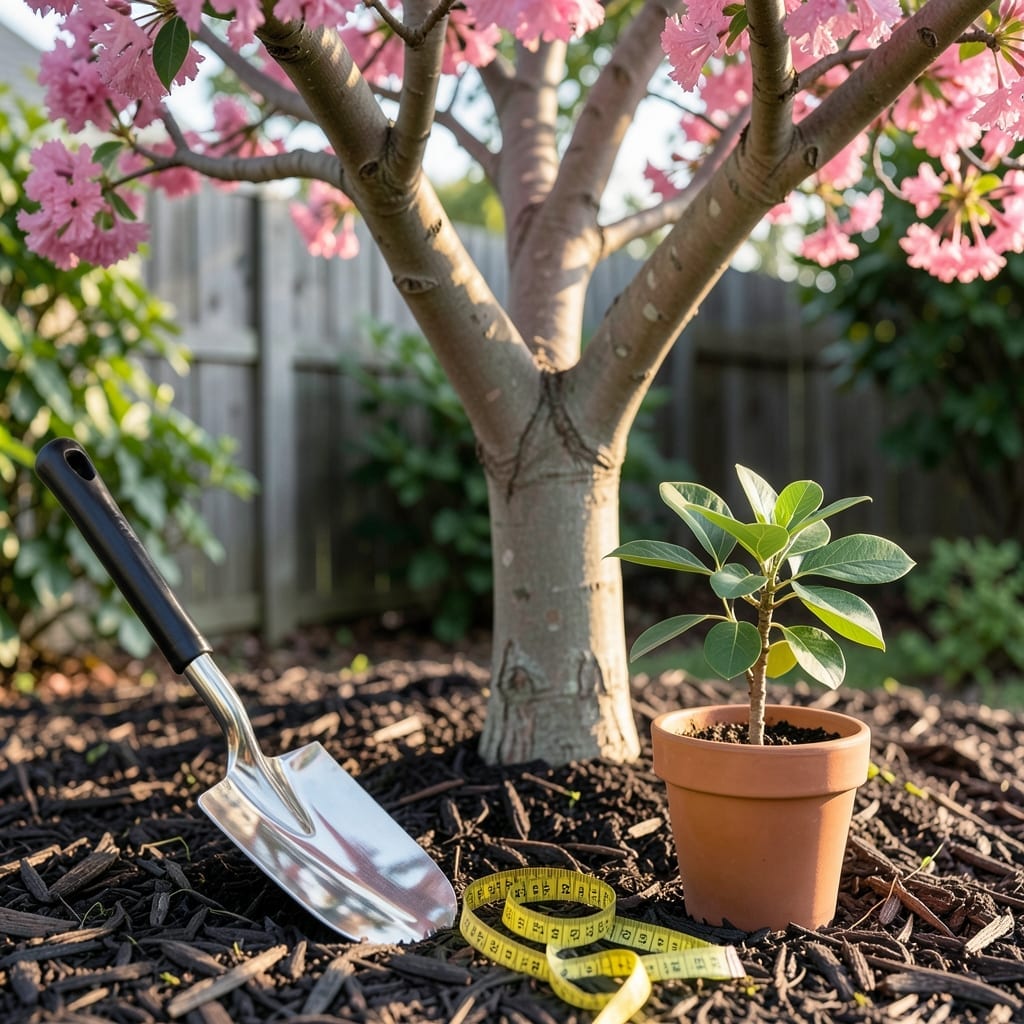
Proper spacing is the secret to growing healthy 🌳 Crepe Myrtles that burst with vibrant blooms year after year. Plant them too close, and you’ll face disease and stunted growth.
I’ve seen too many landscapes where these beautiful trees struggle because of poor planning. The right distance makes all the difference for airflow and root development.
Discover how to space your Crepe Myrtles perfectly for stunning results, whether you’re planting a single specimen or a full hedge.

Getting crepe myrtle spacing right starts with knowing your variety’s mature size. Dwarf types stay compact at 3-6 feet, while standard varieties can tower to 25 feet tall. 🌳
I always recommend checking the plant tag for the exact mature width. The canopy spread often matches the height, so a 15-foot tree may need 15 feet of space. 🌿
| Variety | Mature Height | Spacing |
|---|---|---|
| Dwarf (e.g., ‘Pocomoke’) | 3-6 ft | 3-4 ft apart |
| Semi-Dwarf (e.g., ‘Tonto’) | 8-12 ft | 6-8 ft apart |
| Standard (e.g., ‘Natchez’) | 15-25 ft | 12-15 ft apart |
| Hedge Planting | Any size | 50-75% of mature width |
For hedge planting, I space crepe myrtles 50-75% of their mature width apart. This creates a dense screen while allowing air circulation to prevent disease. ✂️
Root competition is another factor. In poor soil, I give them an extra 2-3 feet of space. In rich, loamy soil, standard spacing works fine.
If you’re planting near a structure or driveway, add at least 5 feet to the recommended spacing. This prevents root damage and maintenance headaches later.
I’ve found that staggered planting in rows works well for a natural look. Space the rows 8-10 feet apart and offset the plants within each row.
For container planting, even dwarf varieties need 3-4 feet between pots. This ensures each plant gets enough sunlight and nutrients. ☀️
Remember, pruning can help manage size, but it’s no substitute for proper spacing. A crowded crepe myrtle will always struggle to thrive.
Finally, consider your landscape goals. For a specimen plant, give it room to shine. For a group planting, tighter spacing creates impact but requires more upkeep.
I see spacing mistakes all the time with crepe myrtles. The most common is ignoring mature size and planting too close together. This leads to crowded roots and poor airflow. 🌳
Another big issue is planting too near structures. Roots can damage foundations or driveways over time. Always give at least 5 extra feet of space. 🌿
⚠️ Warning: Never plant crepe myrtles closer than 3 feet apart—even dwarf varieties need room to grow. Overcrowding causes disease and stunted blooms.
Overcrowding in garden beds is another pitfall. I’ve seen hedge plantings fail because the plants were spaced too tightly. Remember, 50-75% of mature width is ideal for hedges. ✂️
Soil type matters too. In clay soil, I add 2-3 feet to the recommended spacing. In sandy soil, standard spacing works, but watch for nutrient competition.
Don’t forget about future maintenance. If you plant too close to a fence or walkway, you’ll spend years pruning to keep them in bounds. Plan ahead for easy upkeep.
Finally, climate affects spacing. In hot, dry areas, I give them a bit more room. In humid climates, extra space improves air circulation and reduces fungal risks. ☀️