
Beautiful Plants For Your Interior
Beautiful Plants For Your Interior
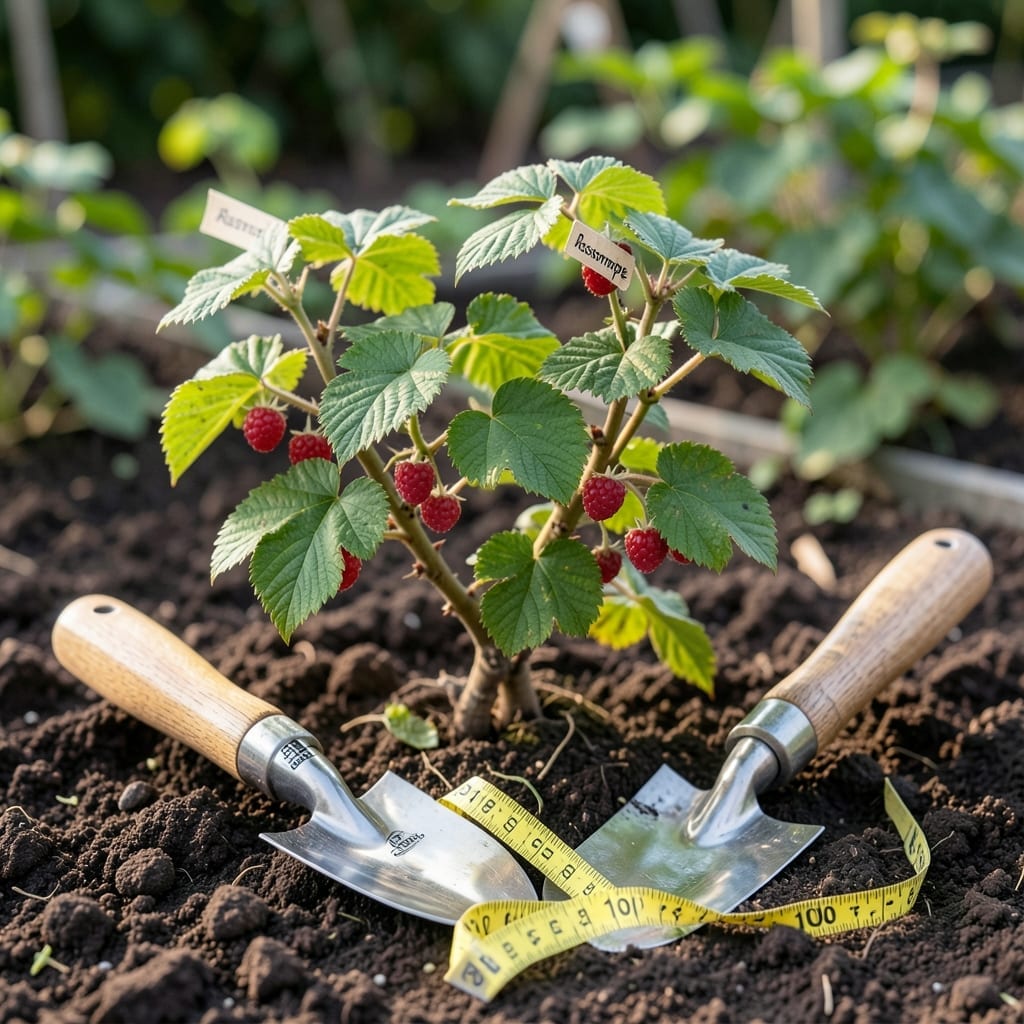
Proper spacing is the key to a thriving raspberry patch that yields sweet, juicy berries year after year. Without it, your 🫐 Raspberry plants may struggle to grow or become susceptible to disease.
I’ve seen firsthand how crowded canes compete for sunlight and nutrients, stunting their potential. But with the right approach, you can create an environment where every plant thrives.
Discover the optimal spacing to maximize your harvest and keep your raspberries healthy and productive for seasons to come.

Proper spacing is critical for healthy raspberry plants. I’ve learned that summer-bearing and fall-bearing varieties need different distances to thrive and prevent disease.
Each raspberry type has unique needs for air circulation and sunlight. Crowded plants suffer, but too much space wastes garden real estate. Get it right for the best harvests.
| Variety | In-Row Spacing | Row Spacing |
|---|---|---|
| Summer-Bearing | 18-24 inches | 6-8 feet |
| Fall-Bearing | 24-30 inches | 6-8 feet |
| Black Raspberries | 24-36 inches | 8 feet |
| Purple Raspberries | 24-30 inches | 7-8 feet |
For summer-bearing raspberries, I recommend 18-24 inches between plants. This allows canes to grow without competing for sunlight or nutrients.
Fall-bearing varieties need a bit more room. I space them 24-30 inches apart to accommodate their vigorous growth habit and ensure good air flow.
Black raspberries are more spreading. I give them 24-36 inches in-row and 8 feet between rows to prevent tangling and disease spread.
Purple raspberries, being a hybrid, do well with 24-30 inches in-row spacing. I keep rows 7-8 feet apart for easy access and maintenance.
Proper row spacing is just as important as in-row spacing. I always leave 6-8 feet between rows for most varieties to allow for easy picking and airflow.
Good air circulation is your best defense against fungal diseases. I’ve found that following these spacing guidelines reduces problems like powdery mildew significantly.
Remember, these are minimum recommendations. If you have space, giving your raspberries a little extra room can lead to even healthier, more productive plants.
Even with good intentions, I see gardeners make spacing errors that harm their raspberry patches. The most common is planting too close, which leads to tangled canes and poor airflow.
Under-spacing causes competition for water and nutrients. I’ve watched plants struggle when crowded, producing smaller berries and being more vulnerable to pests and diseases.
Overcrowding leads to disease spread and weak growth. Always follow variety-specific spacing guidelines.
Another mistake is ignoring variety differences. I remind myself that black raspberries need more space than red varieties. Planting them too close results in a messy, hard-to-manage patch.
Skipping row spacing is just as bad. I always leave at least 6 feet between rows to allow for easy access and proper airflow. This prevents fungal issues and makes harvesting much simpler.
I’ve also learned that planting too far apart wastes space and reduces yields. Finding the balance is key to a productive raspberry patch that’s both healthy and space-efficient.
Lastly, I avoid planting in low spots where water pools. Raspberry roots dislike soggy soil, and poor drainage can lead to root rot, regardless of spacing. Always choose a well-draining location.
By avoiding these common mistakes, I’ve seen my raspberry plants thrive with larger harvests and fewer problems each season.