
Beautiful Plants For Your Interior
Beautiful Plants For Your Interior
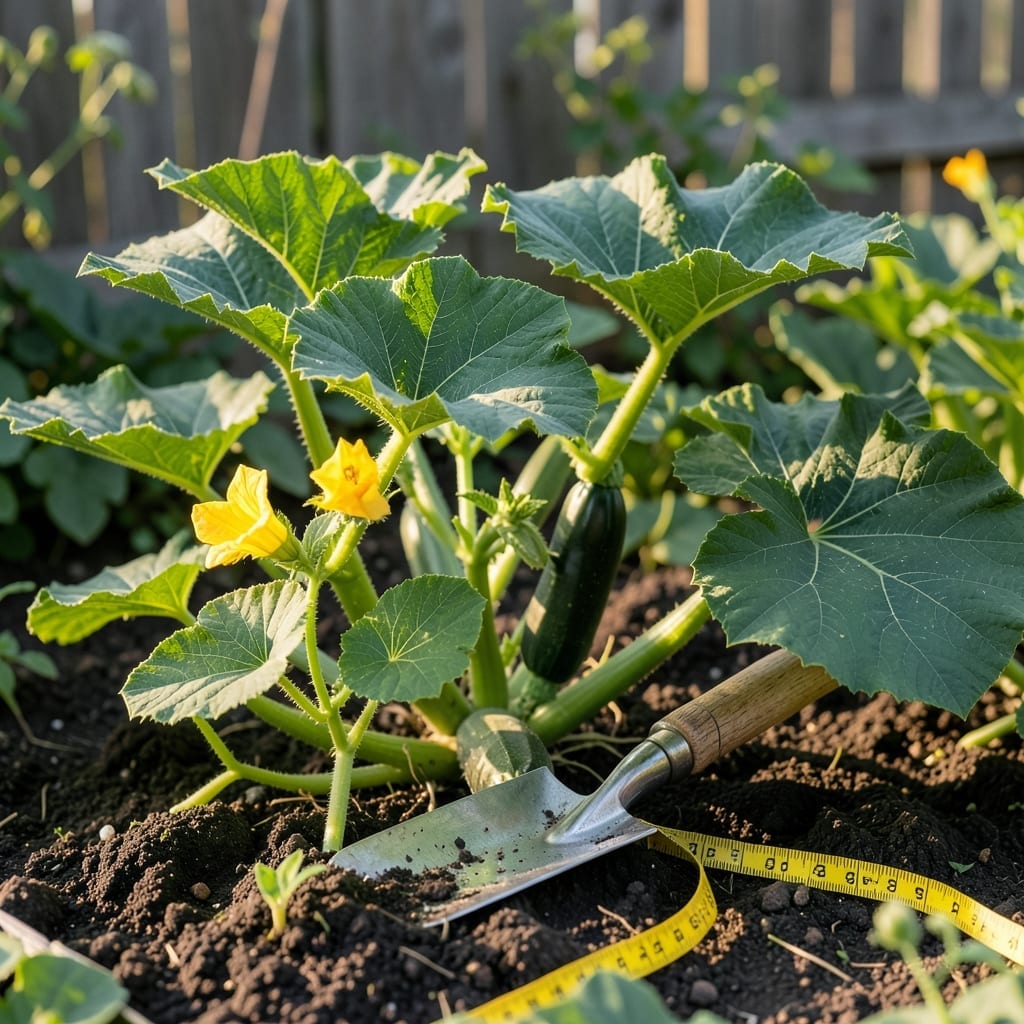
Proper zucchini spacing is the key to healthy plants and bountiful harvests. Crowd them too close, and you risk disease and poor yields.
Give your 🥒 zucchini the room they need to thrive, and you’ll be rewarded with an abundance of fresh produce. I’ve learned through trial and error what works best.
Discover the ideal spacing that balances plant health with garden efficiency. Let’s get your zucchini off to the best start possible.

Getting zucchini spacing right ensures your plants get enough airflow and sunlight to thrive. I’ve seen firsthand how proper spacing prevents disease and pest issues while maximizing yields.
For most bush zucchini varieties, I recommend planting them 24 to 36 inches apart in rows that are 4 to 6 feet apart. This gives each plant enough room to spread its large leaves without shading neighbors.
| Variety | In-Row Spacing | Between-Row Spacing |
|---|---|---|
| Bush Zucchini | 24-36 inches | 4-6 feet |
| Vining Zucchini | 36-48 inches | 6-8 feet |
| Raised Beds | 18-24 inches | N/A |
🌱 Spacing guidelines for optimal growth and air circulation
If you’re growing vining zucchini, which can spread 6 to 8 feet, I’d suggest 36 to 48 inches between plants. These varieties need extra space to prevent tangling and competition for resources.
In raised beds, you can tighten spacing slightly. I’ve had success with 18 to 24 inches between plants. The improved soil drainage and root competition management in raised beds allow for closer planting.
Air circulation is critical with zucchini. Crowded plants trap moisture, creating a perfect environment for powdery mildew and other fungal diseases. Proper spacing keeps leaves dry and healthy.
Don’t forget about companion planting. I like to interplant zucchini with beans or nasturtiums, which can help deter pests. Just ensure these companions don’t compete for space with your zucchini.
For square foot gardening, stick to 1 plant per square foot. Zucchini’s large leaves will quickly fill the space, and overcrowding here can stunt growth and reduce your harvest.
If space is limited, consider vertical gardening. Use a trellis to train vining zucchini upward. This saves ground space and can improve air circulation around the plants.
Finally, always check your seed packet for variety-specific recommendations. Some newer compact varieties may thrive with slightly closer spacing, but I’ve found that erring on the side of more space usually pays off. 🌿
Even experienced gardeners sometimes miscalculate zucchini spacing. I’ve made my share of mistakes, like planting too close and ending up with stunted plants or disease outbreaks. Let’s fix that.
Overcrowding is the most common error. When I first started, I packed plants 12 inches apart, thinking I’d get more harvest. Instead, I got powdery mildew and small zucchinis. 🌱
⚠️ Warning: Crowded zucchini plants compete for sunlight and nutrients, leading to poor yields and disease. Always follow spacing guidelines for your variety.
Another mistake is ignoring mature plant size. Those tiny seedlings will grow into 3-foot-wide bushes. I now measure my space before planting to avoid surprises.
Under-utilizing vertical space wastes potential. Vining zucchini can climb trellises, saving ground space. I’ve trained them upward with great success, getting straighter fruits and better airflow.
Some gardeners forget row spacing. Even with perfect in-row spacing, narrow rows can shade plants. I keep rows 4-6 feet apart for bushes and 6-8 feet for vines to ensure full sun exposure.
Square foot gardening requires special care. I once tried 2 plants per square—big mistake. Stick to 1 plant per square foot for healthy growth. Those large leaves need room to spread.
Finally, check your variety. Some newer hybrids are more compact. I always read seed packets carefully. When in doubt, I give plants extra space—it’s easier than fixing overcrowding later. 🌿