
Beautiful Plants For Your Interior
Beautiful Plants For Your Interior
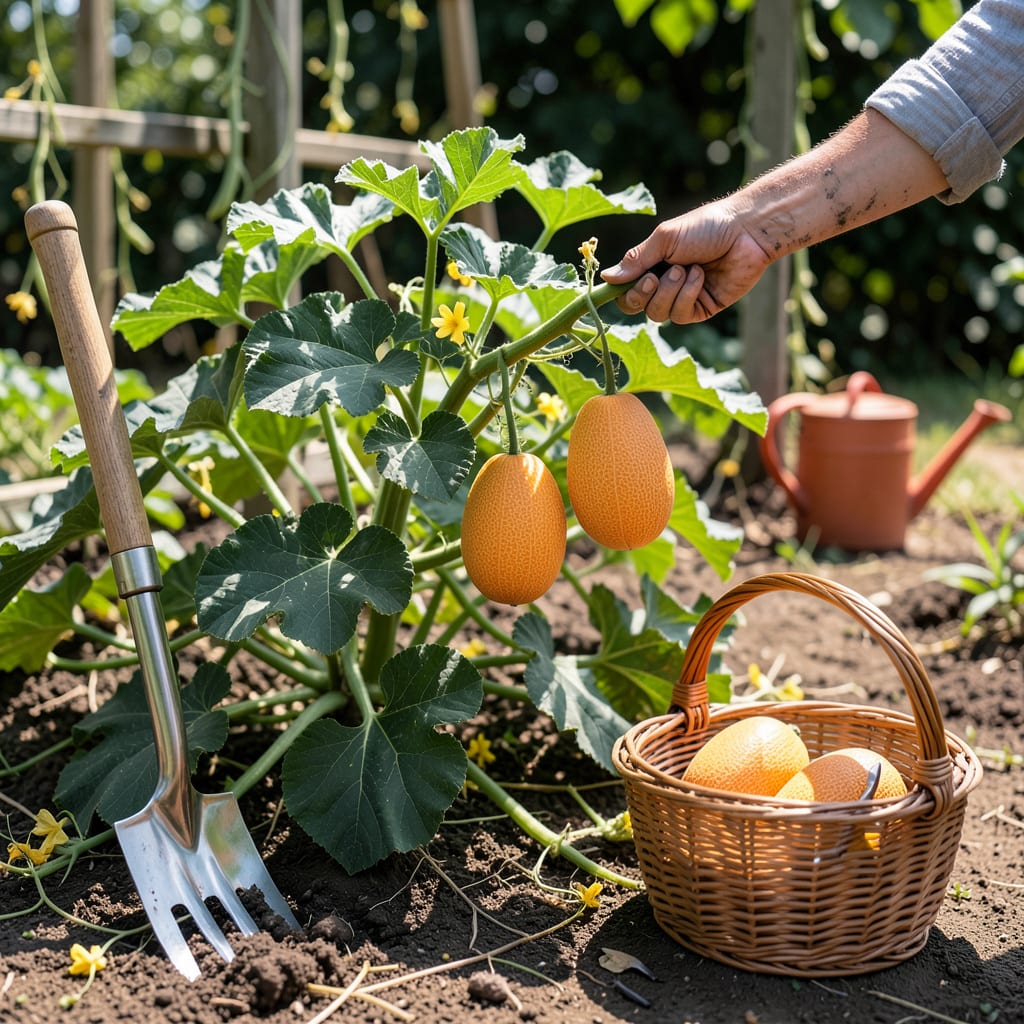
There’s nothing worse than cutting into a cantaloupe only to find it underripe—or worse, mushy and overdone. That perfect moment between bland and overripe is what separates a good harvest from a great one.
After years of trial and error in my garden, I’ve narrowed it down to three foolproof signs that tell you exactly when your 🍈 is ready to pick. No guesswork, no wasted fruit—just sweet, juicy success every time. Let’s break it down.


After months of tending your cantaloupe vines, the moment of truth arrives: Is it ready? The secret lies in three visual cues that never lie. I’ve tested these in my garden, and they’ve saved me from countless underripe disappointments. Let’s start with the most reliable sign.
The stem slip test is your first clue. A ripe cantaloupe will naturally detach from the vine with gentle pressure—this is called the “slip stage.” If you have to tug hard, it’s not ready. Look for a clean break at the stem, not a ragged tear. This happens because the fruit’s abscission layer forms when it’s ripe.
| Sign | What to Look For | Why It Matters |
|---|---|---|
| Stem Slip 🟡 | Stem detaches with light thumb pressure | Indicates full maturity and sugar development |
| Rind Color 🎨 | Shifts from green to creamy yellow or tan | Chlorophyll breaks down as fruit ripens |
| Netting Texture 🧶 | Rough, raised webbing covers the surface | Develops fully only in ripe melons |
Next, examine the rind color. An unripe cantaloupe wears a greenish hue, while a ready one turns creamy yellow or tan between the netting. This color shift happens as chlorophyll degrades and sugars accumulate. Pro tip: Check the side facing the ground—it should be yellow, not white.
The netting pattern is your third visual guide. Immature melons have smooth skin, but ripe ones develop a rough, raised webbing that feels textured under your fingers. This netting becomes more pronounced as the fruit matures. Run your hand over the surface—if it feels bumpy, you’re close to harvest time.
Don’t forget the blossom end (opposite the stem). Press gently with your thumb—if it gives slightly, like a ripe avocado, it’s ready. A hard end means wait; a soft spot means overripe. I use this test alongside the visual signs for double confirmation. Trust me, your taste buds will thank you.
Size matters, but it’s tricky. While most cantaloupes reach 4–6 inches in diameter when ripe, some varieties stay smaller. Always combine size with the other signs. I once picked a melon that looked huge but was still green inside—lesson learned! Now I check the stem slip first.
The sweet aroma at the stem end is a bonus sign. A ripe cantaloupe emits a musky, fruity scent when you sniff the base. No smell? It’s not ready. Overpowering odor? It’s past its prime. This fragrance comes from volatile compounds that develop during ripening.
Timing varies by climate, but in USDA Zone 6, most cantaloupes ripen 70–85 days after planting. Keep a garden journal to track your harvest window. I mark my calendar when flowers appear, then count forward to estimate ripening. It’s not foolproof, but it narrows the guessing game.
Remember, cantaloupes won’t ripen further once picked, so wait for all signs to align. I’ve made the mistake of harvesting early, thinking they’d sweeten on the counter—they didn’t. Patience pays off with that first perfect, juicy bite straight from the vine. 🪴
Even experienced gardeners sometimes misjudge cantaloupe ripeness. I’ve been there—cutting into a melon only to find it underripe or, worse, mushy. The most common mistake? Relying on size alone. Just because your cantaloupe looks big doesn’t mean it’s ready. 🪴
Another pitfall is ignoring the stem slip test. Many gardeners pull melons off the vine without checking if they detach easily. If you have to yank it, it’s not ripe. I learned this the hard way when I ruined an entire harvest by forcing them off too soon.
Misjudging rind color is another frequent error. Some gardeners assume any yellowing means ripeness, but the ground spot (where the melon rests) must turn creamy yellow. If it’s still white or green, wait. I use my phone’s flashlight to check this in dim morning light.
Don’t forget the blossom end test. Pressing too hard can bruise the fruit, while pressing too lightly gives false results. Use your thumb with gentle, even pressure—like testing an avocado. If it feels rock-hard, give it more time. A slight give means perfection.
Timing mistakes happen too. In USDA Zone 6, cantaloupes typically need 70–85 days to mature. Harvesting at 60 days often means underripe fruit, while waiting until 90+ days risks overripeness. Track your planting date and watch closely as you approach the ideal window.
Finally, avoid the “maybe it’ll ripen indoors” trap. Unlike tomatoes, cantaloupes won’t sweeten after picking. I once stored a green melon on my counter for a week—it stayed hard and tasteless. When in doubt, leave it on the vine one more day. Your patience will be rewarded with that perfect, juicy bite. ☀️
You’ve finally harvested your perfect cantaloupe—now what? Unlike some fruits, cantaloupes won’t ripen further once picked, so proper handling is key. I’ve ruined my share by storing them wrong, but these steps ensure maximum flavor and freshness every time. Let’s start with the first 24 hours.
First, don’t wash your cantaloupe immediately. The natural bloom (that dusty coating) protects it from mold. Instead, brush off dirt with a dry cloth. If you must wash it, do so right before eating to prevent spoilage. I learned this after losing a whole batch to premature rot. 🪴
For whole melons, store them at room temperature for 2–3 days if they need slight softening. After that, move them to the fridge to slow decay. The ideal fridge temp is 40–45°F. I use a thermometer to check mine—it’s made a huge difference in shelf life.
Once cut, cantaloupe oxidizes quickly. To extend freshness, wrap the cut surface tightly in beeswax wrap or place it in an airtight container. This prevents the flesh from drying out or absorbing fridge odors. My trick? Squeeze a little lemon juice on the cut surface to slow browning.
For long-term storage, freezing works best for smoothies or sorbets. Cube the flesh, freeze on a tray for 2 hours, then transfer to bags. This prevents clumping. Frozen cantaloupe lasts 6 months but loses texture for fresh eating. I label bags with dates to track freshness.
Watch for spoilage signs: soft spots, mold, or fermented smells mean it’s time to compost. A perfectly stored cantaloupe stays sweet and firm for up to a week. The reward for proper care? That first icy-cold slice on a hot day—pure garden-to-table bliss. ☀️
If the stem resists gentle pressure, your cantaloupe needs more time. The “slip stage” only occurs when fully ripe. Check again in 2-3 days, especially if the rind color is still greenish. Forcing it off early results in bland, underripe fruit.
Unlike tomatoes, cantaloupes won’t sweeten after picking. They may soften slightly at room temperature (68-72°F), but the sugar content remains fixed. Always wait for vine-ripeness. I once tried this shortcut—trust me, it’s not worth the disappointment.
Whole, uncut melons stay fresh for 5-7 days in the fridge’s crisper drawer. Once cut, wrap tightly in beeswax wrap and eat within 3 days. For longer storage, freeze cubed flesh for up to 6 months—perfect for smoothies!
Overpowering aroma often means overripeness. The sweet fragrance peaks just before the fruit turns mushy. Next time, harvest when the scent is sweet but subtle at the stem end. Pair this with the stem slip test for foolproof timing.
