
Beautiful Plants For Your Interior
Beautiful Plants For Your Interior
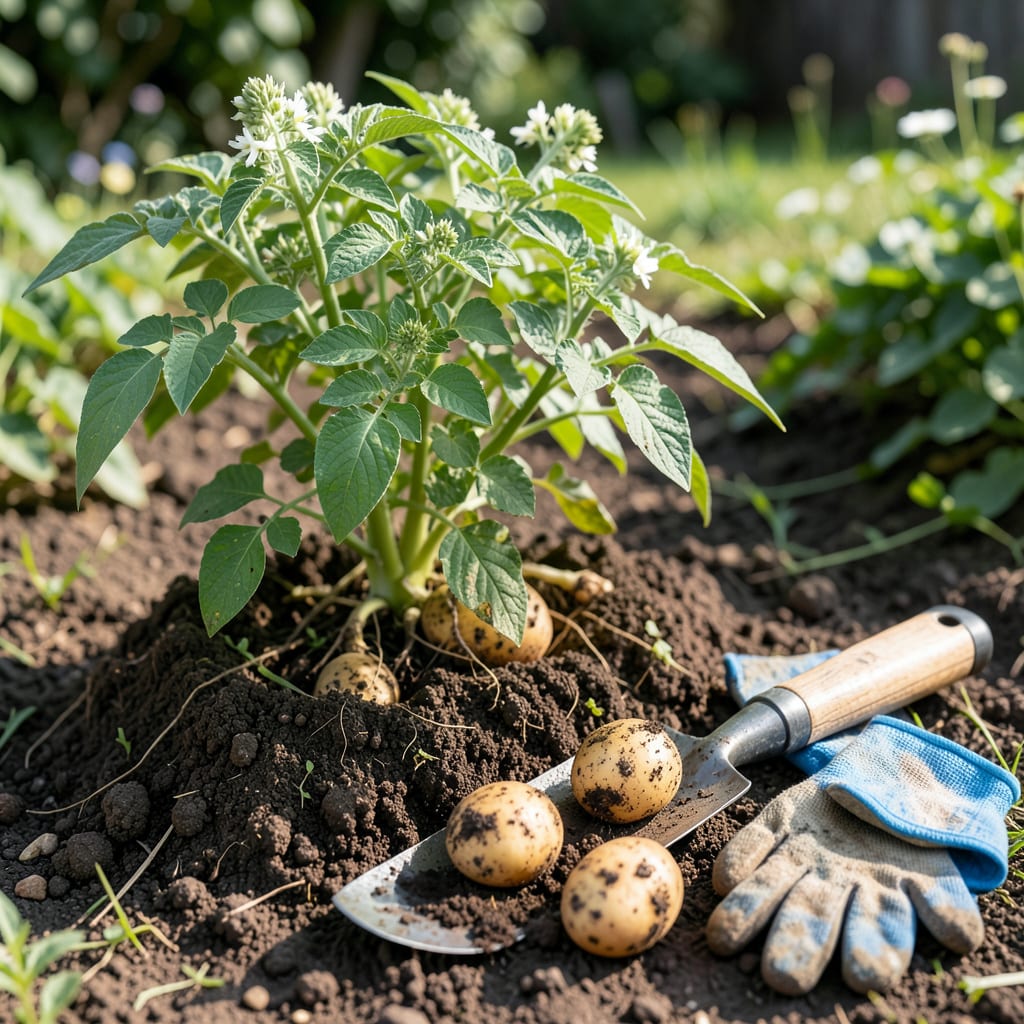
Timing your Potato harvest perfectly can transform your garden yield. I remember my first season missing the key signs and digging too early – what a difference proper timing makes!
From the 🥔 plant’s foliage to skin firmness, I’ll show you the exact indicators to watch for. Whether you want new potatoes or storage crops, these signals never lie.


I always tell fellow gardeners that potato plants give clear signals when they’re ready. The most obvious sign is when the foliage turns yellow and begins to die back naturally.
This yellowing process typically starts about 2-3 weeks before harvest time. For me, it’s like the plant is waving a flag saying “I’m done growing!”
| Harvest Sign | Description |
|---|---|
| Foliage Yellowing | Leaves turn yellow and wilt |
| Vine Dieback | Stems dry and turn brown |
| Firm Skins | Skin resists scratching when rubbed |
| Flowering Complete | All flowers have faded |
Another sure sign is when the vines die back completely. I’ve found that early varieties like Yukon Gold often show this sign about 70-90 days after planting.
For late varieties such as Russets, you might wait up to 120 days. The dying vines indicate that the plant has stopped sending nutrients to the tubers.
I always check the skin firmness too. When potatoes are ready, their skins won’t scratch easily when rubbed with your finger. This is a great test for storage potatoes.
Remember that new potatoes can be harvested earlier, while the plants are still flowering. I love digging a few out when I need that fresh garden taste.
The flowering stage is another important indicator. Most varieties will have finished flowering before they’re ready for harvest. I watch for this sign about 2 weeks before I expect to dig.
Weather conditions matter too. I avoid harvesting when the soil is waterlogged. Wait for a dry period to prevent rot and make digging easier.
In my experience, the combination of yellow foliage, firm skins, and dry vines is the perfect trio of signs. When I see all three, I know it’s time to get my garden fork ready 🌱
I use a few simple tests to check potato readiness without disturbing the whole plant. The gentle probe method works well – I carefully push my hand into the soil near the base.
Another approach is sample digging. I’ll carefully unearth one or two potatoes from different plants to check their size and skin condition. This gives me a good sense of the overall crop.
The skin rub test is my favorite. When I gently rub the potato skin with my thumb, a mature potato won’t scratch easily. If it does, I know they need more time.
For size assessment, I compare the sample potatoes to the expected mature size for their variety. Yukon Golds typically reach 2-3 inches in diameter when ready, while Russets can grow larger.
I always perform these tests on different plants in my patch. Potatoes can mature at slightly different rates, and this helps me get a complete picture of my crop’s readiness.
✂️
I’ve learned that new potatoes and storage potatoes have completely different harvest windows. For new potatoes, I start checking when the plants begin flowering, usually around 60-70 days after planting.
These young tubers have thin skins and a delicate texture that’s perfect for immediate use. I love their buttery flavor when harvested fresh from the garden.
| Feature | New Potatoes | Storage Potatoes |
|---|---|---|
| Harvest Time | 60-70 days | 90-120 days |
| Plant Stage | Flowering begins | Foliage dies back |
| Skin Texture | Thin, delicate | Thick, firm |
| Best Use | Immediate eating | Long-term storage |
For storage potatoes, I wait until the foliage dies back completely, which typically occurs 90-120 days after planting. The skins become much thicker and more protective.
These mature tubers will keep for months in a cool, dark place. I always let them cure for 1-2 weeks in a dry, well-ventilated area before storing to toughen their skins.
One key difference I’ve noticed is the size variation. New potatoes are small, while storage potatoes can grow much larger depending on the variety and growing conditions.
✂️
Digging before the skins firm up results in thin-skinned potatoes that bruise easily. These won’t store well and may rot quickly. Wait until at least some foliage yellows for better keeping quality.
Avoid harvesting when soil is waterlogged. Wet conditions make digging difficult and increase rot risk. Wait for dry weather to protect your crop and make the process easier.
Check for flowering about 60-70 days after planting. Gently dig around the base when you see blooms – if you find 1-2 inch tubers, they’re perfect for fresh eating.
Overcrowding or poor soil are common culprits. Ensure plants have 12 inches of space and rich, loose soil. Small potatoes can also mean the variety naturally produces smaller tubers.
