
Beautiful Plants For Your Interior
Beautiful Plants For Your Interior
There’s nothing quite like biting into a perfectly ripe ear of 🌽 corn—sweet, juicy, and bursting with flavor. But pick it too early or too late, and you’re left with either underwhelming kernels or a starchy mess. The difference comes down to knowing exactly when to harvest.
I’ve learned the hard way that timing is everything. Whether you’re growing in Zone 6a or just eager for that first summer bite, I’ll show you the foolproof signs to look for. No more guessing—just perfect corn every time.


Nothing beats the taste of freshly picked corn, but timing is everything. Picking too early leaves you with watery kernels, while waiting too long turns them starchy. I’ve learned the hard way that visual cues are your best guide—not just guesswork.
Corn doesn’t ripen all at once, so I check each ear individually. The silk, husk, and kernels tell the real story. Ignore the calendar and focus on these 3 foolproof signs instead. Trust me, your taste buds will thank you! 🌽
I always start by peeling back just enough husk to check the top kernels. If they’re rounded and tightly packed, the rest of the ear is likely ready. Don’t strip the husk entirely—it protects the corn until harvest.
Avoid the mistake of waiting for all silks to brown. Some varieties (like ‘Peaches and Cream’) may still have partial green silks when ripe. Instead, focus on the kernel test—it’s the most reliable method I’ve found.
Weather plays a role too. In hot, dry summers, corn matures faster, so check ears a few days earlier. Cool, wet seasons? Add 3-5 extra days to your expected harvest window. I keep a garden journal to track these patterns yearly.
If you’re growing multiple corn varieties, note that sweet corn (like ‘Honey & Pearl’) ripens faster than field corn. Sweet varieties typically hit peak flavor at 70-80 days, while field corn may need 90-100 days.
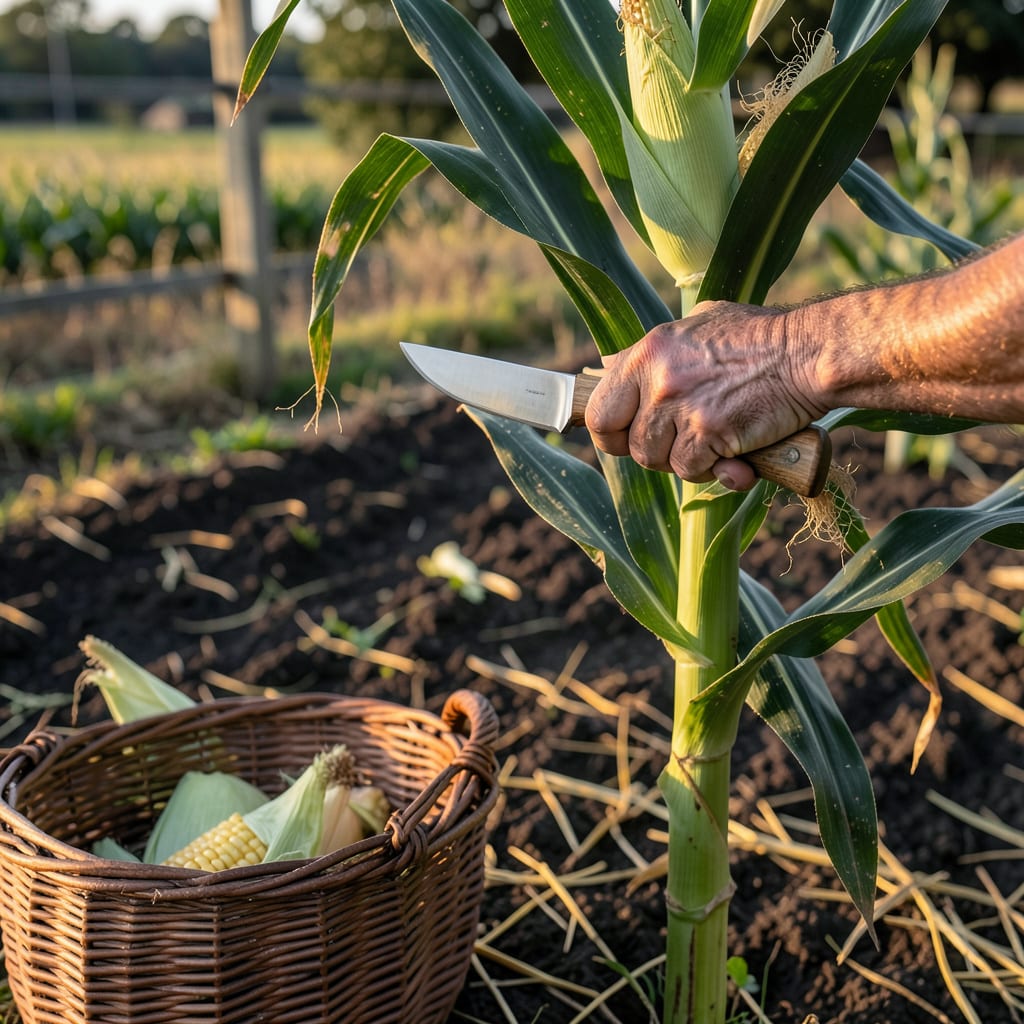
Pro tip: Harvest in the early morning when sugars are highest. I use a sharp knife to cut the ear at the base, leaving 1-2 inches of stalk attached. This prevents moisture loss and keeps kernels fresher longer.
Still unsure? Try the “shake test”—hold the ear and gently shake it. A heavy, solid feel means it’s packed with plump kernels. Light or rattly? Give it another 2-3 days before checking again.
Remember, corn loses sweetness fast after picking. For the best flavor, I rush it straight to the fridge or cook it within 24 hours. The difference between fresh and day-old corn is like night and day! 🌿
If you’ve ever wondered whether your corn is truly ready, the finger test is your secret weapon. This hands-on method takes the guesswork out of harvesting by letting you feel and see the kernels’ ripeness. Trust me, once you try it, you’ll never rely on looks alone again.
Here’s how it works: Peel back just enough of the husk to expose a small section of kernels. Press one firmly with your thumbnail. If a milky white liquid squirts out, you’ve hit the sweet spot. If it’s clear or watery, your corn needs more time.
💡 Pro Tip: The Milky Test
✅ Ready: Kernels release milky juice when pierced.
❌ Not ready: Clear liquid means it’s underripe.
⚠️ Overripe: Thick, doughy liquid signals starchiness.
For drought-stressed corn, the test can be tricky. Kernels might feel firmer than usual, but the milky juice is still your best indicator. If you’re unsure, check multiple ears—consistency across the stalk is key. I’ve found that ears at the top of the stalk often ripen first.
Don’t forget to check the silk color too. While the finger test is definitive, brown, dry silks are a great backup sign. If the silks are still green or moist, your corn isn’t ready, no matter how plump the kernels look. Patience pays off here!
If you’re growing sweet corn varieties like ‘Peaches and Cream,’ the milky stage is especially critical. These types lose sweetness fast once picked, so test in the early morning for the best flavor. Field corn, on the other hand, can handle a slightly later harvest.
Finally, trust your instincts. If the ear feels heavy and full in your hand and passes the finger test, it’s time to pick. I like to harvest with a quick twist-and-pull motion to avoid damaging the stalk. Now, get out there and enjoy that perfect, homegrown crunch! 🌽
Not all corn is created equal when it comes to harvest time. The variety you’re growing dramatically affects when and how you should pick it. Sweet corn, field corn, and popcorn each have unique signs of readiness that I’ll break down for you.
For example, sweet corn like ‘Peaches and Cream’ reaches peak sweetness in just 75-85 days, while field corn may take up to 100 days. Popcorn requires even more patience—wait until the husks are completely dry and kernels hard as rocks.
| Variety | Days to Maturity | Ready Sign | Best Use |
|---|---|---|---|
| Sweet Corn | 60-85 days | Milky kernels, brown silks | Fresh eating |
| Field Corn | 90-120 days | Dry husks, hard kernels | Animal feed, flour |
| Popcorn | 100-120 days | Fully dried on stalk | Popping |
For sweet corn varieties, timing is critical because sugars convert to starch rapidly after picking. I always harvest in the cool morning hours to preserve maximum sweetness. Field corn, however, can stay on the stalk longer since it’s typically dried for storage.
If you’re growing ornamental corn, wait until the husks turn papery and the kernels develop their full color pattern. These varieties are all about visual appeal, so I let them mature fully before cutting the stalks for autumn decorations.
Remember that weather conditions can shift these timelines. A hot, dry summer might speed up maturity by 5-7 days, while cool, wet conditions could delay it. When in doubt, perform the finger test we discussed earlier—it works for all varieties!
Once you’ve mastered these variety-specific signs, you’ll never second-guess your corn harvest again. The key is observing your plants daily as they approach maturity and acting quickly when you spot those perfect readiness cues. Happy harvesting! 🌽
Corn typically reaches maturity about 18-24 days after silks first emerge. This window can vary slightly based on weather conditions. In hot, dry summers, check at 18 days, while cooler seasons may require the full 24 days.
Early morning is actually the best time to harvest corn because sugar levels are highest. Just make sure the ears pass the ripeness tests first. Picking before dawn won’t harm the corn, but waiting until after dew dries helps prevent mold during storage.
Overripe corn becomes starchy and tough as sugars convert to starch. Kernels lose their juicy sweetness and develop a mealy texture. For sweet corn varieties, this happens quickly—often within 2-3 days past peak ripeness.
Ears typically ripen 1-2 days apart on the same stalk. The top ear usually matures first, followed by lower ears. Check each ear individually using the silk and kernel tests rather than assuming uniform ripeness.
A green husk doesn’t automatically mean unripe corn. Focus on the silk color and kernel test instead. Some varieties maintain green husks even when ready. If the ear feels full and kernels release milky juice, it’s good to pick.
