
Beautiful Plants For Your Interior
Beautiful Plants For Your Interior
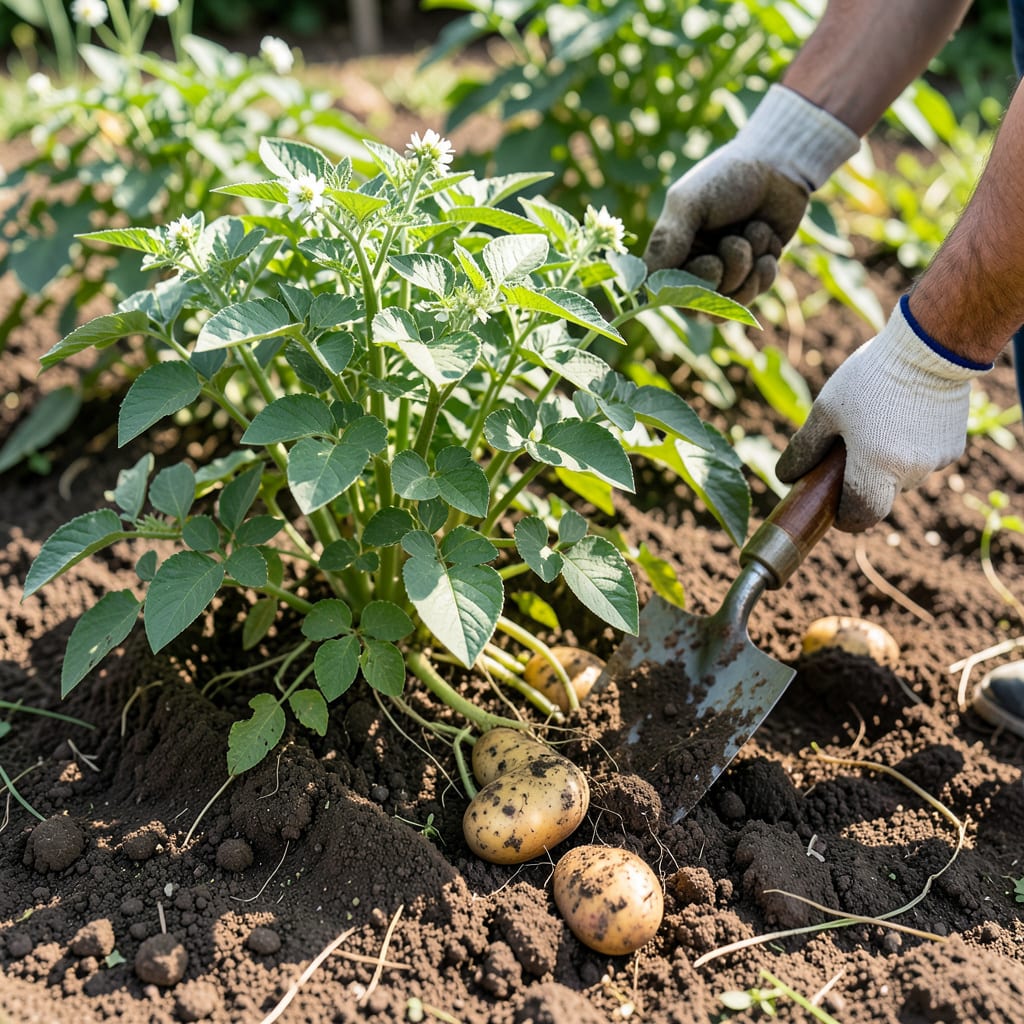
Nothing beats the satisfaction of pulling perfectly ripe potatoes from your garden soil. With the 🥔 potato plants I’ve grown, timing the harvest makes all the difference between a mediocre and an outstanding crop.
I’ll show you the subtle signs to watch for, from foliage changes to skin set, that signal your potatoes are ready to come out of the ground. These clues are surprisingly simple once you know what to look for.


I always check for foliage changes first when determining if my potatoes are ready. When the plant’s leaves start turning yellow and wilting, it’s a clear sign the tubers are approaching maturity.
The flowering stage is another key indicator. Most potato varieties will bloom, and once those flowers fade, it’s time to start checking for harvest readiness. This typically happens about 2-3 weeks before full maturity. 🌿
| Sign | Description | Timing |
|---|---|---|
| Yellowing foliage | Leaves turn yellow and wilt | 2-3 weeks before harvest |
| Flower fading | Flowers drop off the plant | Early maturity stage |
| Skin set | Skin doesn’t rub off easily | At full maturity |
| Tuber size | 1-3 inches for new potatoes | 60-90 days after planting |
| Top dieback | Entire plant wilts and dies | Ready for harvest |
I always perform the skin test to confirm. Gently rub a test tuber with your thumb—if the skin stays intact, it’s ready. If it rubs off easily, the potatoes need more time in the ground. ✂️
For new potatoes, I start checking when plants are still flowering. These can be harvested when they’re golf-ball sized, usually about 2-3 weeks after the plants have finished flowering.
The size of the tubers is another reliable indicator. For mature potatoes, I wait until they’ve reached their full size, typically between 2-4 inches in diameter, depending on the variety.
I’ve found that early varieties mature faster, often ready in 60-70 days, while maincrop varieties can take 90-120 days. Always check your seed potato packaging for specific maturity times.
Another sign I watch for is cracking soil around the stems. As tubers grow, they often push against the soil, causing visible cracks. This is a great time to do a gentle dig to check on their progress.
Remember that weather conditions can affect maturity. In cooler climates, potatoes may take longer to mature, while warmer areas might see faster development. Always adjust your expectations based on your local growing conditions. 🌱
Finally, I always harvest on a dry day when the soil isn’t waterlogged. This makes digging easier and helps prevent rot or disease in your freshly harvested potatoes. Proper timing ensures the best flavor and storage life.
I love harvesting new potatoes for their tender skin and buttery flavor. These are ready when plants are still flowering, typically 60-70 days after planting. They’re smaller, usually 1-2 inches in diameter.
For mature potatoes, I wait until the foliage dies back. These take longer, often 90-120 days, and develop a thicker skin that’s ideal for storage. Their size ranges from 2-4 inches depending on variety.
| Aspect | New Potatoes | Mature Potatoes |
|---|---|---|
| Harvest Time | 60-70 days | 90-120 days |
| Skin Thickness | Thin, tender | Thick, firm |
| Size | 1-2 inches | 2-4 inches |
| Plant Stage | Flowering | Foliage died back |
| Best For | Immediate use | Storage |
The harvesting method differs too. For new potatoes, I gently hand-dig around the plant, carefully feeling for tubers. This lets the plant continue growing for a second harvest of mature potatoes later. 🌿
With mature potatoes, I use a garden fork to lift the entire plant. I start digging about 6 inches away from the stem to avoid piercing the tubers. It’s important to be gentle to prevent bruising or cutting.
I’ve found that early varieties like ‘Yukon Gold’ or ‘Red Norland’ are perfect for new potatoes. For storage, I prefer maincrop varieties like ‘Russet’ or ‘Kennebec’ that develop that thicker skin needed for long-term keeping.
Remember that soil conditions affect harvest ease. I always water the day before harvesting to soften the soil, making digging easier and reducing the risk of damaging the tubers. ✂️
I’ve learned the hard way that harvesting too early is one of the biggest mistakes. When I dig up potatoes before the skin has set, they often bruise easily and don’t store well. The skin should resist gentle rubbing. 🌱
Another common error is waiting too long after the foliage dies back. If potatoes stay in wet soil, they can rot. I aim to harvest within 2 weeks of the plants completely wilting.
⚠️ Avoid These Harvesting Pitfalls
Harvesting in wet soil leads to clumping and rot. Always wait for dry conditions and use a garden fork to prevent piercing tubers.
I always use the wrong tools in my early gardening days. Using a shovel instead of a garden fork can slice through potatoes. Now I dig carefully 6 inches from the plant base. ✂️
Mishandling after harvest is another issue. I never wash potatoes immediately after digging. This removes the protective soil layer and increases rot risk. I let them dry in a shady spot for a few hours first.
Sun exposure is harmful to freshly dug potatoes. The light turns them green and produces solanine, a toxic compound. I always cover harvested potatoes with a dark cloth if I can’t move them indoors immediately. 🌿
Digging them up before the skin sets results in tender tubers that bruise easily and won’t store well. The skin will rub off when handled, and they lack full flavor development.
New potatoes can be gently harvested 2-3 weeks after flowering begins. For mature potatoes, wait until the foliage yellows and dies back, usually 4-6 weeks after blooming.
Yes, leaving them in wet soil after the plants die can cause rot. Harvest within 2 weeks of foliage dieback to prevent spoilage and pest damage.
Most do, but early varieties mature faster (60-70 days) while maincrops take 90-120 days. Always check your specific variety’s recommended harvest time.
