
Beautiful Plants For Your Interior
Beautiful Plants For Your Interior
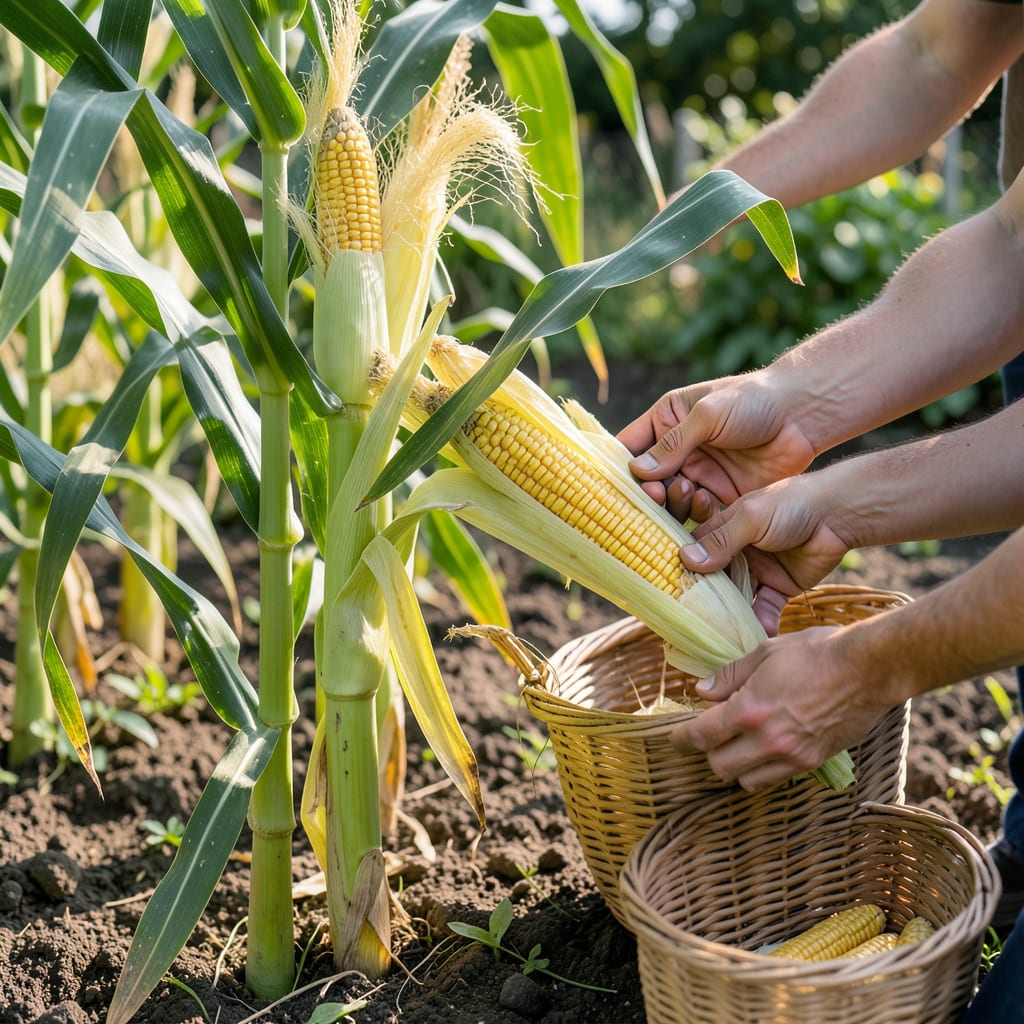
Picking Corn at just the right moment makes all the difference between sweet perfection and tough disappointment. I’ve learned the hard way that timing is everything with this summer staple.
With July to September as prime harvest months, knowing the visual cues saves you from guessing. Let me show you the easiest way to spot ripe ears every time.


I always check the silk color first when determining if my corn is ready. The silks should be brown and dry at the top of the ear, not fresh or green.
The ear shape matters too. A ripe ear of corn will feel plump and firm when gently squeezed through the husk.
| Sign | What to Look For |
| Silk Color | Brown and dry at the top |
| Kernel Test | Milky liquid when pierced |
| Ear Shape | Plump and firm through husk |
| Husk Condition | Green and tight to ear |
The kernel test is my go-to method. I pierce a kernel with my fingernail and check the liquid. If it’s milky white, the corn is at its peak.
If the liquid is clear, the corn isn’t ready yet. This means the sugar content hasn’t developed enough for that sweet flavor we all love.
Another sign is the husk condition. It should be green and tightly wrapped around the ear. Yellowing husks can indicate over-maturity.
I also pay attention to the ear size. Corn ears should reach their full size for the variety you’re growing before harvesting.
The time from planting matters too. Most sweet corn varieties take 60 to 100 days to mature, depending on the type.
I’ve found that checking these signs in the early morning gives the most accurate results. The cool temperature helps preserve the sugar content in the kernels.
Remember, corn doesn’t continue ripening after picking. Once you harvest it, the sugar starts converting to starch, so timing is crucial for the best flavor.
With these simple checks, I consistently harvest perfectly ripe corn every season 🌽
I’ve seen many gardeners rush to harvest their corn too early, only to find underdeveloped kernels that lack sweetness. Patience is key—wait for the silks to turn fully brown and dry before testing.
Another common error is ignoring the kernel liquid test. Clear liquid means the corn isn’t ready, while milky white liquid confirms peak ripeness. Skipping this step often leads to disappointment.
Overripe corn has doughy kernels and yellowing husks. The sugar converts to starch quickly after peak ripeness, reducing sweetness.
Some gardeners also harvest in the heat of the day, which can cause the kernels to lose moisture and flavor. I always pick in the early morning when the sugar content is highest.
Improper handling is another mistake. Pulling the ear downward can damage the stalk. Instead, I use a twisting motion while holding the stalk steady to avoid harming the plant.
Misjudging the ear size is a frequent issue too. Corn ears should feel full and plump through the husk. If they feel small or underdeveloped, they need more time.
Finally, don’t assume all ears on a stalk ripen at the same time. I check each ear individually, as they can mature at slightly different rates within the same corn plant 🌽
I always harvest my corn in the early morning when the sugar content is at its highest. This is when the kernels are most plump and flavorful.
The cool temperatures of early morning help preserve the natural sweetness. As the day warms up, the sugar begins converting to starch, reducing that perfect taste.
Harvest corn in the morning for the sweetest flavor. Avoid picking during the hottest part of the day.
I’ve noticed that humidity levels are often higher in the morning, which helps maintain the kernel moisture we all love. This makes the corn taste fresher and juicier.
Another tip is to harvest right after dew has dried but before the heat sets in. This timing ensures the best texture and flavor.
After picking, I immediately cool the ears to slow down the sugar-to-starch conversion. This keeps the corn tasting sweet for longer.
With this approach, I enjoy the sweetest corn every time 🌽
The milky liquid indicates peak sugar content in the kernels. Clear liquid means the corn is underripe, while doughy liquid signals it’s overripe and starchy.
It’s best to avoid afternoon harvesting. The heat of the day causes sugar to convert to starch faster, reducing sweetness. Always pick in the early morning instead.
Yellowing husks often mean the corn is past its prime. Harvest immediately if the kernels still feel plump, as the sugar content is likely declining rapidly.
Gently peel back just enough husk to expose a few kernels. Pierce one with your fingernail to check the liquid. Then cover the kernels back up if not ready.
