
Beautiful Plants For Your Interior
Beautiful Plants For Your Interior
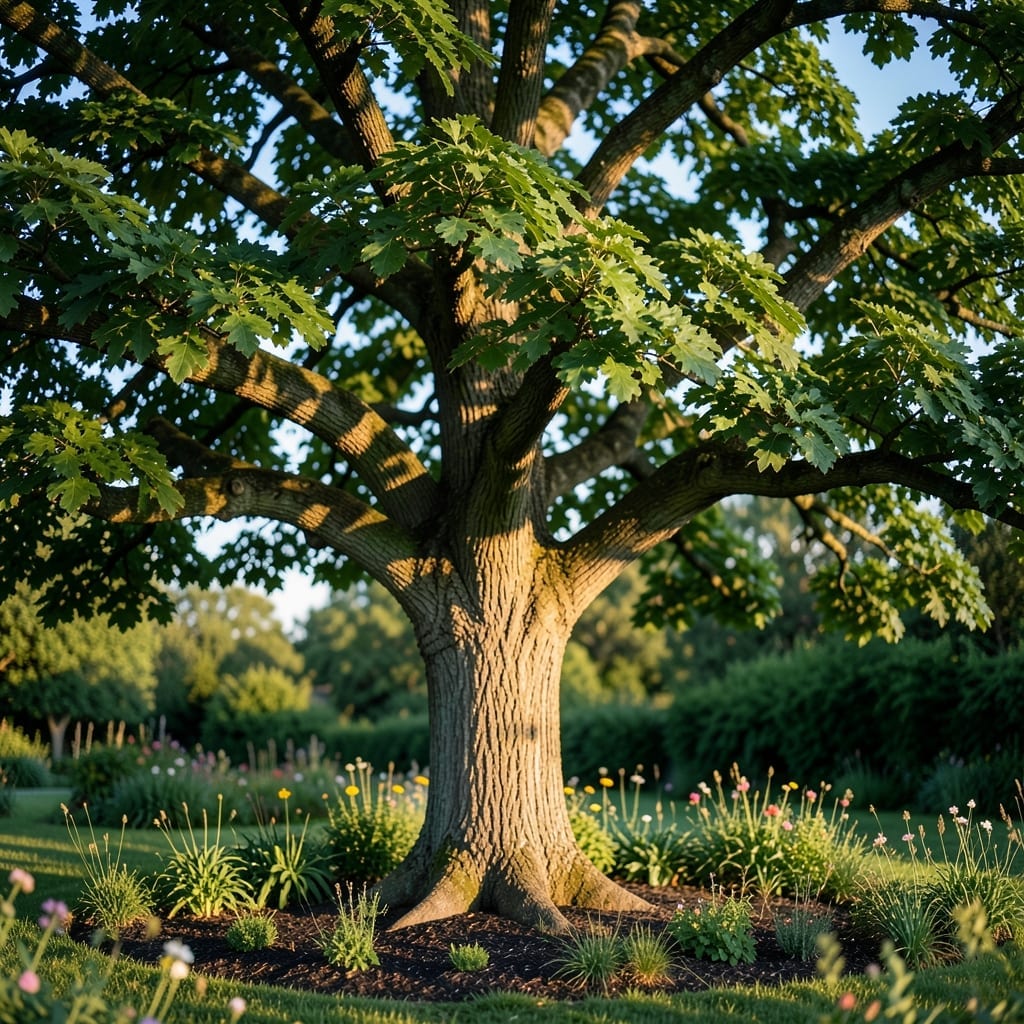
Trees grow tall through a combination of cell division in their tips, water transport via xylem, and structural support from lignin in their cell walls, allowing them to reach impressive heights over time.
What fascinates me is how trees combine biology and engineering to reach for the sky. The apical meristem at their tips constantly produces new cells, while the xylem acts like a straw, pulling water and nutrients upward against gravity. 🌟
Lignin is the unsung hero here, hardening cell walls to create a sturdy framework that supports massive weight. Without these systems working in harmony, trees couldn’t achieve their towering heights.
💡 In This Article
The journey begins at the apical meristem, a cluster of rapidly dividing cells at the tips of branches and roots. These cells elongate and specialize, adding length to the tree. The growth hormone auxin plays a crucial role here, produced in the meristem and transported downward to stimulate cell expansion. 🔥
Water transport is handled by the xylem, a network of vessels that use capillary action and negative pressure to pull water from the soil to the leaves. Some trees can move water 100 feet or more upward, defying gravity through this efficient system. The phloem works in tandem, distributing sugars and nutrients produced by photosynthesis.
The real structural magic happens with lignin, a complex polymer that hardens cell walls, providing the rigidity needed to support massive trunks and branches. This process, called secondary growth, thickens the tree annually, creating growth rings visible in cross-sections. Each ring represents a year of growth.
Auxins also inhibit side branching, focusing the tree’s energy on upward growth. This apical dominance ensures the tree grows tall before spreading out. Some species like the coast redwood can grow 2-3 feet per year under ideal conditions, reaching heights over 370 feet. ✨
Secondary growth adds girth through the vascular cambium, a thin layer of dividing cells between the xylem and phloem. This outward expansion strengthens the tree’s structure, allowing it to support more weight as it grows taller. The bark, produced by the cork cambium, protects these vital systems.
What’s remarkable is how these systems work in harmony. The meristem provides new growth, the vascular system distributes resources, and the structural components provide support. This biological engineering allows trees to reach heights that seem to defy physics. 💫
Genetics play the biggest role, as each species has a maximum height potential. Coastal redwoods, for example, can reach over 370 feet due to their unique adaptations. Environmental factors like sunlight, soil quality, and water availability then determine if they reach that potential.
The xylem acts like a straw, using capillary action and negative pressure to pull water upward. Some trees can transport water over 100 feet through this system, defying gravity. The process works because of the tree’s ability to create a continuous water column.
Yes, there’s a physical limit. When trees grow too tall, their xylem struggles to transport water to the top, causing stress. The tallest trees often have adaptations like thicker bark or specialized leaf structures to compensate.
In forests, trees compete for sunlight, which drives them to grow upward to reach the canopy. In open areas with no competition, trees can spread out horizontally instead. This is why forest trees often appear taller and thinner.