
Beautiful Plants For Your Interior
Beautiful Plants For Your Interior
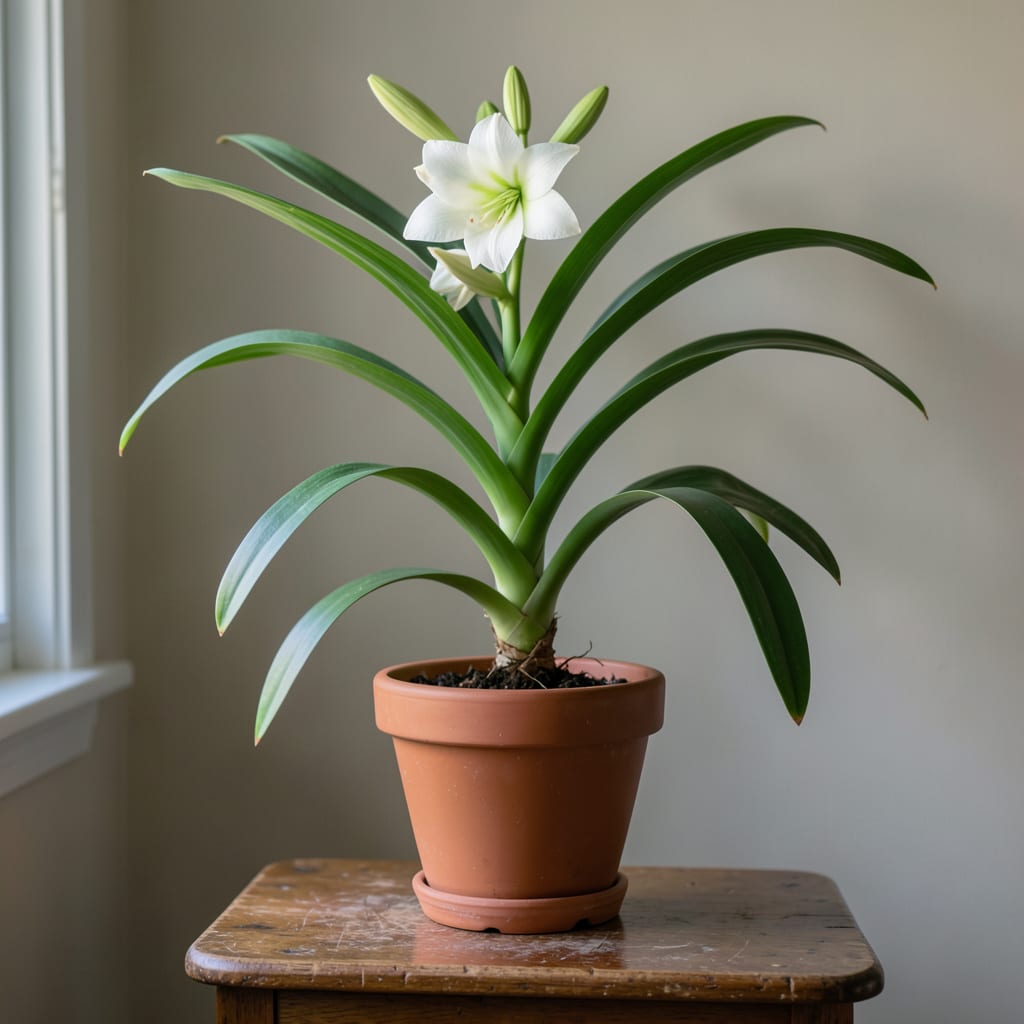
Watching your Amaryllis 💐 grow long leaves can be exciting, but the real reward comes when it blooms. Understanding how to care for your plant after leaf growth is crucial for successful flowering.
I’ll guide you through the essential steps to encourage your Amaryllis to bloom, including proper watering, fertilizing, and providing the right conditions. Let’s help your Amaryllis reach its full potential in USDA Zone 6.
To encourage your Amaryllis to bloom after it grows long leaves, it’s essential to understand its natural growth cycle. The plant’s cycle includes leaf development, a dormancy period, and flowering. 🌼
The Amaryllis growth cycle typically begins with leaf growth, followed by a dormancy period, and then flowering. Understanding this cycle is crucial for providing the right care. 🌱
During the leaf development stage, the Amaryllis grows long leaves to store energy for the blooming process. This stage is critical for the plant’s development. 🌱
Proper care during this stage involves providing adequate watering and fertilizing. I’ll discuss these care tips in detail later. 💧
The dormancy period is a critical phase in the Amaryllis growth cycle. During this time, the plant rests and prepares for flowering. 🌿
Understanding the growth cycle helps you provide the right conditions for your Amaryllis to bloom successfully. By recognizing the different stages, you can tailor your care to meet the plant’s needs. 🌼
Now that we’ve explored the Amaryllis growth cycle, let’s move on to the essential care tips to encourage blooming after leaf growth. 💐
Careful planning and attention to detail are necessary to ensure your Amaryllis blooms beautifully. By following the right care tips, you can enjoy stunning flowers. 🌺
In the next section, I’ll discuss the essential care tips to promote Amaryllis blooming. These tips will help you provide the right conditions for your plant to thrive. 🌻
By understanding the Amaryllis growth cycle and providing the right care, you can enjoy beautiful blooms. Let’s explore the essential care tips in more detail. 💐
Proper care involves more than just watering and fertilizing. It requires a comprehensive approach that addresses the plant’s needs at different stages. 🌿
In summary, understanding the Amaryllis growth cycle is crucial for encouraging blooming. By recognizing the different stages and providing the right care, you can enjoy stunning flowers. 🌼
To get your Amaryllis to bloom after it grows long leaves, you need to provide the right care. This includes proper watering, fertilizing, and light conditions. 🌼
I recommend starting with the right watering schedule. Water your Amaryllis when the soil feels dry to the touch. This usually means watering once a week during the growing season. 💧
Fertilize your Amaryllis with a balanced fertilizer (20-20-20 NPK) every two weeks during the growing season. This will promote healthy growth and blooming.
Fertilizing is also crucial for promoting blooming. Use a balanced fertilizer and follow the manufacturer’s instructions. 🌱
In addition to watering and fertilizing, providing the right light conditions is essential. Place your Amaryllis in a spot with bright, indirect light. 🌻
During the dormancy period, reduce watering to once a month. This will help the plant prepare for blooming. 🌿
By following these essential care tips, you can encourage your Amaryllis to bloom beautifully.
Proper care involves more than just watering and fertilizing. It requires a comprehensive approach that addresses the plant’s needs at different stages. 🌼
In summary, to get your Amaryllis to bloom after it grows long leaves, focus on providing the right watering, fertilizing, and light conditions. With proper care, you can enjoy stunning flowers. 🌺
When trying to get your Amaryllis to bloom after it grows long leaves, it’s easy to make mistakes that can prevent flowering. I’ll help you identify and correct common errors. 🌼
One of the most common mistakes is overwatering. Amaryllis plants are susceptible to rot if the soil is too wet.
Avoid overwatering your Amaryllis, as this can lead to root rot and prevent blooming. Check the soil moisture regularly.
Another mistake is not providing a sufficient dormancy period. Amaryllis needs a period of rest to prepare for blooming. Reduce watering to once a month during this time. 🌿
Improper post-bloom care can also affect future flowering. After the flowers have faded, remove the flower stalk but keep the leaves intact until they turn yellow. 🌱
By avoiding these common mistakes, you can encourage your Amaryllis to bloom successfully.
In summary, to get your Amaryllis to bloom after it grows long leaves, avoid common mistakes like overwatering and insufficient dormancy. With proper care, you can enjoy beautiful blooms. 🌺
After the leaves grow, your Amaryllis will typically go through a dormancy period before blooming. This can take 6-8 weeks. Be patient and maintain proper care during this time to encourage blooming.
No, you can’t force an Amaryllis to bloom immediately. The plant needs time to store energy and go through its natural dormancy period. Trying to rush the process can lead to poor or no flowering. Let it follow its natural cycle for best results.
During the dormancy period, reduce watering to once a month. This helps the plant prepare for blooming. Overwatering can cause rot and prevent flowering, so it’s crucial to keep the soil dry.
Use a balanced fertilizer (20-20-20 NPK) every two weeks during the growing season. This promotes healthy growth and encourages blooming. Follow the manufacturer’s instructions for application rates.
