
Beautiful Plants For Your Interior
Beautiful Plants For Your Interior
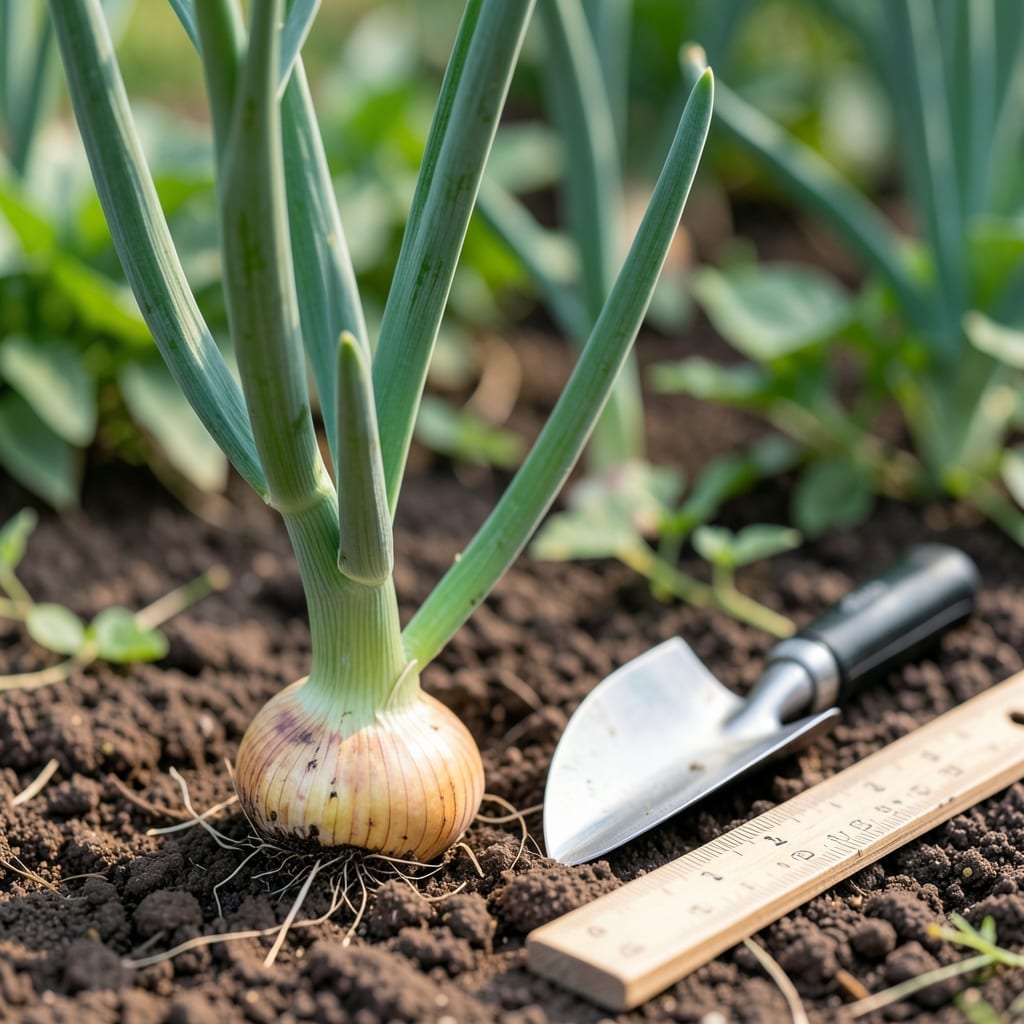
Planting onion bulbs at the right depth is the secret to a bountiful harvest, yet many gardeners unknowingly sabotage their crop by getting this simple step wrong.
I discovered that even small adjustments in planting depth can make a huge difference in your 🧅 Onion yield. Whether you’re a beginner or seasoned gardener, this often-overlooked detail could be the game-changer for your spring planting.
Find out exactly how deep to plant your bulbs and why it matters more than you think. Let’s dig into the specifics that will set you up for success.


Getting the planting depth right is crucial for healthy onion bulb development. I’ve seen gardeners struggle with stunted growth simply because their bulbs were planted too deep or too shallow.
The ideal depth for onion bulbs is 1 to 2 inches below the soil surface. This allows the roots to anchor properly while ensuring the bulb can expand without resistance.
🌱 Onion Planting Depth Guidelines
| Requirement | Specification |
|---|---|
| Ideal Depth | 1-2 inches |
| Bulb Orientation | Pointed end up |
| Soil Type | Loamy & well-draining |
| Spacing | 4-6 inches apart |
Planting too deep can restrict bulb expansion, leading to smaller onions. Conversely, shallow planting may expose the bulb to temperature fluctuations and dry out the roots.
The pointed end of the bulb should always face upward. This ensures the green shoots can emerge easily through the soil, while the roots grow downward for stability.
Soil type also plays a role in depth adjustment. In sandy soil, you might plant slightly deeper to protect the bulb from drying out. In clay soil, stick to 1 inch to prevent waterlogging.
I recommend testing your soil’s drainage before planting. Dig a small hole, fill it with water, and see how quickly it drains. If it takes hours, your soil may be too dense.
For best results, loosen the soil to at least 6 inches deep before planting. This gives the roots room to spread and access nutrients more easily.
Watering after planting is essential to help the soil settle around the bulb. A light watering ensures good contact between the roots and the soil, kickstarting growth.
If you’re planting in cold climates, consider adding a layer of mulch to insulate the soil. This keeps the temperature stable and protects the bulbs from late frosts.
Remember, the goal is to create the ideal environment for your onions to thrive. With the right depth, soil, and care, you’ll be rewarded with a healthy, abundant harvest 🌱
Planting onion bulbs correctly starts with soil preparation. I always begin by loosening the soil to 6 inches deep to ensure the roots have plenty of room to grow and access nutrients.
Once your soil is ready, create small holes that are 1 to 2 inches deep, spacing them 4 to 6 inches apart to give each bulb enough space to mature properly.
🌱 Onion Planting Steps
Place each bulb in the hole with the pointed end facing upward. This ensures the green shoots will grow upward while the roots extend downward, establishing a strong foundation.
After placing the bulbs, cover them with soil and water lightly to help the soil settle around the bulb. This step is crucial for good root-to-soil contact, which kickstarts growth.
For gardeners in colder climates, I recommend adding a layer of mulch to insulate the soil. This keeps temperatures stable and protects the bulbs from late frosts.
Consistent moisture is key after planting. Water your bulbs once a week with about 1 inch of water, preferably in the morning to allow for proper absorption.
With these steps, you’ll create the perfect conditions for your onion bulbs to thrive and produce a healthy harvest 🌱