
Beautiful Plants For Your Interior
Beautiful Plants For Your Interior
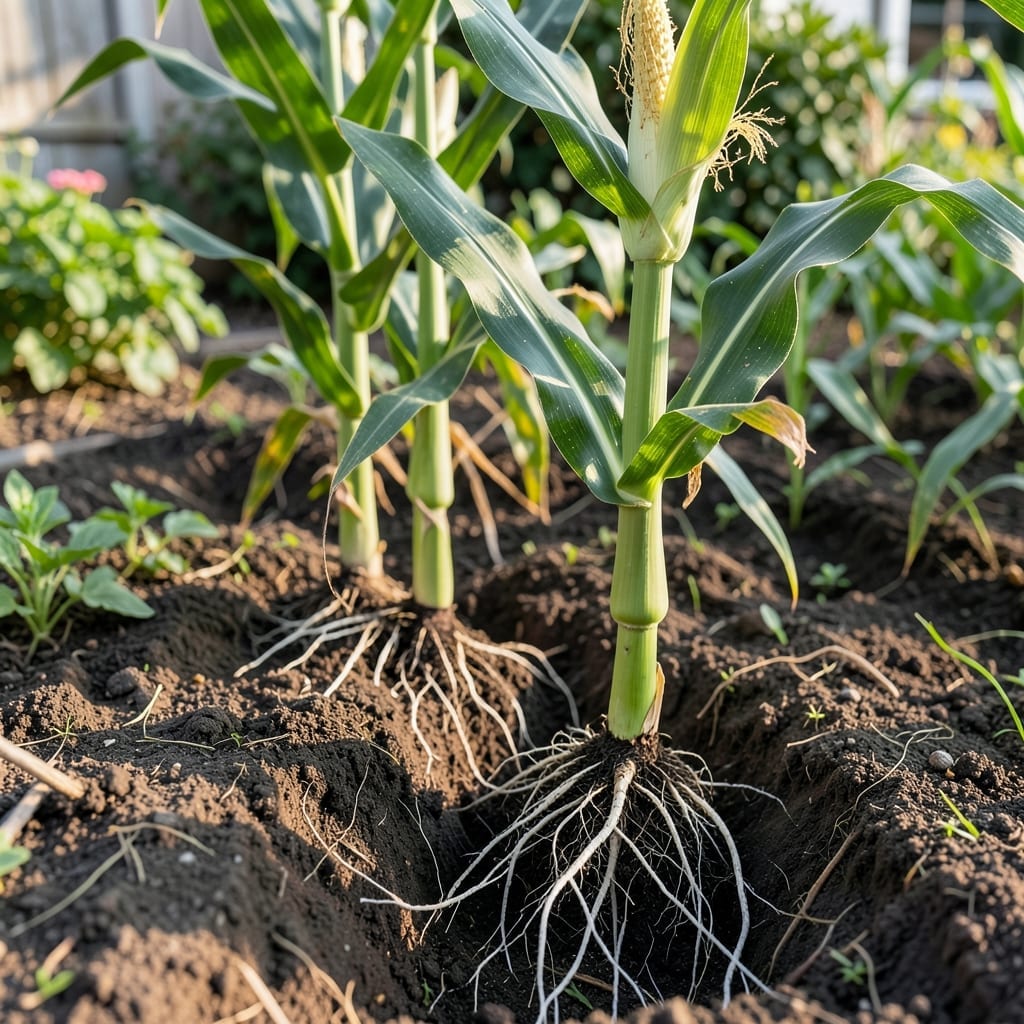
Ever wondered what’s happening beneath the soil when your 🌽 corn plants start towering above you? Those tall stalks rely on an impressive root system that most gardeners underestimate.
Understanding root depth isn’t just academic—it’s the key to better watering, feeding, and overall plant health. Corn doesn’t just grow up; it grows down, often farther than you might expect.
From seedling to maturity, those roots are working overtime to anchor the plant and pull up nutrients. I’ll show you how deep they typically go and why it matters for your harvest.
Discover how to give your corn the best start by optimizing what’s happening below the surface—where the real magic begins.
When I first planted corn, I was amazed by how quickly its root system developed. The depth of corn roots varies significantly as the plant grows, starting shallow and expanding rapidly.
At germination, the primary roots emerge just 1-2 inches deep. Within weeks, secondary roots branch out, reaching 6-12 inches by the seedling stage.
| Growth Stage | Root Depth |
|---|---|
| Germination | 1-2 inches |
| Seedling | 6-12 inches |
| Vegetative | 1-2 feet |
| Tasseling | 2-3 feet |
| Maturity | 3-5 feet |
By the vegetative stage, I noticed roots spreading 1-2 feet deep. This is when the plant starts rapid growth and needs more water and nutrients.
At tasseling, the roots can reach 2-3 feet deep. This depth helps the plant support its tall stalks and developing ears.
At full maturity, corn roots typically extend 3-5 feet deep in ideal conditions. I’ve seen some varieties push roots even deeper in loose, well-drained soil.
The primary root system includes the radicle and seminal roots, which anchor the plant early on. Later, nodal roots emerge from above-ground nodes.
These nodal roots are crucial as they form a dense network that absorbs most of the water and nutrients. They’re also more sensitive to environmental conditions.
In my garden, I’ve found that soil compaction can limit root depth. Loose, well-aerated soil allows roots to grow deeper and stronger, improving overall plant health.
Remember, corn root depth isn’t just about vertical growth. The root spread can extend horizontally up to 1 foot from the stalk, creating a wide support base.
This extensive root system is why corn is so resilient in varying conditions. With proper care, you can maximize root growth for a bountiful harvest 🌱
If you’ve ever struggled with stunted corn plants, the issue might be underground. Root depth isn’t fixed—it’s shaped by your soil, weather, and even how you plant. I’ve seen dramatic differences in root systems based on these factors.
From clay-heavy soils to dry spells, each condition pushes roots to adapt. Understanding these influences helps you create the ideal environment for deep, strong roots that support tall, productive stalks.
In my garden, I’ve noticed corn planted in loose, compost-rich soil develops roots up to 3 feet deep. Meanwhile, in heavy clay, they barely reach 18 inches. The difference in plant stability is striking.
Watering plays a huge role too. Deep, infrequent watering trains roots to grow downward, while frequent shallow watering keeps them near the surface. I always aim for 1 inch per week, especially during tasseling.
Temperature is another game-changer. Corn planted in cold soil struggles to establish deep roots. I wait until soil temps hit 60°F before sowing to give roots their best start.
Finally, don’t overlook plant spacing. Crowded corn competes for resources, stunting root growth. I space my plants 12-18 inches apart for optimal development 🌱