
Beautiful Plants For Your Interior
Beautiful Plants For Your Interior
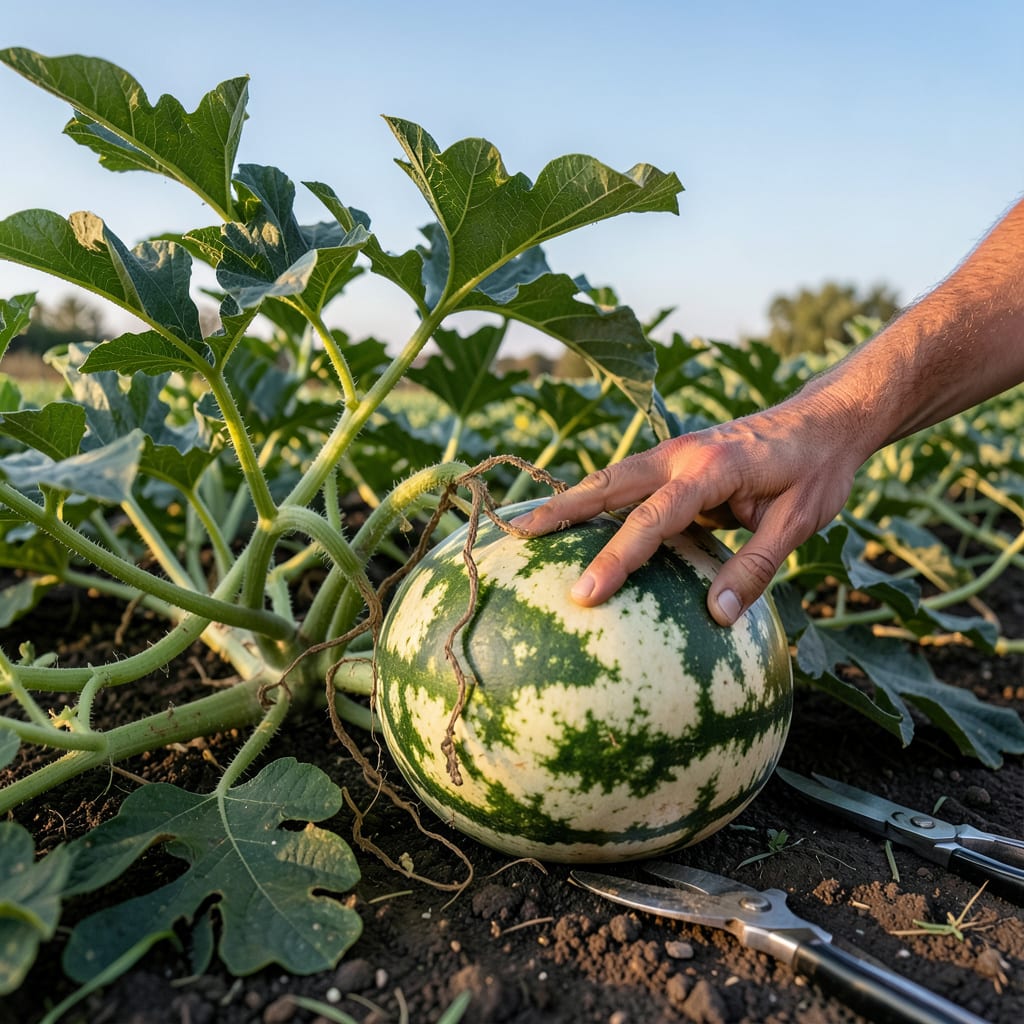
Picking a Watermelon 🍉 at peak ripeness is both an art and a science. Knowing the right signs can mean the difference between a sweet, juicy treat and a bland disappointment.
I’ll show you exactly how to spot the visual, auditory, and tactile clues that signal your Watermelon is ready to come off the vine. No more guessing games.


Timing your watermelon harvest perfectly ensures the best flavor and texture. I’ve found that relying on just one sign isn’t enough—you need to combine multiple clues for accuracy.
Visual cues like rind color and ground spot are the easiest starting points. The underside of the melon, where it touches the soil, should turn from white to cream or yellow when ripe.
The tapping test is a classic method I swear by. A ripe watermelon produces a deep, hollow sound when tapped with your knuckles. An unripe one sounds high-pitched or metallic.
For the tendril method, look at the curly vine near the stem. If it’s green and flexible, the melon isn’t ready. Once it turns brown and crisp, you’re good to go.
The ground spot is a telltale sign. A white or pale green spot means it’s still growing, while a cream or yellow spot indicates ripeness. This works for all varieties.
Don’t overlook the rind’s appearance. A shiny green rind means it’s not ready, but a dull, matte finish suggests it’s time to harvest. Some heirlooms may develop a yellowish tint as well.
Size isn’t always a reliable indicator, but it’s worth noting. Most watermelons reach their full size before ripening. Check your seed packet for the expected mature dimensions for your variety.
I recommend checking these signs in the early morning when the plant is most hydrated. This ensures the most accurate results, especially for the tapping test and ground spot assessment.
If you’re still unsure, combine at least two or three of these methods. For example, check the tendril and ground spot together, then confirm with the tapping sound. This triple-check system rarely fails me.☀️
Even experienced gardeners can misjudge watermelon ripeness. I’ve seen many pick too early because they relied on just one indicator like size or color alone. These mistakes often lead to underripe fruit with poor flavor.
One of the most common errors is ignoring the tendril. Some assume that if the melon looks big enough, it must be ready. But the curly tendril near the stem is a critical sign that’s often overlooked.
Don’t rely on size alone: Big doesn’t always mean ripe.
Color can be misleading: Some varieties stay green when ripe.
Tapping takes practice: A metallic sound means it needs more time.
Check in morning light: Evening tests can give false results.
Another frequent mistake is misunderstanding the tapping test. A ripe watermelon should produce a deep, hollow sound, not a high-pitched or metallic one. It takes practice to distinguish the difference.
The ground spot is often misread too. Some gardeners look for a bright yellow spot, but a cream color is often sufficient. A white spot always means it needs more time on the vine.
I’ve also seen people pick too late, thinking the melon will continue to ripen after harvest. Unlike some fruits, watermelons don’t ripen further once picked, so timing is everything.
To avoid these mistakes, I recommend combining at least two methods for confirmation. Check the tendril and ground spot first, then verify with the tapping test. This approach gives the most reliable results.🌱
Not all watermelons show ripeness the same way. I’ve learned that variety matters when checking for maturity. Seedless types often need extra attention as their signs can be subtler than traditional varieties.
For seeded watermelons, the classic signs like tendril drying and ground spot color work reliably. But with seedless varieties, the tapping test becomes even more important since their rinds stay greener longer.
| Variety | Key Ripeness Signs |
|---|---|
| Seeded | Dry tendril, cream ground spot, hollow sound |
| Seedless | Deep tapping sound, dull rind, yellow underside |
| Heirloom | Yellow tint, rough texture, brown stem |
Heirloom watermelons often develop unique color changes. Many turn yellowish as they ripen, which can be a dead giveaway. Their rinds also tend to become rougher to the touch when ready.
For mini watermelons, size is a better indicator than for larger varieties. These often reach their full size of 3-5 pounds before showing other ripeness signs. Always check the ground spot first with these compact fruits.
I always recommend checking multiple signs regardless of variety. With seedless types, combine the tapping test with the ground spot for best results. This approach works across all watermelon kinds.🌱
A ripe one produces a deep, hollow sound when tapped with your knuckles. An unripe melon sounds high-pitched or metallic. It takes practice to hear the difference.
The curly tendril turns brown and dry when the fruit is ready. If it’s still green and flexible, the watermelon needs more time on the vine.
No, a white ground spot means it’s not ripe yet. Wait until it turns cream or yellow for the best flavor and texture.
No, seedless types often stay greener and rely more on the tapping test. Heirlooms may develop a yellowish tint when ready.
