
Beautiful Plants For Your Interior
Beautiful Plants For Your Interior
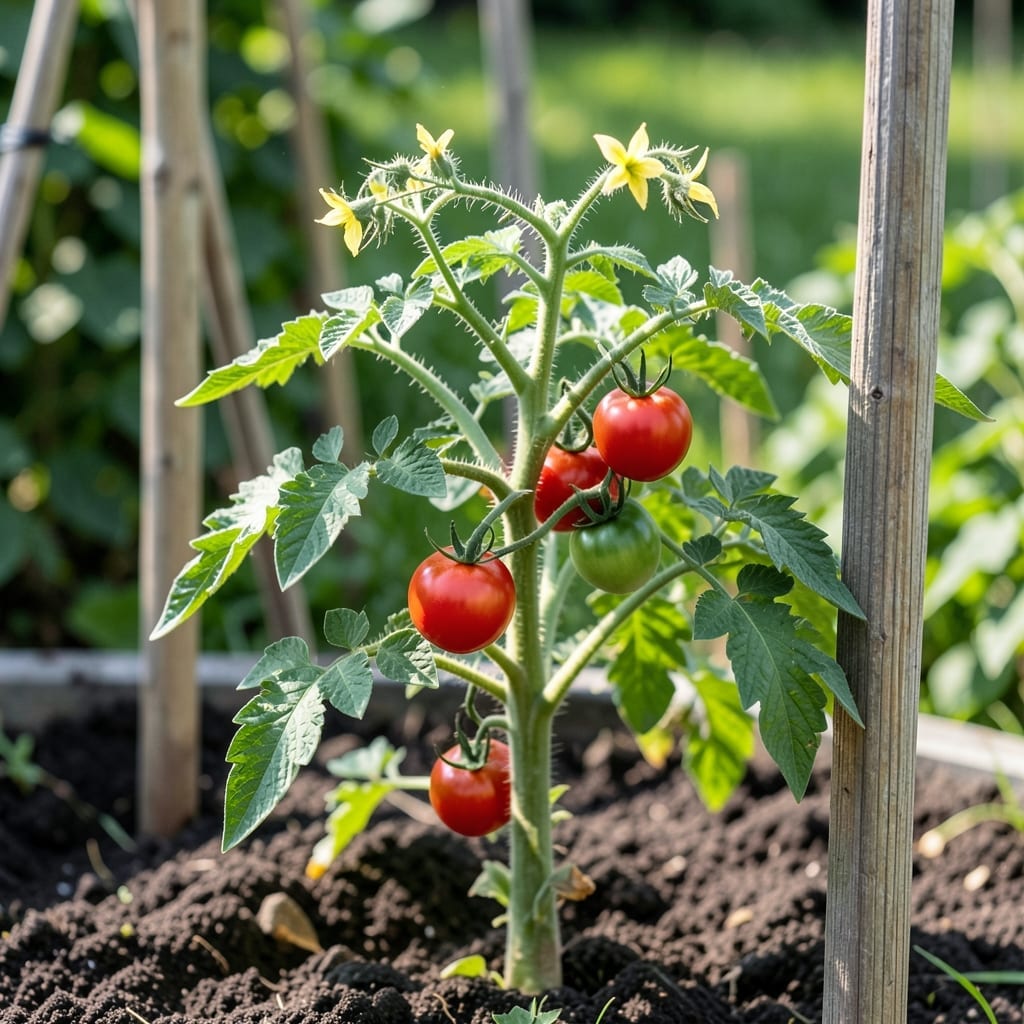
Tomato plants can surprise you with their size range, from tidy 2-foot bush varieties to sprawling 6-foot giants that need serious support. The 🍅 Tomato you choose will dictate your garden’s layout and care routine.
Whether you’re working with a small balcony or a spacious backyard, understanding these dimensions helps prevent overcrowding and ensures healthy growth. I’ve seen firsthand how the wrong assumptions can lead to tangled messes.
Discover how to match plant varieties to your space and set yourself up for a bountiful harvest. It’s simpler than you might think.

Understanding tomato plant size starts with knowing the two main growth types. Determinate tomatoes grow to a compact 3-4 feet and stop, making them ideal for containers.
Indeterminate varieties keep growing until frost, often reaching 6-12 feet with proper support. Their vining habit requires tall stakes or trellises.
| Type | Height Range | Spread | Examples | Best For |
|---|---|---|---|---|
| Determinate | 3-4 ft | 2-3 ft | Roma, Bush Early Girl | Containers, small spaces |
| Indeterminate | 6-12 ft | 3-4 ft | Beefsteak, Cherry | Garden beds, trellises |
| Dwarf | 1-2 ft | 1-2 ft | Tiny Tim, Patio | Hanging baskets, patios |
I always recommend determinate tomatoes for beginners because they’re more predictable. Their bushy growth makes them easier to manage in limited spaces.
Indeterminate tomatoes reward experienced gardeners with continuous harvests but demand more attention. You’ll need to prune regularly and provide sturdy supports.
For container growing, look for dwarf varieties that stay under 2 feet. These compact plants produce surprisingly well in 5-gallon pots on a sunny balcony.
The Beefsteak tomato is a classic example of an indeterminate variety that can reach 8 feet tall in optimal conditions. I’ve seen them outgrow their stakes in just one season.
Remember that soil quality and sunlight directly impact size. Even dwarf varieties will stay smaller if grown in poor conditions or with limited light.
For vertical gardening, cherry tomatoes are excellent choices. Their vigorous growth can be trained up trellises, saving valuable ground space while maximizing yield.
Always check the seed packet for specific size expectations. Some heirloom varieties can surprise you with their unexpected height and spread.
In my experience, giving plants extra root space often results in larger, healthier plants. Consider 18-inch deep containers for best results with container varieties.
The final size of tomato plants isn’t just about the variety—your garden conditions play a huge role. I’ve seen the same Beefsteak variety reach 6 feet in ideal soil but struggle to hit 4 feet in poor conditions.
Sunlight is the biggest factor—6-8 hours daily produces the tallest, most vigorous plants. Without enough light, even indeterminate tomatoes will stay stunted and produce less fruit.
Container-grown tomatoes often stay smaller than their in-ground counterparts. Even with the best care, root restriction limits their potential height by about 20-30%.
I’ve found that cherry tomatoes are the most adaptable—they’ll grow vigorously even in suboptimal conditions, though their final size may be reduced. Their smaller fruit means the plant can focus energy on growth.
Pruning techniques can control size too. Removing suckers from indeterminate varieties keeps them more compact while increasing air circulation. Just don’t overdo it, or you’ll reduce your harvest.
Soil temperature matters more than many realize. Tomato plants grow fastest when soil stays between 70-85°F. Cooler soils slow growth significantly, resulting in smaller plants.
In my experience, mulching helps maintain consistent soil temps and moisture, which directly impacts how tall your tomatoes will grow by season’s end 🌱