
Beautiful Plants For Your Interior
Beautiful Plants For Your Interior
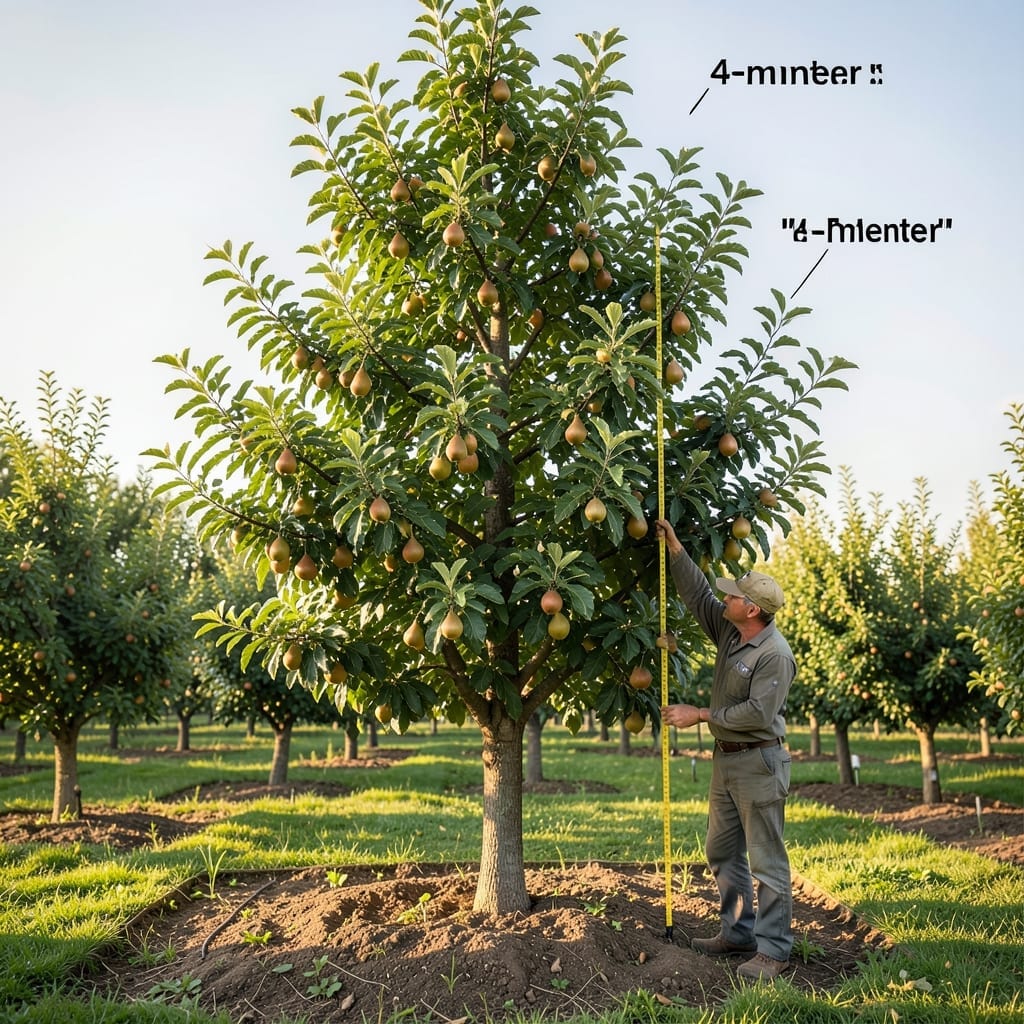
Pear trees are a beautiful and productive addition to any garden, but their mature size can surprise even experienced growers. Knowing how big they get is crucial for proper spacing and landscape planning.
I’ve seen too many gardeners plant their 🍐 Pear Tree without considering its full potential. Whether you’re planning a small backyard orchard or just adding one tree, understanding its dimensions will save you headaches later.
Discover the typical height and spread of different pear tree varieties, plus tips to manage their size effectively. Let’s get started.
Understanding the mature size of pear trees is essential for garden planning. Standard varieties can reach 20-40 feet tall with a similar spread, while dwarf types stay compact at 8-12 feet in both dimensions.
Semi-dwarf pear trees typically grow to 12-18 feet, offering a middle ground for many landscapes. The final size depends on factors like rootstock choice, soil quality, and local climate conditions.
European pear varieties like Bartlett or Anjou often reach the upper end of the standard size range. These trees need ample space to develop their full canopy and produce abundant fruit.
Asian pears, such as Shinseiki, tend to be slightly smaller, usually maxing out at 15-25 feet. Their growth habit is often more upright, which can be advantageous in tighter spaces.
The rootstock significantly influences final size. Dwarfing rootstocks restrict growth, while vigorous types allow trees to reach their maximum potential. Always check the rootstock when purchasing bare-root trees.
Climate plays a role too. In warmer zones, pear trees may grow larger than in cooler regions with shorter growing seasons. Proper pruning techniques can help manage size regardless of variety.
For container growing, only dwarf varieties are suitable. They need large pots with good drainage and regular feeding to thrive in confined spaces.
Remember that mature size is typically reached after 10-15 years. Young trees grow rapidly at first, then slow as they approach their full dimensions.
When planting, consider the tree’s canopy spread as much as its height. A wide-spreading pear tree needs 15-20 feet of clearance from structures or other large plants.
🌳Managing pear tree size is essential for small gardens. With the right techniques, even standard varieties can be kept at manageable dimensions without sacrificing fruit production or health.
I’ve successfully used pruning and training methods to keep pear trees thriving in limited spaces. The key is starting early and being consistent with your approach.
For dwarf varieties, container growing is an excellent option. Use a 20-gallon pot with drainage holes and a quality potting mix. Remember that container-grown trees need more frequent watering and feeding.
Espalier training is perfect for narrow spaces. This method involves training branches flat against a support structure. It’s time-consuming but creates a beautiful and space-efficient tree form.
When pruning, focus on removing water sprouts and suckers first. Then thin out crowded branches to improve air circulation. Always use sharp pruning tools to make clean cuts.
Remember that size control is an ongoing process. Even with dwarf varieties, regular maintenance is needed to keep them at your desired size. I recommend checking your trees monthly during the growing season.
🌳