
Beautiful Plants For Your Interior
Beautiful Plants For Your Interior
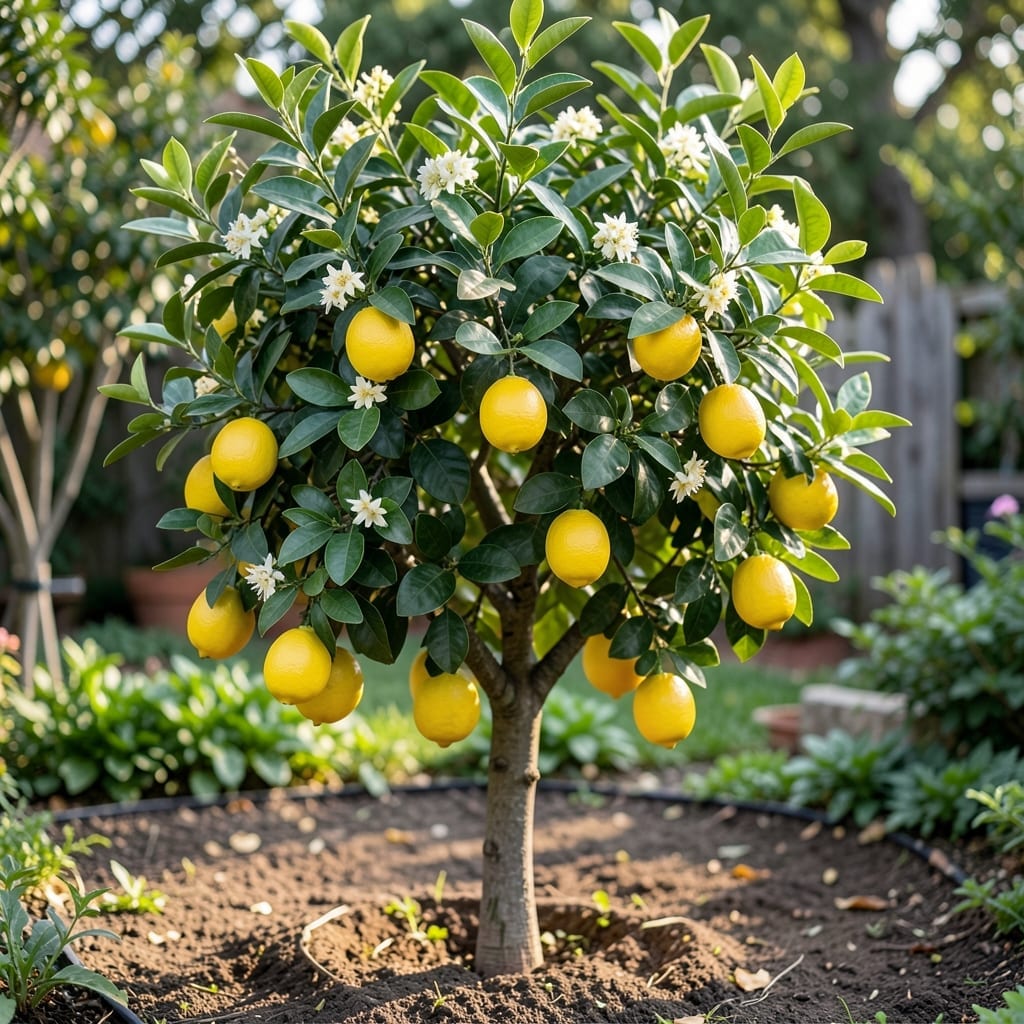
Lemon trees can range from compact patio plants to towering orchard giants, making their size a crucial factor for any gardener. The 🍋 Lemon Tree you picture in your backyard might not stay small for long.
Whether you’re planning a container garden or a full orchard, knowing the potential height and spread helps you design the perfect space. Some varieties stay manageable while others can reach 30 feet tall.
Discover how different types grow and what you can do to control their size. Let’s explore what works best for your garden vision.
The mature size of a lemon tree varies dramatically by type. Standard varieties like Eureka or Lisbon can reach 20-30 feet tall with a 15-25 foot spread, towering over most gardens.
For smaller spaces, dwarf lemon trees like Meyer typically max out at 8-12 feet in both height and width. These compact varieties are perfect for containers or small yards.
| Variety | Type | Mature Height | Mature Width |
|---|---|---|---|
| Meyer | Dwarf | 8-12 ft | 6-10 ft |
| Eureka | Standard | 20-30 ft | 15-25 ft |
| Lisbon | Standard | 20-30 ft | 15-25 ft |
| Ponderosa | Semi-Dwarf | 12-18 ft | 10-15 ft |
Semi-dwarf varieties like Ponderosa offer a middle ground, growing to 12-18 feet tall with a 10-15 foot spread. These are ideal for gardeners with moderate space.
I’ve found that Meyer lemons are the most popular for containers because they stay small and produce abundant fruit. Their compact size makes them perfect for patios and balconies.
In my experience, standard lemon trees need plenty of room to thrive. Planting them too close to structures can lead to stunted growth or damaged property as they mature.
For orchard settings, I recommend spacing standard varieties at least 25 feet apart to ensure proper air circulation and sunlight exposure for each tree.
Dwarf lemon trees are surprisingly productive despite their size. With proper care, they can yield dozens of lemons each season while staying manageable.
Remember that these size estimates are for mature trees in ideal conditions. Your actual results may vary based on climate, soil quality, and care practices.
When selecting a lemon tree, consider your space limitations and long-term maintenance capabilities. A dwarf variety might be the perfect solution for urban gardeners.
I always advise gardeners to check their USDA hardiness zone before planting. Most lemon trees thrive in zones 9-11, but some cold-hardy varieties can handle zone 8 with protection.
🌳Several key factors determine how large your lemon tree will grow. I’ve seen firsthand how climate and growing conditions can dramatically affect a tree’s final size.
Warm climates with long growing seasons tend to produce the largest trees, while cooler areas may result in smaller, slower-growing specimens.
The rootstock your lemon tree is grafted onto plays a huge role. Dwarfing rootstocks can keep even standard varieties at 10-12 feet, while vigorous rootstocks may push growth beyond typical limits.
Container growing naturally restricts size. I’ve grown Meyer lemons in pots that stayed under 6 feet tall for years. The container limits root development, which in turn limits top growth.
Pruning is your most powerful tool for size control. Regular pruning not only keeps your tree at a manageable size but also encourages better fruit production and air circulation.
In my experience, soil quality makes a noticeable difference. Trees in rich, well-draining soil grow faster and larger than those struggling in poor soil. A consistent fertilizing schedule also supports healthy growth.
Remember that water availability affects size too. Trees with consistent moisture grow more vigorously than those subject to drought stress. However, overwatering can be just as harmful as underwatering.
🌿