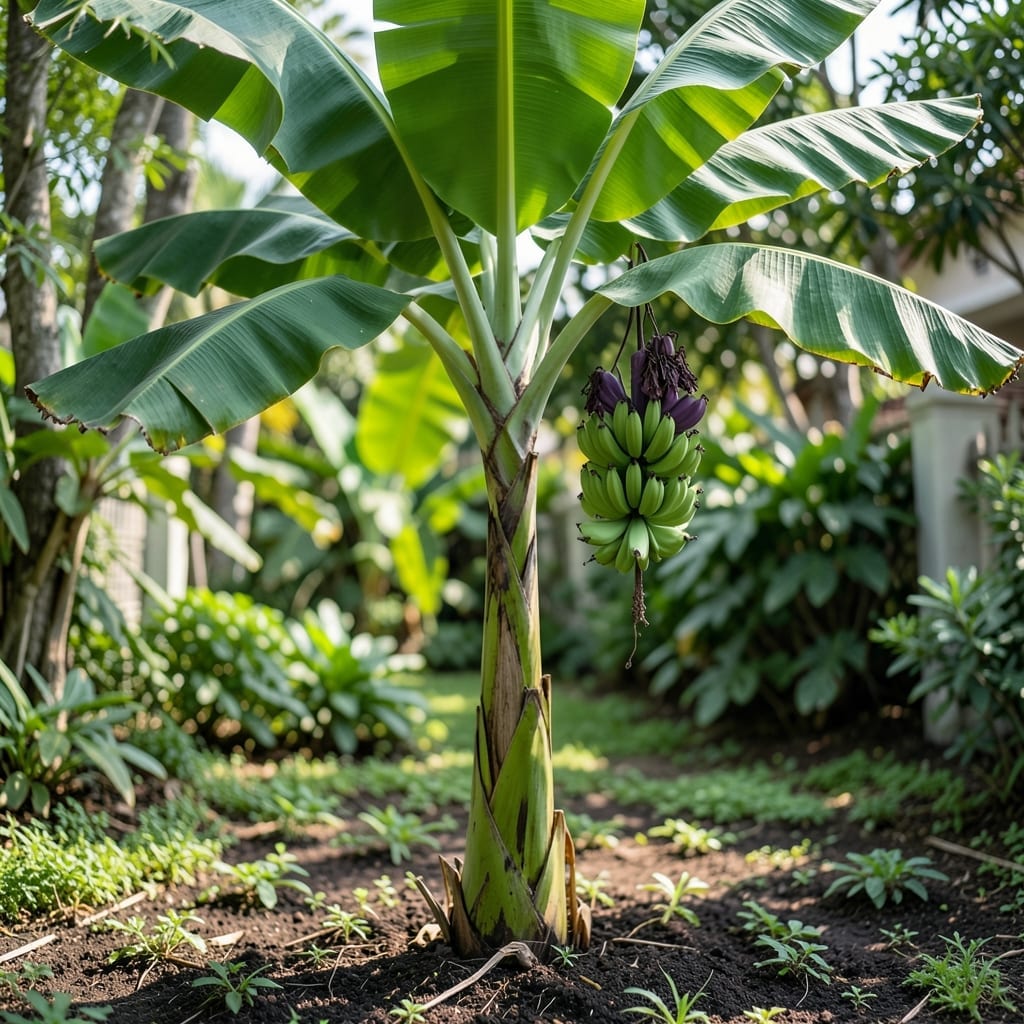
Banana trees come in a surprising range of sizes, from compact dwarf varieties to towering giants. I’ve seen Dwarf Cavendish stay manageable at 8-12 feet, perfect for smaller gardens or containers.
For gardeners with limited space, dwarf varieties are a game-changer. Dwarf Cavendish stays compact but still produces full-sized fruit. It’s my top recommendation for container growing.
Climate plays a huge role in final size. In tropical zones like USDA 10-11, banana trees reach their maximum potential. Cooler areas may result in slightly smaller plants.
Soil quality matters just as much. Rich, well-draining soil with plenty of organic matter supports robust growth. I always mix in compost before planting to give my bananas the best start.
Watering consistently is key, especially during the first year. These plants are thirsty, needing deep watering weekly in most climates. Just be sure your soil drains well to prevent root rot.
Pruning helps manage size and encourages better fruit production. I remove older leaves regularly to keep my trees at a manageable height and improve airflow.
Remember, even dwarf varieties need space for their roots to spread. A 3-4 foot diameter area is ideal for most banana trees, whether in ground or in a large container.
Space Requirements and Planting Tips for Banana Trees
Banana trees need plenty of room to thrive, as their size can quickly overwhelm small gardens. I’ve learned that proper spacing prevents competition for nutrients and sunlight. Most varieties require 10-15 feet between plants for optimal growth.
For smaller gardens, dwarf varieties like Dwarf Cavendish work well in large containers. Even these compact types need 3-5 feet of space to reach their 8-12 foot mature height. Always consider the mature spread when planting.
Banana Tree Spacing Guide
- Dwarf varieties: 3-5 feet apart
- Semi-dwarf types: 6-8 feet apart
- Standard trees: 10-15 feet apart
- Container growing: 20+ gallon pots
- Row planting: 12-15 feet between rows
I always recommend planting banana trees in full sun locations with well-draining soil. These tropical plants love warmth and moisture but hate soggy roots. A south-facing spot in your yard is often ideal.
In colder climates, consider potted banana trees that can be moved indoors during winter. Even in containers, they’ll need consistent watering and occasional feeding to support their rapid growth.
Remember that banana trees grow very quickly under ideal conditions. I’ve seen mine grow 6-8 feet in a single season with proper care. This rapid growth means you’ll need to plan for their final size from day one.
For the best results, plant in spring or early summer when the soil has warmed. This gives your trees the entire growing season to establish strong root systems before any potential cold weather.
With the right spacing and location, your banana trees will reward you with lush foliage and potentially delicious fruit for years to come 🌿
★★★★★4.6(14 reviews)