
Beautiful Plants For Your Interior
Beautiful Plants For Your Interior
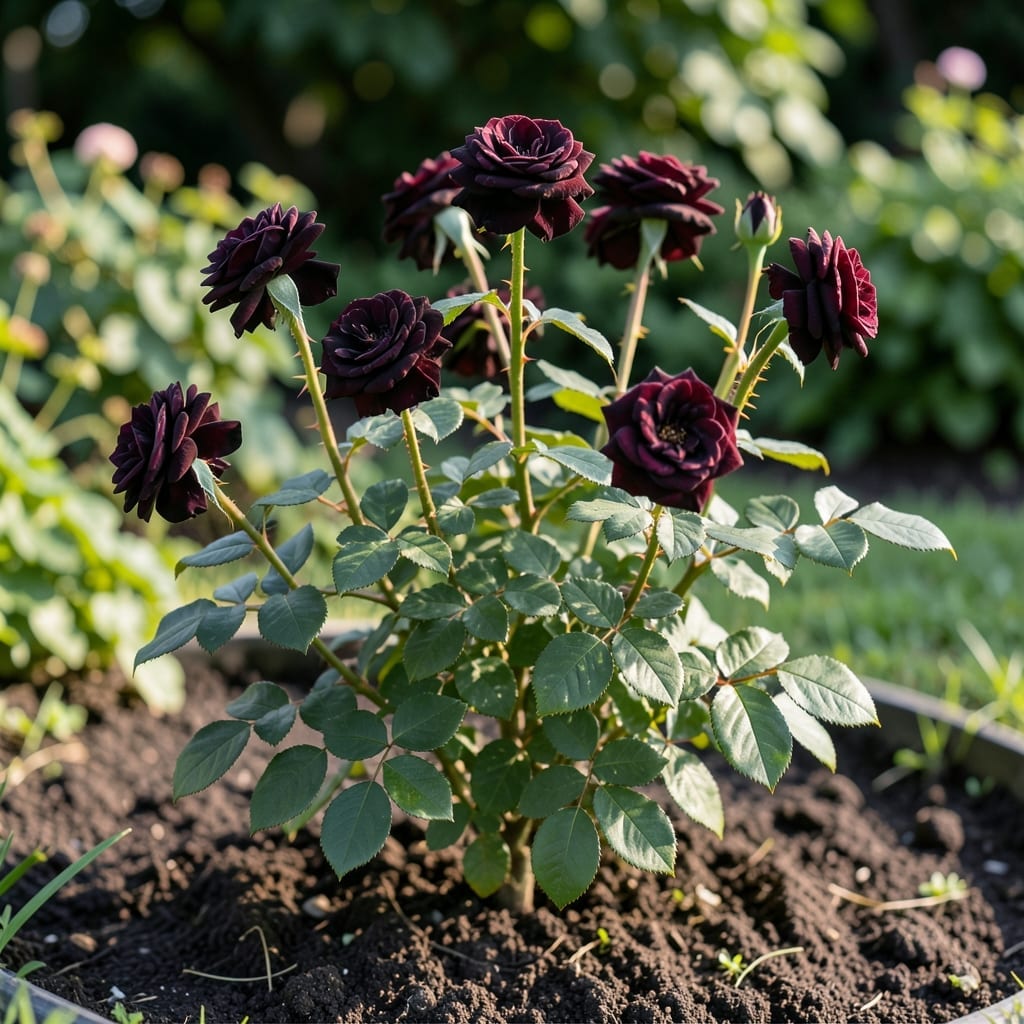
Black roses are created through artificial dyeing of dark red or purple roses, or naturally by breeding deep burgundy varieties. True black roses don’t exist in nature due to pigment limitations.
What fascinates me is how growers achieve those deep burgundy tones naturally through selective breeding and pigment manipulation. The process involves enhancing anthocyanins, the compounds responsible for dark hues in roses. For artificial methods, florists often use food-safe dyes to transform lighter blooms into striking black varieties that maintain their color for weeks. 🌟
💡 In This Article
The deep burgundy hues in roses come from concentrated anthocyanins, pigments that intensify with selective breeding. Growers cross dark red varieties like ‘Black Baccara’ or ‘Onyx’ to enhance these compounds, creating richer, near-black tones. The process takes years, as each generation must be evaluated for color depth and stability. 🔥
Environmental factors play a crucial role in color development. Cooler temperatures (around 60-65°F) during bud formation increase anthocyanin production, while full sun exposure deepens the hue. Soil pH also matters—slightly acidic conditions (pH 6.0-6.5) help maintain vibrant dark tones, whereas alkaline soil can mute them. ✨
What most don’t realize is that true black is impossible because roses lack the genetic capacity to produce melanin, the pigment responsible for absolute black in nature. Instead, the darkest roses achieve their appearance through layered anthocyanins that absorb most light wavelengths, creating an illusion of black.
The petals often have a velvety texture that enhances this effect. 💫
Even the darkest natural varieties, like ‘Black Prince’, appear more deep purple or maroon under close inspection. Light reflection off the petal surface reveals subtle red or purple undertones, proving that nature’s “black” is always a rich, complex shade rather than pure black.
This is why artificial dyeing remains popular for achieving a true black aesthetic. ⚡
The breeding process also affects other rose characteristics. Darker varieties often have stronger fragrances, with notes of spice or fruit complementing their dramatic appearance. However, they may require more care, as their deep coloration can make them more susceptible to sunburn in extreme heat. 🌟
Roses lack the genetic ability to produce melanin, the pigment for true black. Instead, the darkest varieties use concentrated anthocyanins to create deep burgundy tones that appear nearly black under certain light. The petals absorb most light wavelengths, creating an illusion of black.
White or very light-colored roses absorb dye most effectively. For a richer result, start with dark red or burgundy varieties like ‘Black Baccara’. These take dye more evenly, producing a deeper, more natural-looking black.
Typically 12-24 hours in a dye solution for noticeable color change. For deeper black tones, repeat the process with fresh dye. Check periodically as petals darken from the edges inward.
Yes, but it’s less effective. Food coloring is thinner and may not produce as deep or long-lasting a color. For best results, use floral-specific dyes, which are formulated to bond better with the petals.