
Beautiful Plants For Your Interior
Beautiful Plants For Your Interior
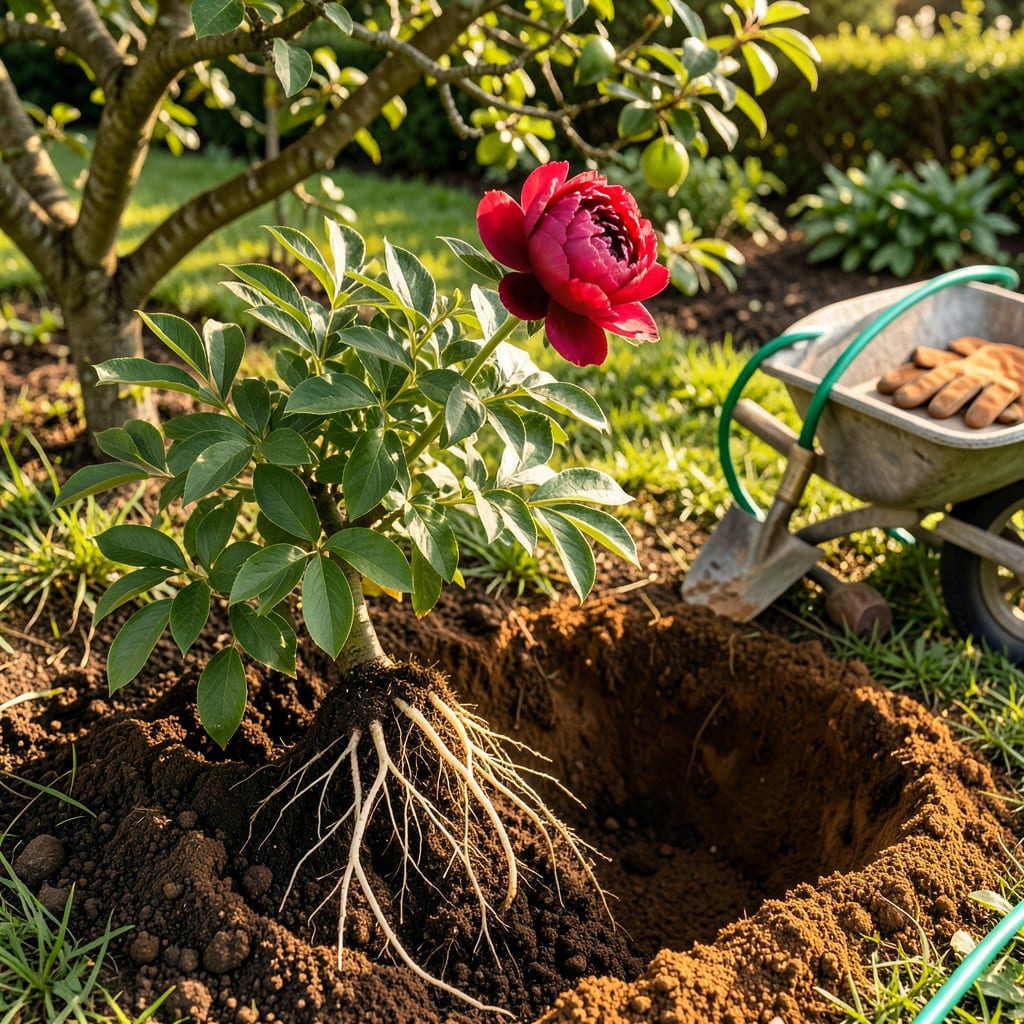
Peonies can thrive for decades in the right location—but when they need moving, timing and technique make all the difference. After relocating my own established plants, I learned that early fall (September in most zones) gives roots 6-8 weeks to establish before winter dormancy, ensuring robust spring growth.
The process requires careful preparation: selecting a sunny, well-drained site and digging wide (not deep) to preserve the root system. Planting depth is critical—bury the pink “eyes” 1-2 inches below soil, or you’ll sacrifice blooms. With proper aftercare, transplanted peonies often outperform their original location within two seasons.
📚 In This Guide
Timing and technique make all the difference—follow this method for blooms that thrive in their new home.
Early fall is non-negotiable for peony transplantation. Aim for September through early October, at least 6 weeks before your first hard frost. This gives roots time to establish before winter dormancy while avoiding the stress of summer heat. You’ll see new growth emerge in spring if the timing is right.
Never transplant in spring or summer—disturbing roots during active growth shocks the plant and sacrifices next year’s blooms. If you must move a peony outside this window, containerize it temporarily and keep it shaded until fall planting. The plant will survive, but flowering may be delayed a full season.
Select a location with full sun (6+ hours daily) and well-draining soil. Peonies tolerate partial shade but won’t bloom profusely. Dig a hole 12-18 inches wide and 12 inches deep—twice the width of the root ball to accommodate future growth. Mix the excavated soil with 1-2 inches of compost to improve fertility without making it too rich.
Test drainage by filling the hole with water. If it doesn’t drain within 30 minutes, amend with coarse sand or plant in a raised bed. Peonies rot in soggy soil. Position the hole so the plant sits at the same depth as before—you’ll see the old soil line on the stem as a guide.
Use a garden fork to loosen the soil in a 12-inch radius around the plant before lifting. Insert the fork at a 45-degree angle to minimize root damage. Once loosened, grasp the base of the stems and lift the entire root mass. Shake off excess soil to expose the tuberous roots and eyes (the pinkish buds where next year’s stems form).
If dividing, use a clean knife to cut the root clump into sections, ensuring each has 3-5 eyes and a portion of the root system. Discard any sections with soft, mushy roots—these indicate rot. Healthy roots feel firm and fibrous. Soak the divisions in water for 10-15 minutes to rehydrate before replanting.
Place the peony in the prepared hole so the eyes sit 1-2 inches below the soil surface in cold climates or at soil level in warmer zones. Planting too deep delays blooming; too shallow exposes roots to freeze-thaw cycles. Backfill with the amended soil, gently firming it around the roots to eliminate air pockets. Water thoroughly until the soil is saturated but not puddled.
Create a 2-inch-high soil berm around the plant’s perimeter to direct water toward the roots during the first year. Mulch with 1-2 inches of shredded bark, keeping it 3 inches away from the stem to prevent rot. The mulch conserves moisture and insulates roots but should never touch the plant directly.
Water deeply once a week for the first month unless rain provides 1 inch of moisture weekly. Check soil moisture by digging 2 inches down—it should feel damp but not soggy. Avoid fertilizing until spring; fresh compost in the planting hole provides enough nutrients for establishment. You’ll see new red shoots emerge in early spring if the transplant succeeded.
Stake the plant if the stems flop—transplanted peonies sometimes produce weaker growth the first year. Remove any flower buds that form the following spring; this directs energy to root development. By the second year, your peony will bloom normally, often with larger flowers due to reduced competition from neighboring plants.
Here’s what I’ve learned from years of moving peonies—small details that make a huge difference in how well they settle into their new home.
Timing is Everything: That September through early October window mentioned in Step 1 isn’t arbitrary. I’ve tried pushing it to late October, and the roots just don’t establish properly before winter. The 6 weeks before first frost guideline gives you a buffer—count backward from your average first frost date to schedule the move. If you’re in a region with unpredictable falls, err on the earlier side. The plant will thank you with better blooms next year.
Root Handling Technique: When you’re working through Step 3, resist the urge to wash the roots clean. Gently shaking off excess soil is enough—you want to preserve those beneficial soil microbes. The 10-15 minute soak for divisions isn’t just about hydration; it helps the roots absorb water before they’re surrounded by dry soil again. I use lukewarm water for this step—it seems to perks up the roots faster than cold water.
Depth Precision: In Step 4, that 1-2 inches below soil surface measurement for the eyes is critical. I use a ruler the first few times until I develop an eye for it. Too deep and you’ll get leaves but no flowers; too shallow and the roots heave out of the ground during freeze-thaw cycles. In warmer zones where you plant at soil level, watch for the eyes drying out—apply a thin layer of mulch (but keep it 3 inches away from the stem as mentioned) to protect them.
Watering Wisdom: The once a week watering in Step 5 assumes average conditions. In sandy soil, you might need to water every 5 days—check that 2 inches down moisture level religiously. I’ve ruined transplants by assuming rain was enough, only to find bone-dry soil beneath the surface. If your peony came from a wetter location, it’ll need extra attention those first few weeks as it adjusts to the new drainage.
Avoid summer (heat stress) and winter (frozen ground). Early fall (6-8 weeks before first frost) is ideal—roots establish before dormancy. Spring is a second-best option only if absolutely necessary, but expect delayed blooms.
Plant the “eyes” (buds) no deeper than 1–2 inches below soil. Too deep = fewer blooms! In cold climates, aim for 1 inch; warmer zones can go 2 inches. Pro tip: Mark the spot with a stick to avoid over-mulching later.
Patience! It may take 1–3 years to recover. Check planting depth, sunlight (6+ hours/day), and soil drainage. Avoid high-nitrogen fertilizers—use phosphorus-rich options (like bone meal) to encourage blooms.
Yes! Divide mature clumps (3+ years old) by cutting roots into sections with 3–5 eyes each. Discard woody centers. Replant immediately, and water well. Best done in fall for minimal shock.
Well-draining, fertile soil is key. Amend clay or sandy soil with compost. Aim for neutral pH (6.5–7.0). Avoid soggy spots—peonies hate “wet feet” and may rot. A 2-inch mulch layer helps retain moisture without suffocating roots.
