
Beautiful Plants For Your Interior
Beautiful Plants For Your Interior
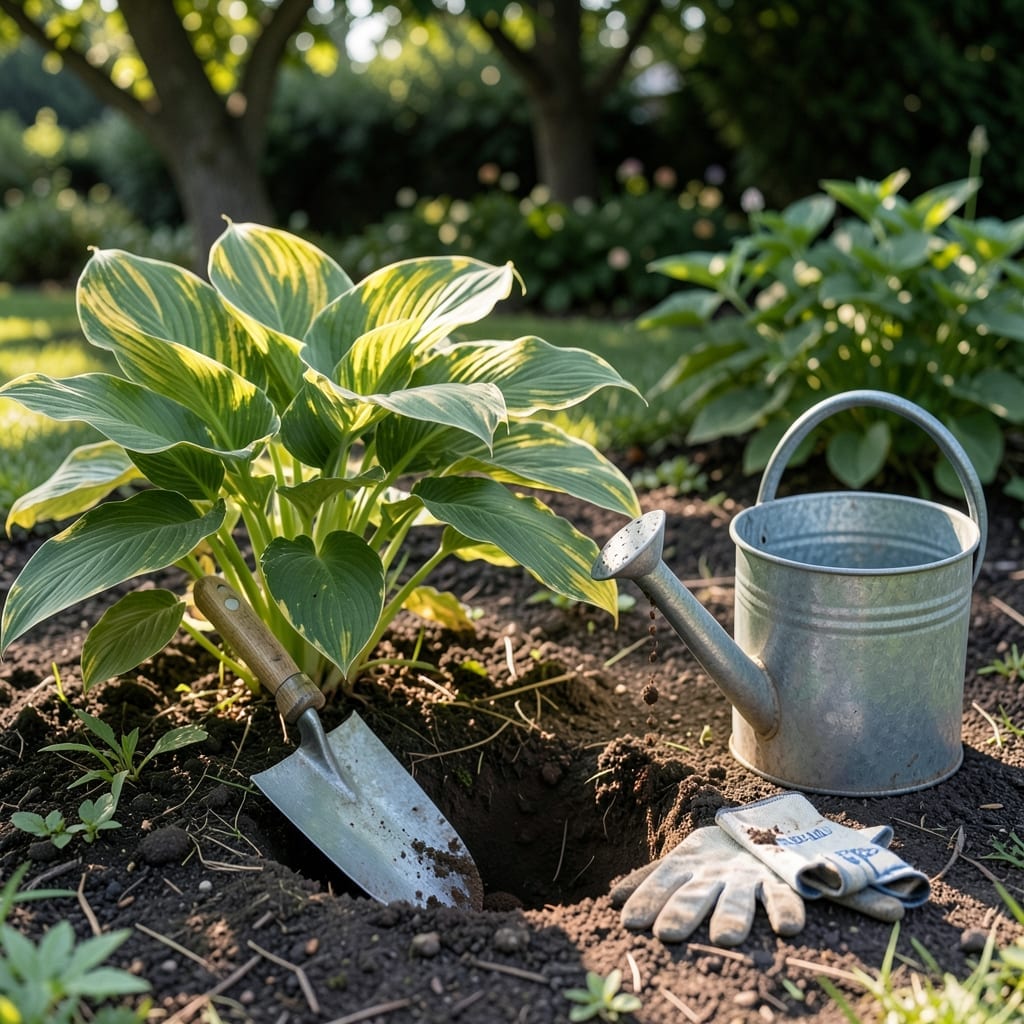
Wilting hostas after transplanting hit me hard the first time. 🌿 The leaves droop, edges brown, and you swear you’ve killed them.
Turns out, it’s normal. Roots need time to re-establish in new soil, and hostas react dramatically to the move. I’ve learned that 2-3 weeks of patience plus the right care brings them back stronger.
You’ll see new growth emerge from the center first. Keep soil consistently moist (not soggy) and provide afternoon shade. The wilting leaves won’t recover, but fresh ones will.
This works for any hosta variety, from blue giants to miniatures. They bounce back faster than you’d think.
Transplant shock in hostas occurs when the plant struggles to adapt to its new environment. Several key factors disrupt its normal physiological processes, leading to wilting, yellowing, or stunted growth. Understanding these causes helps you prevent or mitigate the issue effectively.
Hostas have delicate, fibrous root systems that are highly sensitive to disruption. When dug up, roots lose fine root hairs responsible for water and nutrient absorption. This damage reduces the plant’s ability to take up moisture, causing immediate stress. Even gentle handling can sever these critical structures, delaying recovery.
Transplanting disrupts the plant’s hydraulic continuity—the flow of water from roots to leaves. If the root ball dries out or becomes waterlogged, the hosta cannot regulate its internal water pressure (turgor). Underwatering leads to wilting, while overwatering suffocates roots, both triggering shock symptoms.
Sudden shifts in light, temperature, or humidity overwhelm the hosta’s adaptive mechanisms. Moving from shade to sun, for example, increases transpiration (water loss through leaves) faster than the compromised roots can replenish. Similarly, temperature swings disrupt enzyme activity, slowing growth and recovery.
Hostas thrive in moist, well-draining, organic-rich soil. Transplanting into compacted, sandy, or nutrient-poor soil limits root expansion and access to essential nutrients like nitrogen and potassium. Poor soil structure also restricts oxygen flow to roots, further stressing the plant.
Transplant shock in hostas is fixable with the right care. Below are targeted solutions for common causes, plus tips to keep your plants thriving long-term.
If roots were injured during transplanting, trim any broken or mushy roots with clean shears. Replant in loose, well-draining soil and water deeply to help roots re-establish. Prevention tip: Always lift hostas with a wide berry of soil around the roots to minimize disturbance. 💡
Wilting often signals underwatering or overwatering. Check soil moisture daily—keep it evenly damp (not soggy) for the first two weeks. Use mulch to retain moisture. Prevention tip: Water at dawn to reduce evaporation and fungal risks. 🌡️
Move hostas to a shady spot immediately if leaves appear scorched. Use a shade cloth for 3–5 days post-transplant. Prevention tip: Avoid transplanting during peak summer heat; spring or fall is ideal. ✨
A weak, pale hosta may need a boost. Apply a balanced, water-soluble fertilizer (10-10-10) at half strength after one week. Prevention tip: Amend soil with compost before planting to provide slow-release nutrients. 🎯
Strong winds dry out leaves and stress the plant. Erect a temporary windbreak or relocate to a calmer area. Prevention tip: Choose a sheltered transplant site from the start. 🌿
Most hostas bounce back in 2-3 weeks with proper care. New growth appears from the center first, while wilted leaves won’t recover. Keep soil consistently moist and provide afternoon shade to speed up the process.
Yes, trim severely damaged leaves to redirect energy to new growth. Use clean shears and remove only the worst leaves, leaving healthy foliage to support recovery. Never remove more than 1/3 of the plant at once.
Evening is ideal—cooler temps reduce stress on the plant. If planting in the morning, do it early to avoid midday heat. Always water thoroughly after transplanting, regardless of timing.
Wait at least 1 week before fertilizing to avoid burning tender roots. Use a balanced, water-soluble fertilizer at half strength once the plant shows new growth. Over-fertilizing can worsen shock.