
Beautiful Plants For Your Interior
Beautiful Plants For Your Interior
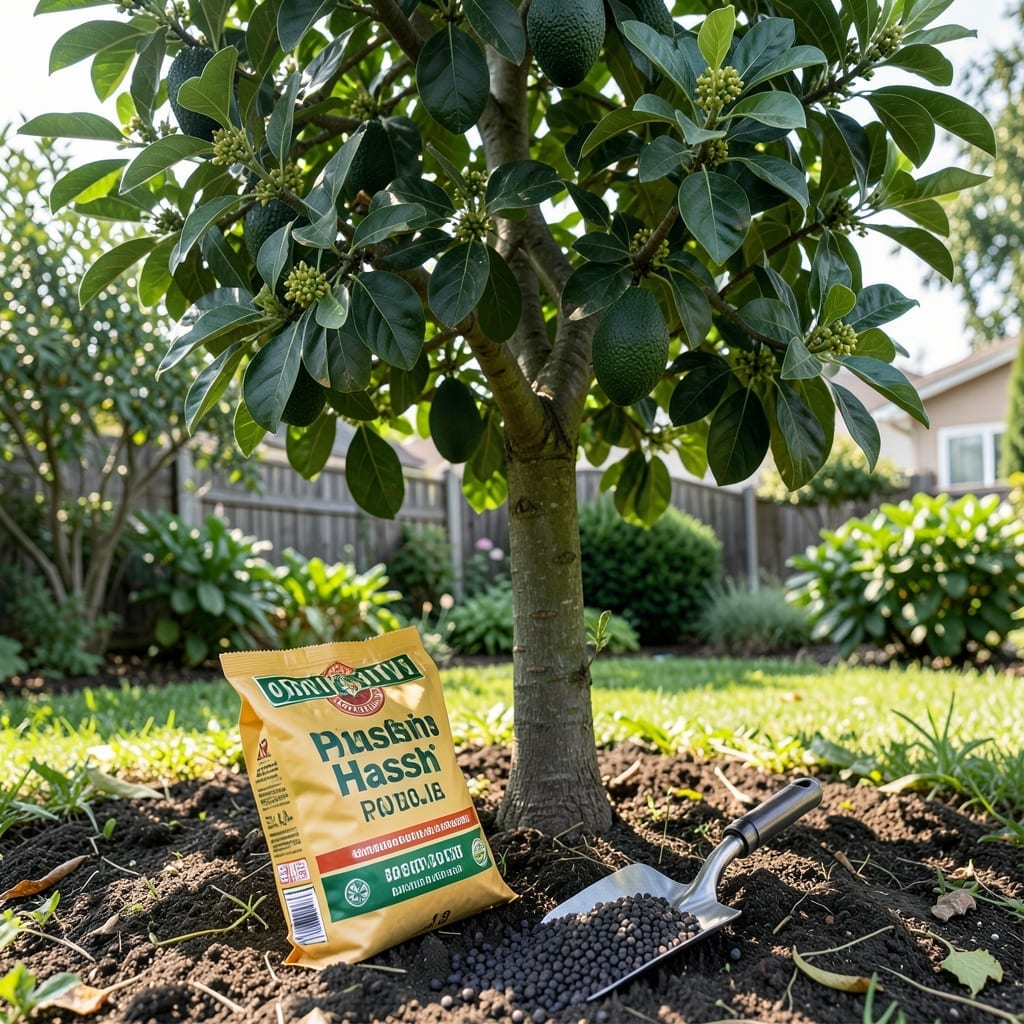
Your Hass Avocado Tree 🥑 could be just one fertilizer choice away from thriving like never before. The right nutrients make all the difference between a struggling plant and one that produces healthy fruit year after year.
I’ve seen too many gardeners unknowingly harm their trees with the wrong approach. What your Hass Avocado Tree needs is a carefully balanced mix to support its unique growth patterns.
Discover how to give your tree exactly what it craves, when it needs it most. Let’s set your Hass Avocado Tree up for success.
Choosing the right fertilizer for your Hass avocado tree is crucial at every stage. Young trees need a balanced NPK ratio, like 6-6-6, to establish strong roots. As they mature, a 8-3-9 blend supports foliage and fruit production.
Seasonal timing matters too. I always apply fertilizer in early spring to kickstart growth, then light feedings in summer and fall. Winter is a no-go—your tree is dormant and won’t benefit.
Hass Avocado Tree Fertilizer by Growth Stage
| Growth Stage | Recommended NPK | Key Nutrients | Application Time |
|---|---|---|---|
| Young Trees | 6-6-6 | Nitrogen, Phosphorus, Potassium | Early Spring |
| Mature Trees | 8-3-9 | Potassium, Zinc, Iron | Spring, Light Summer |
| Fruiting Stage | 8-3-9 or 10-5-10 | Potassium, Magnesium | Early Spring, Fall |
For young Hass avocado trees, I recommend starting with a slow-release fertilizer. This prevents nutrient burn and ensures steady growth. Look for products labeled for citrus or avocado trees—they’re formulated perfectly.
Mature trees benefit from higher potassium to boost fruit quality. I’ve seen amazing results with avocado-specific fertilizers that include zinc and iron. These micronutrients are often overlooked but vital.
Don’t forget micronutrients. Zinc deficiency shows as yellowing leaves. I always add a zinc spray if I notice this. Iron is another must—chelated iron works best in alkaline soils.
Timing your fertilizer application is key. I apply in early morning when the soil is moist. This helps prevent root burn. Always water deeply after fertilizing to distribute nutrients evenly.
For fruiting trees, switch to a higher potassium formula like 10-5-10. This supports flowering and fruit set. I’ve found that organic options like fish emulsion work well here too.
Avoid fertilizing during drought or extreme heat. Stressing the tree with extra nutrients when it’s already struggling can do more harm than good. I wait until conditions improve.
Lastly, always test your soil before applying fertilizer. A simple soil test kit reveals what’s missing. I do this every spring and fall to adjust my approach.
With the right care, your Hass avocado tree will reward you with lush growth and abundant fruit for years to come 🌳
When feeding your Hass avocado tree, the choice between organic and synthetic fertilizers can feel overwhelming. I’ve tested both and found each has distinct advantages for your tree’s needs.
Organic options like compost or fish emulsion improve soil health long-term. Synthetic fertilizers offer quick nutrient delivery and precise NPK ratios for immediate needs.
Organic vs Synthetic Fertilizers
✅ Organic Pros
❌ Organic Cons
✅ Synthetic Pros
❌ Synthetic Cons
I’ve had great success with organic fertilizers for my Hass avocado trees. They build healthy soil that supports long-term growth. Compost tea is my go-to for a nutrient boost.
Synthetic fertilizers work well when I need quick results. For example, if my tree shows nitrogen deficiency, a fast-acting synthetic can turn those yellow leaves green in days. But I always use them sparingly.
One downside to organics is nutrient variability. A batch of compost might not have the exact NPK your tree needs. That’s why I combine organics with avocado-specific synthetics for balance.
For environmental impact, organics win hands down. Synthetics can leach into waterways, harming local ecosystems. I use them only when absolutely necessary.
Cost is another factor. Organics often cost more upfront but save money over time by improving soil health. Synthetics are cheaper but may require more frequent application.
Ultimately, I recommend a hybrid approach. Use organic fertilizers as your base and supplement with synthetics when your tree shows specific deficiencies 🌱