
Beautiful Plants For Your Interior
Beautiful Plants For Your Interior
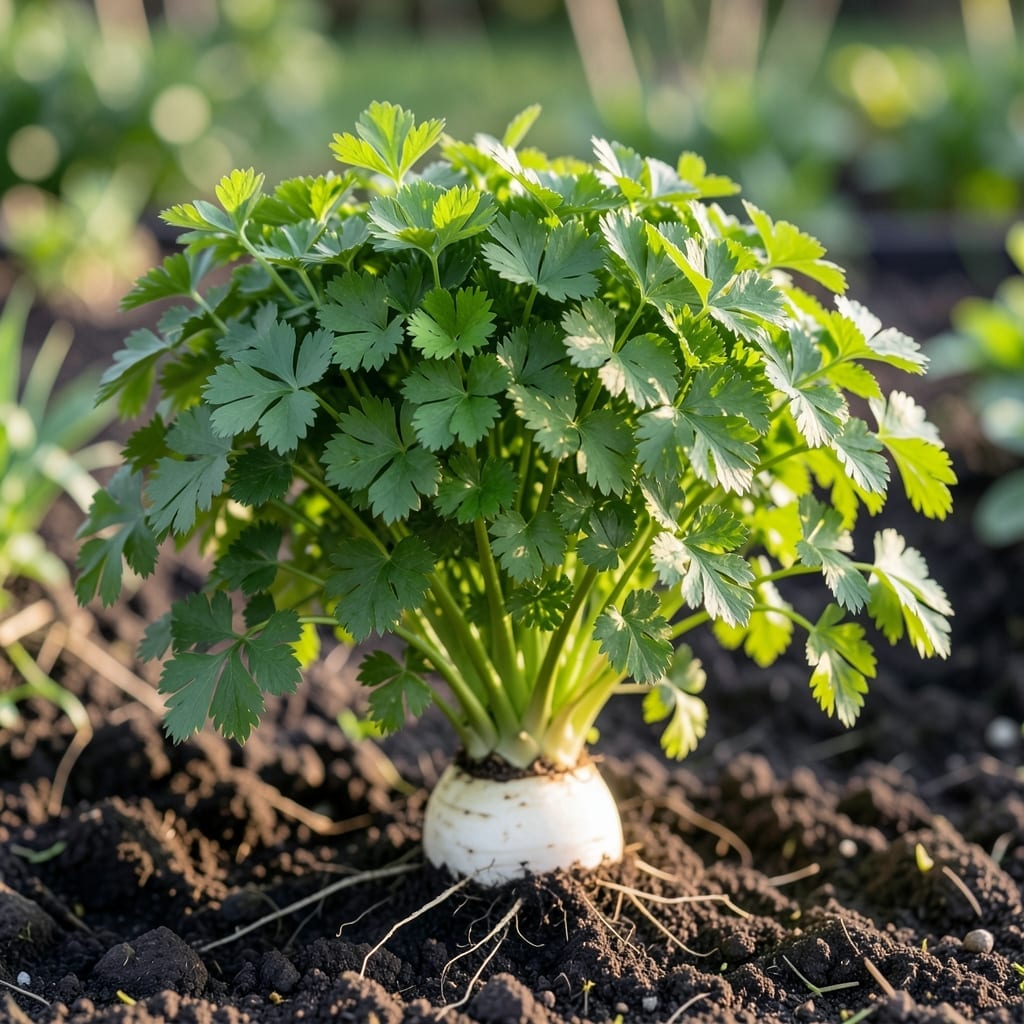
This parsley grows roots you actually eat—not just leaves. I discovered Hamburg rooted parsley after tiring of the same old flat-leaf varieties, and it changed how I think about garden freshness.
It handles cold better than most herbs, comes back for a second year, and the thick roots taste like celery meets parsley. Plant in well-draining soil and watch it thrive where other herbs struggle.
📚 In This Guide
This method ensures a steady supply of flavorful roots and greens with minimal fuss.
Choose a location with full sun to partial shade—Hamburg parsley tolerates a bit less light than flat-leaf varieties. The soil should be well-draining and rich in organic matter. I like to work in 2-3 inches of compost to a depth of 8-10 inches before planting.
Remove any weeds or debris, then rake the surface smooth. This plant prefers a soil pH between 6.0 and 7.0, so test if you’re unsure. The roots will grow long and straight in loose soil, so avoid compacted or clay-heavy areas.
Sow seeds ¼ inch deep and 2-3 inches apart in rows spaced 12-18 inches apart. If transplanting, set young plants at the same depth they were growing in their containers. I’ve found that soaking seeds in lukewarm water for 12 hours speeds up germination.
Water gently but thoroughly after planting. You’ll see sprouts in 2-3 weeks if the soil stays consistently moist. Thin seedlings to 6-8 inches apart once they have 2-3 true leaves to give the roots room to develop.
Keep the soil evenly moist, especially during dry spells. Hamburg parsley needs 1-1.5 inches of water per week, either from rainfall or supplemental watering. I check the soil daily in hot weather—if the top inch feels dry, it’s time to water.
Apply a balanced fertilizer every 4-6 weeks to encourage strong root and foliage growth. Mulch around the plants with 1-2 inches of organic material to retain moisture and suppress weeds. Avoid letting the soil dry out completely, as this can cause the roots to split or become woody.
Begin harvesting roots when they are 2-3 inches in diameter, usually 4-5 months after planting. Use a garden fork to gently lift the plants, then trim the tops to 1-2 inches above the roots. The greens are edible and delicious, so don’t discard them!
Store roots in the refrigerator for up to 2 weeks, or freeze them for longer storage. For fresh use, I like to leave a few plants in the ground and harvest as needed. The flavor is sweetest after a light frost, so consider leaving some in the garden until late fall.
Small adjustments in planting and care make a big difference with this hardy biennial.
Soil Preparation: In Step 1, working compost into the soil to that 8-10 inch depth is non-negotiable. I learned the hard way that shallow composting leads to stunted roots. Hamburg parsley needs that deep, loose foundation to develop its signature thick roots without forking. The 2-3 inches of compost also helps maintain the ideal 6.0-7.0 pH range mentioned in the instructions.
Germination Boost: That 12-hour soak for seeds in Step 2 isn’t just a suggestion—it cuts your germination wait significantly. I’ve tested this side-by-side, and soaked seeds sprouted nearly a week faster. Just be sure your lukewarm water stays consistently warm; cold water can shock the seeds and negate the benefit.
Watering Wisdom: The 1-1.5 inches of water weekly in Step 3 is your sweet spot. I check the top inch of soil daily in summer, and if it feels dry, I water immediately. Hamburg parsley is forgiving, but letting the soil dry completely causes those woody, split roots we want to avoid. A simple rain gauge can help you track weekly watering accurately.
Harvest Timing: Those 4-5 months until harvest in Step 4 can feel long, but resist the urge to dig early. I once pulled roots at 3 months and they were pencil-thin. The 2-3 inch diameter is your cue for both flavor and texture perfection. Also, don’t discard those tops—trimming to 1-2 inches above the roots gives you a second edible crop from each plant.
Yes! It thrives in partial shade, especially in hotter climates. Aim for 4-6 hours of sunlight daily for best growth.
Hamburg rooted parsley typically matures in 90-120 days. Harvest roots in the first year and leaves in the second for optimal flavor.
Watch for parsley worms, aphids, or fungal diseases like leaf spot. Use organic sprays and ensure good airflow to prevent issues.
Absolutely! Choose a deep container (12+ inches) to accommodate the taproot. Ensure drainage and consistent moisture.
Try parsnips or celeriac for a similar root flavor, or flat-leaf parsley for foliage. Both are hardy and versatile in cooking.