
Beautiful Plants For Your Interior
Beautiful Plants For Your Interior
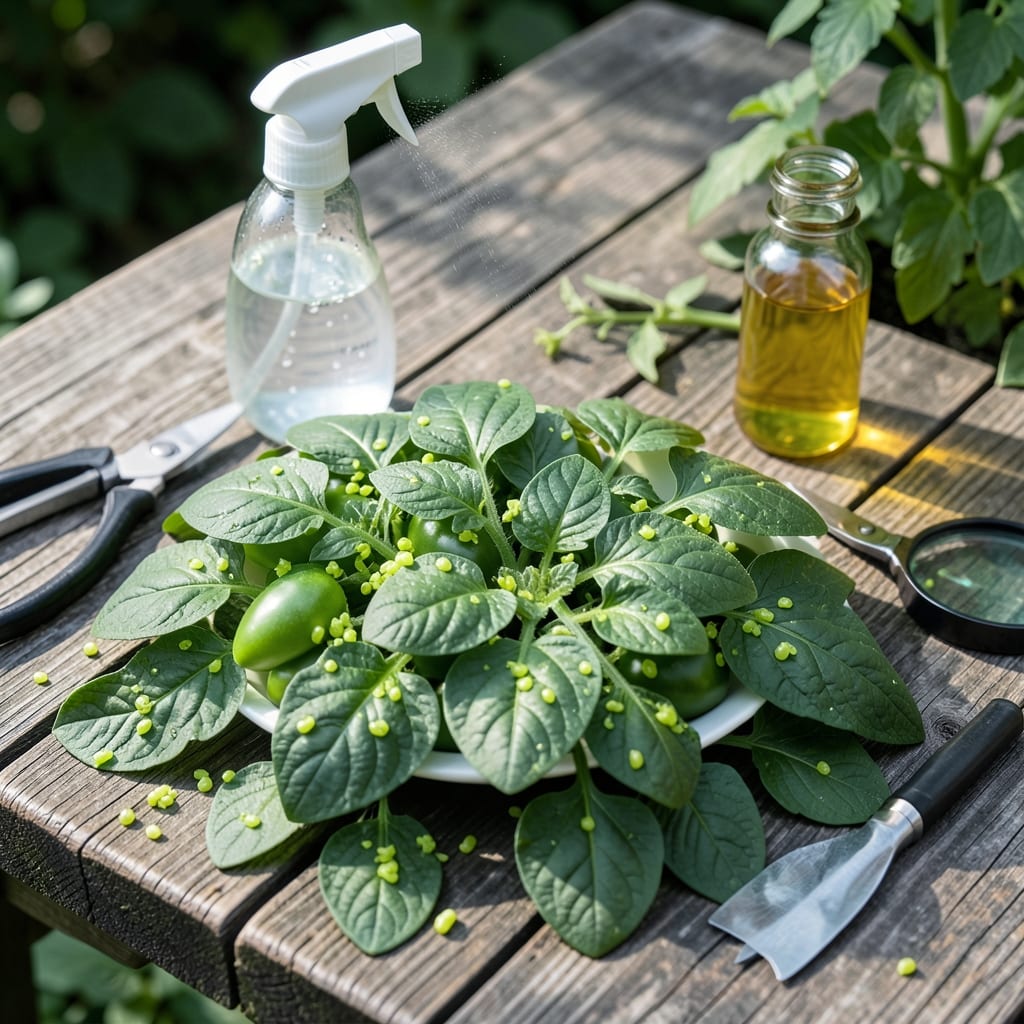
Those tiny green eggs on your tomato leaves aren’t a Dr. Seuss story—they’re likely lacewing or aphid eggs hatching trouble. I spotted them last season and learned the hard way that early action saves your harvest.
Check the undersides of leaves first. A strong blast of water knocks off aphids, while lacewing eggs mean beneficial insects are already working for you. Organic solutions keep your plants safe and chemical-free.
Bare bones pest control. Most of this is already in your shed.
| Ingredient | Amount | Notes |
|---|---|---|
| Neem Oil 🌿 | 1 piece | Cold-pressed organic |
| Spray Bottle 💦 | 1 piece | 1-gallon capacity |
| Insecticidal Soap 🧼 | 1 piece | Ready-to-use formula |
| Garden Hose 💧 | 1 piece | With adjustable nozzle |
| Magnifying Glass 🔍 | 1 piece | For egg inspection |
| Pruning Shears ✂️ | 1 piece | Sharp clean blades |
| Water 💧 | 1 gallon | For dilution |
| Lacewing Eggs 🐞 | 1 packet | Beneficial insects |
| Sticky Traps 🪣 | 4 pieces | Yellow for aphids |
[recipeingredientscaler]
Neem oil and insecticidal soap are your organic powerhouses here. Garden centers like Home Depot or Lowe’s carry both—look for OMRI-certified labels to ensure they’re safe for organic gardening. A 1-gallon spray bottle is ideal (or whatever you’ve got with a good mist setting).
No neem oil? Horticultural oil works similarly but check the label for tomato compatibility. Skip the soap if you spot lacewing eggs—they’re your allies. A strong hose blast dislodges aphids without chemicals (trust me on this one).
Store neem oil in a cool, dark place—it degrades in sunlight. Keep spray bottles clean between uses. I label my pest control supplies so I’m not guessing what’s what mid-season.
Here’s my go-to organic treatment plan—works every time without harsh chemicals.
Grab the magnifying glass and examine the undersides of leaves where pests love to hide. Green eggs in neat rows or clusters usually mean lace bugs or aphids. I’ve found that checking in morning light makes the tiny eggs easiest to spot against the leaf surface.
If you see eggs plus sticky residue or curled leaves, you’re dealing with an active infestation. Don’t skip this step—misidentifying the pest wastes time and lets the problem spread while you try the wrong fix.
Use the pruning shears to remove any leaves with large egg clusters or visible damage. Bag and dispose of the trimmings—don’t compost them, or you’ll just reintroduce the pests later. I always sterilize the shears with rubbing alcohol between cuts to prevent spreading anything to healthy parts of the plant.
After pruning, blast the remaining foliage with the garden hose on a strong jet setting. This knocks off eggs and nymphs before they can take hold. Do this in the early morning so leaves dry quickly in the sun, reducing disease risk.
Mix 1 tablespoon neem oil with the 1 gallon water in the spray bottle, then add 1 teaspoon insecticidal soap to help it spread. Shake well and spray the undersides of leaves until they’re thoroughly coated but not dripping. Reapply every 5-7 days for 3 weeks to break the pest life cycle.
I spray in the late afternoon to avoid leaf burn from sun exposure. Always test on a small area first—some tomato varieties are sensitive to oils. If you see leaf yellowing within 24 hours, rinse with the hose and dilute the next batch.
Hang the 4 sticky traps around the tomato plants to catch adult pests before they lay more eggs. Place them just above plant height and replace every 2-3 weeks or when covered in debris. The yellow color attracts aphids and whiteflies especially well.
Release the lacewing eggs according to package instructions—usually at dusk to avoid birds eating them. Lacewings are voracious predators of eggs and nymphs. I’ve seen them clear up an infestation in 10-14 days once established. Water the plants first so the eggs stick to the foliage.
To tackle green eggs on tomato leaves, start with a reliable handheld magnifying glass (like the Carson MiniBrite) to inspect eggs closely. A pair of sharp pruning shears, such as Fiskars Bypass Pruners, ensures clean removal of infested leaves without damaging the plant. 🔍🌱
A portable LED microscope (e.g., Plugable USB 2.0 Digital Microscope) helps monitor pests in detail. For organic treatment, a spray bottle with adjustable nozzle (like the Haws Watering Can) makes applying neem oil or soapy water easier. 💡
If specialized tools aren’t available, use a regular magnifying glass or even a smartphone camera for inspection. Household scissors can substitute pruners, and a repurposed kitchen spray bottle works for treatments. ✨
