
Beautiful Plants For Your Interior
Beautiful Plants For Your Interior
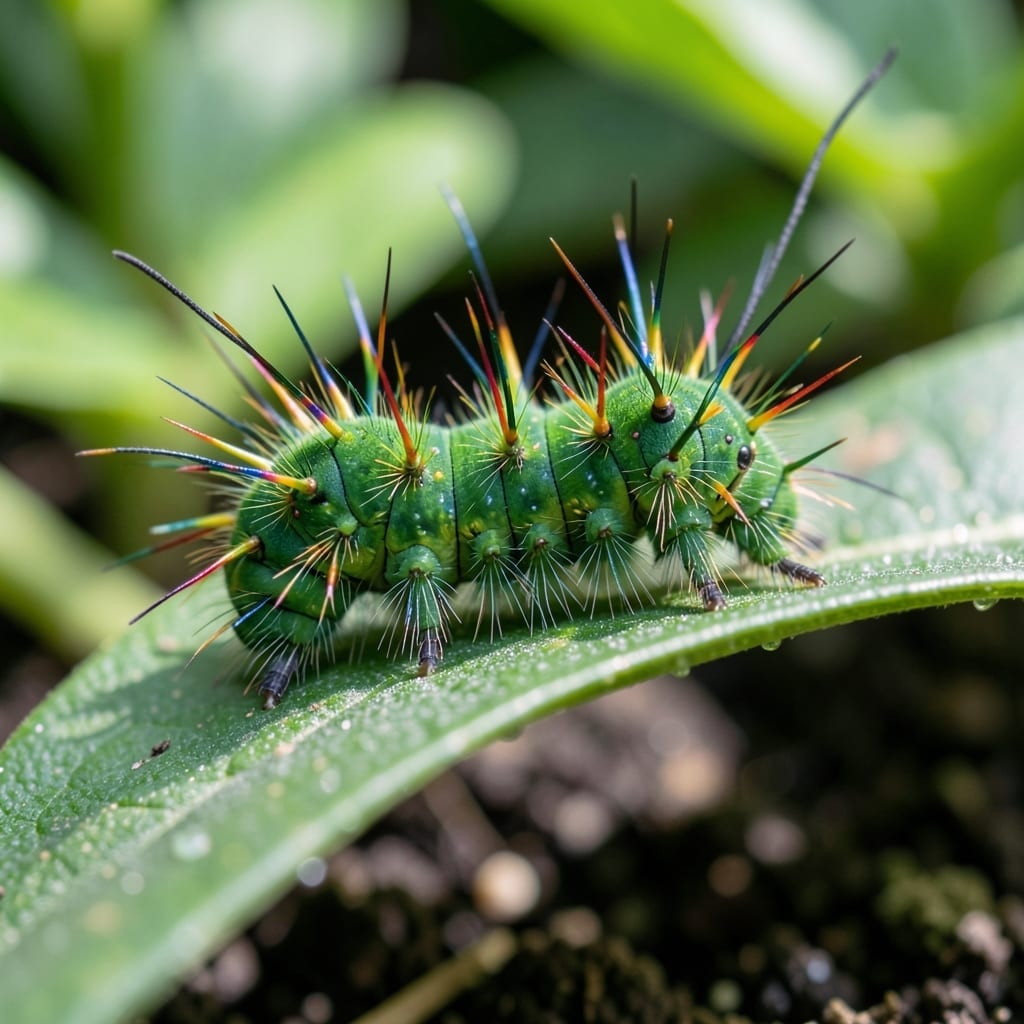
I spotted my first one on a parsley leaf last July. This caterpillar looks like a tiny alien with its bright green body and colorful spikes, but it’s actually a common garden visitor.
They target parsley, dill, and carrots most often, munching leaves overnight. You’ll notice jagged holes and black droppings before you see the caterpillars themselves hiding on the undersides.
Hand-picking works best for small infestations. Drop them in soapy water and they won’t return. For bigger problems, a Bt spray stops them without harming other insects.
Your plants recover quickly once they’re gone. Keep an eye out and you’ll maintain that healthy garden all season long.
The vibrant green caterpillar with rainbow spikes often appears in gardens due to a mix of natural and environmental factors. Below are the primary causes, explained scientifically to help you understand and address the issue.
Many caterpillar species, such as the White-Marked Tussock Moth or Hickory Tussock Moth, develop bright colors and spiky bristles as a defense mechanism. The green base blends with foliage, while the rainbow-tipped spikes warn predators of potential toxicity or irritation. This aposematism (warning coloration) is an evolutionary adaptation to deter birds and other threats.
These caterpillars thrive in gardens with abundant host plants like walnut, butternut, or butternut trees (for the Hickory Tussock Moth) or various deciduous trees and shrubs (for the White-Marked Tussock Moth). If your garden includes their preferred food sources, they’ll naturally migrate there to feed and grow. Overplanting susceptible species can inadvertently invite them.
Warm, humid climates accelerate caterpillar life cycles, leading to more frequent sightings. Rainy seasons also promote the growth of host plants, providing ample food. Additionally, reduced predator populations (e.g., birds, parasitic wasps) due to pesticide use or habitat loss can allow caterpillar numbers to surge unchecked.
Gardening practices like over-fertilizing or excessive watering can create ideal conditions for host plants—and thus, caterpillars. Even organic mulches (e.g., leaf litter) can shelter pupae over winter, leading to infestations the following spring. Proper garden hygiene (removing debris, rotating crops) disrupts their life cycle.
Dealing with a colorful but unwanted garden guest? Here’s how to evict those spiky visitors without harming your plants or the environment. 🌱✨
If the infestation is small, wear gloves and gently pluck the caterpillars off by hand. Drop them into a bucket of soapy water to ensure they don’t return. Prevention tip: Inspect leaves daily, especially under them, where they love to hide. 💡
A strong blast of water from a hose can dislodge caterpillars from plants. Do this early in the day so foliage dries quickly, reducing the risk of fungal issues. Prevention tip: Repeat every 2-3 days until the problem subsides. 🌧️
Encourage beneficial insects like ladybugs, lacewings, or parasitic wasps by planting nectar-rich flowers (e.g., marigolds or alyssum). These predators will keep caterpillar populations in check. Prevention tip: Avoid broad-spectrum pesticides that kill helpful bugs too. 🎯
Use neem oil or Bacillus thuringiensis (Bt) spray for a non-toxic solution. Apply in the evening when caterpillars are most active, and reapply after rain. Prevention tip: Test sprays on a small area first to ensure plant compatibility. 🌿
Remove fallen leaves, weeds, and debris where caterpillars may lay eggs or overwinter. Prevention tip: Rotate crops yearly to disrupt their life cycle. ✨
Pro tip: Act fast at the first sign of damage—small infestations are easier to manage than full-blown outbreaks!
Some spiky caterpillars can cause skin irritation. Always wear gloves when handling them to avoid potential rashes or allergic reactions.
They often feed on parsley, dill, carrots, and walnut trees. Regularly check the undersides of leaves for early signs of damage.
Remove garden debris, rotate crops, and encourage natural predators like ladybugs. These steps disrupt their life cycle effectively.
Yes, Bt spray targets only caterpillars and won’t harm beneficial insects like bees. Apply in the evening for best results.