
Beautiful Plants For Your Interior
Beautiful Plants For Your Interior
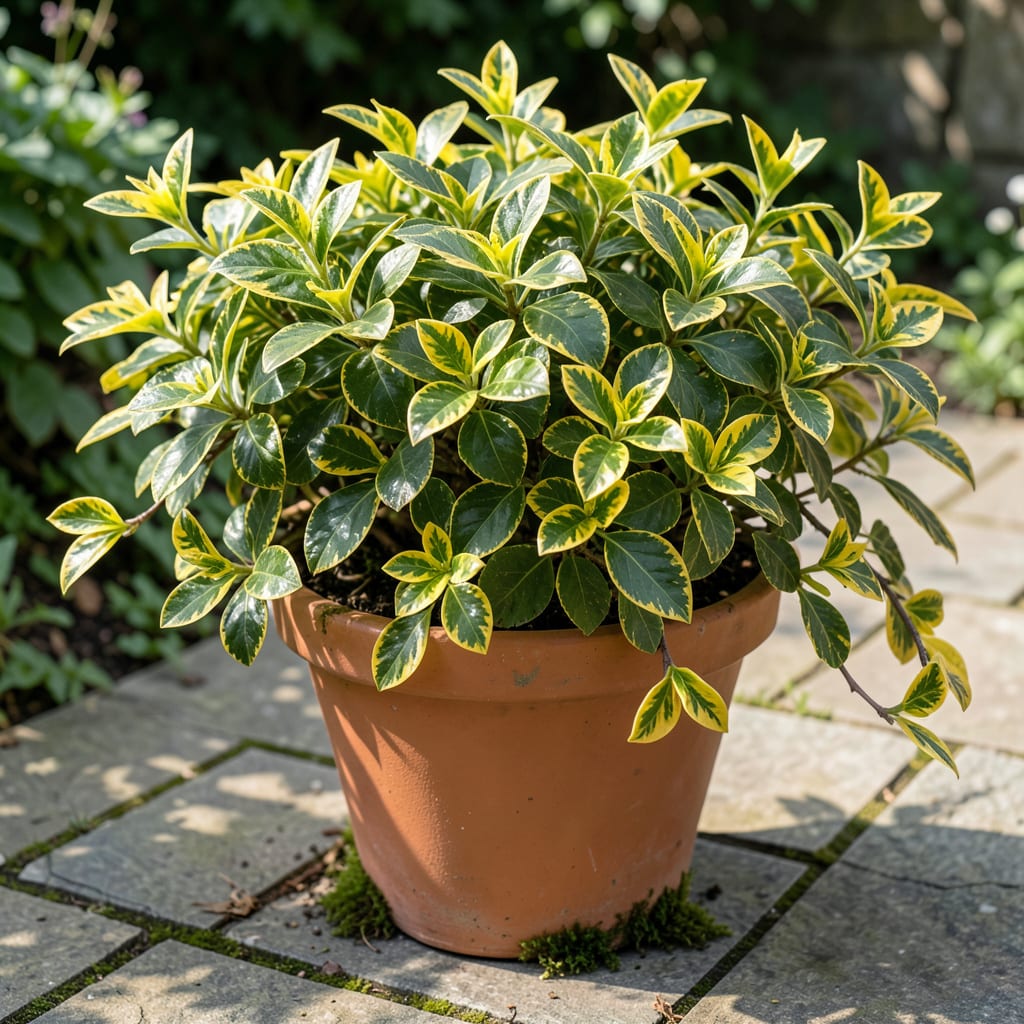
Variegated shrubs add year-round drama without flowers. I fell for these plants the first time I saw how their golden and green leaves brighten shady corners.
Most thrive in partial shade with consistent moisture, and the contrast they provide makes every border look more professional. Once established, they need minimal care beyond occasional pruning to maintain their shape.
📚 In This Guide
This method ensures vibrant foliage and strong establishment in your garden landscape.
Choose a site with partial to full sun exposure, as variegated shrubs often develop their best coloration with 4-6 hours of direct sunlight daily. Too much shade will mute the yellow variegation, while excessive sun can scorch leaves in hotter climates.
Test drainage by digging a 12-inch deep hole and filling it with water. If it drains within 2-3 hours, the location is suitable. This prevents root rot, which variegated shrubs are particularly susceptible to due to their unique foliage genetics.
Consider mature size—most variegated shrubs reach 3-6 feet tall and wide—and space accordingly to avoid future crowding.
Dig a hole twice as wide as the root ball but no deeper. Loosen the soil at the sides to encourage outward root growth. For clay-heavy soil, amend with 50% native soil and 50% organic matter to improve structure.
Remove the shrub from its container and gently tease apart any circling roots. If the root ball is tightly bound, make three 1-inch deep vertical cuts through the roots with a clean knife. This stimulates new root growth into the surrounding soil.
Position the shrub so the top of the root ball sits 1 inch above the surrounding soil level to allow for settling.
Backfill the hole with the amended soil, firming gently as you go to eliminate air pockets. Create a 2-inch high watering ring around the base to help direct moisture to the roots. This is especially important during the first 4-6 weeks of establishment.
Water deeply immediately after planting, using 5-10 gallons for a 3-gallon shrub. The soil should be moist to a depth of 12-18 inches. Check moisture by inserting your finger into the soil—if it feels dry at 2 inches depth, it’s time to water again.
Apply a 2-3 inch layer of organic mulch, keeping it 3 inches away from the trunk to prevent rot.
Water on a deep but infrequent schedule—about 1-2 times per week for the first growing season, adjusting for rainfall. Variegated shrubs often have slightly reduced vigor compared to their green counterparts, so consistent moisture is key.
Fertilize lightly in early spring with a balanced 10-10-10 formula, following package instructions. Avoid high-nitrogen fertilizers, which can cause excessive green growth at the expense of the variegated pattern. Yellowing leaves may indicate nutrient deficiency or overwatering.
Prune only to shape or remove dead wood, as heavy pruning can reduce the variegated foliage display.
These insights will help you avoid pitfalls and ensure your variegated shrub thrives from day one.
Sunlight Optimization: The 4-6 hours of direct sunlight mentioned in Step 1 is non-negotiable for vibrant variegation. In hotter climates, aim for morning sun and afternoon shade to prevent leaf scorch. I learned this the hard way after watching my first shrub’s yellow patches fade in full afternoon sun.
Drainage Test Precision: When testing drainage as described in Step 1, use that exact 12-inch deep hole. If water doesn’t drain within 2-3 hours, consider raising the planting area or amending with coarse sand. Variegated shrubs hate wet feet more than most plants.
Planting Depth Critical: That 1 inch above soil level in Step 2 isn’t arbitrary—it accounts for settling. Planting too deep suffocates roots, while too high exposes them. Trust me, your shrub will thank you for this precision when it establishes quickly.
Watering Ring Hack: The 2-inch high watering ring from Step 3 is genius for directing moisture to roots. I’ve found it especially helpful during the 4-6 weeks of establishment, preventing water from running off before it can soak in deeply.
Variegation occurs due to genetic mutations or viral infections that affect chlorophyll production, creating striking green and yellow patterns. Examples include Euonymus fortunei ‘Emerald Gaiety’ or Aucuba japonica ‘Variegata’.
Most thrive in partial shade to full sun with well-draining soil. Water regularly but avoid overwatering. Prune in early spring to maintain shape and encourage vibrant foliage.
Plant in early spring or fall to allow roots to establish before extreme temperatures. Avoid planting during summer heat or winter frost for optimal growth.
Brown patches may indicate sunburn, nutrient deficiency, or improper watering. Ensure balanced exposure and consistent moisture. Trim damaged areas to promote healthy regrowth.
Yes! Consider Dappled Willow or Variegated Dogwood. Both offer colorful leaves with minimal upkeep, perfect for busy gardeners.
