
Beautiful Plants For Your Interior
Beautiful Plants For Your Interior
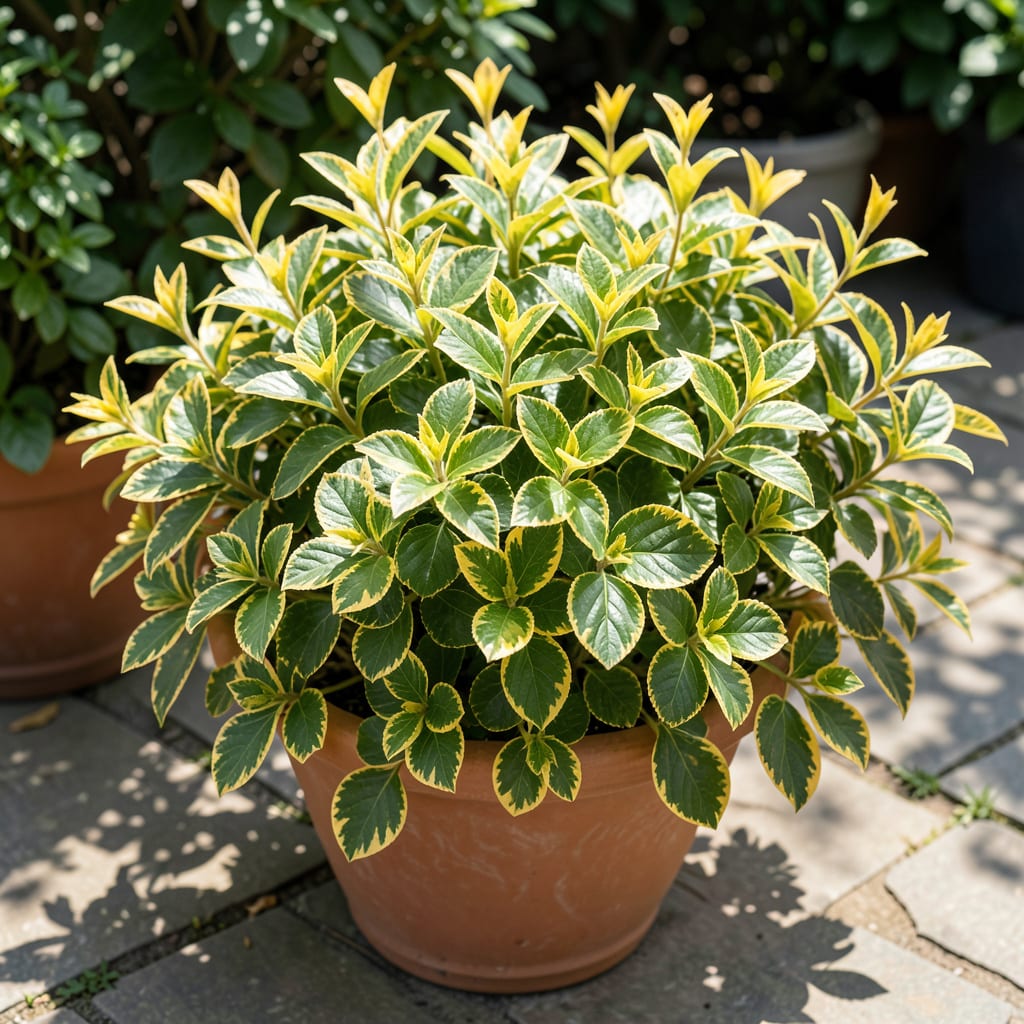
That yellowing in your shrub isn’t just unsightly—it’s a cry for help. I’ve seen chlorophyll deficiency and iron chlorosis turn healthy greens into sickly yellows overnight, and catching it early saves the plant.
Pests can mimic the same symptoms, but the pattern tells the story. Check leaf veins, soil moisture, and new growth. The right fix starts with the right diagnosis, and I’ll show you how to spot the difference.
📚 In This Guide
Here’s my method for spotting key characteristics that set these shrubs apart in any landscape.
Start by observing the leaf variegation pattern. True green and yellow shrubs display distinct margins—either golden edges with green centers or vice versa. I look for consistency across the foliage; irregular splotches often indicate disease rather than natural variegation.
Check the undersides too. Some varieties like Euonymus fortunei show more intense yellow variegation on the upper surface while the underside remains solid green. Hold leaves up to the light to see if the yellow portions are translucent, which is typical of many variegated cultivars.
Note whether the shrub grows upright, spreading, or mounding. Variegated Daphne odora forms a dense, rounded shape while Cornus alba ‘Elegantissima’ has a more open, arching habit. I find the growth pattern often correlates with the intensity of variegation—more compact shrubs tend to have bolder color contrasts.
Measure the mature height and spread. Most green and yellow shrubs fall in the 3-6 foot range at maturity. Look for nodes where leaves emerge; the distance between them (internode length) varies significantly between cultivars and can be a key identifier.
Stem color and texture provide crucial clues. Many variegated shrubs have green stems with yellow highlights that echo their foliage. I pay special attention to newer growth—young stems often show the most vivid coloration before maturing to more subdued tones.
Check for lenticels (small raised pores) on the bark. Their presence, size, and color vary between species. Some shrubs like variegated Weigela have particularly prominent lenticels that stand out against the smooth bark, while others maintain a more uniform stem appearance.
Variegation patterns often shift with the seasons. Many green and yellow shrubs develop more intense yellow coloring in spring as new growth emerges, then settle into a balanced pattern by summer. I make it a point to check the shrub in multiple seasons when possible.
Note any changes in variegation intensity based on light exposure. Leaves in full sun often show more pronounced yellow margins, while those in shade may appear more uniformly green. This photoresponse can help distinguish between similar-looking cultivars.
While foliage is primary, reproductive structures offer additional identification points. Variegated Abelia produces small white flowers that contrast beautifully with its green and yellow leaves. I examine flower shape, size, and arrangement—these remain consistent within species regardless of leaf variegation.
Check for fruit development after flowering. Some shrubs produce berries that maintain the color theme, like the white fruits of variegated Viburnum tinus. The presence or absence of fruit, along with its color and timing, can confirm identification when combined with foliage characteristics.
The details that separate good identification from great are often overlooked.
Leaf Pattern Insight: In Step 1, focus on the consistency of those distinct margins. Irregular splotches often signal disease rather than natural variegation, which typically appears uniform across the foliage. I’ve found that holding leaves up to the light reveals whether the yellow portions are translucent—a hallmark of many variegated cultivars.
Growth Habit Clue: Step 2’s height and spread measurement is critical. Most of these shrubs mature in the 3-6 foot range, but the internode length between leaf nodes can vary dramatically between species. Shorter internodes often indicate a more compact growth habit, which pairs with bolder color contrasts.
Seasonal Observation: Step 4 mentions that variegation intensifies in spring. This is especially noticeable in newer growth, where yellow coloring can be vivid before settling into a balanced pattern by summer. Light exposure plays a role too—full sun often produces more pronounced yellow margins than shade.
Green and yellow foliage often signals nutrient deficiencies (like nitrogen or iron), overwatering, or pests. Environmental stress, such as poor soil drainage or extreme temperatures, can also trigger this color change.
Early spring or fall is ideal for treatment, as plants are actively growing. Address issues promptly—test soil, adjust watering, or apply fertilizers to restore health before stress worsens.
Yes! Varieties like Euonymus fortunei (Emerald ‘n’ Gold) or Dwarf Ninebark feature natural green and yellow foliage. These are great low-maintenance alternatives if you love the color combo.
Start by checking soil moisture and drainage. If the issue persists, test soil pH and nutrients. Prune affected areas and apply a balanced fertilizer or iron supplement if needed.
