
Beautiful Plants For Your Interior
Beautiful Plants For Your Interior
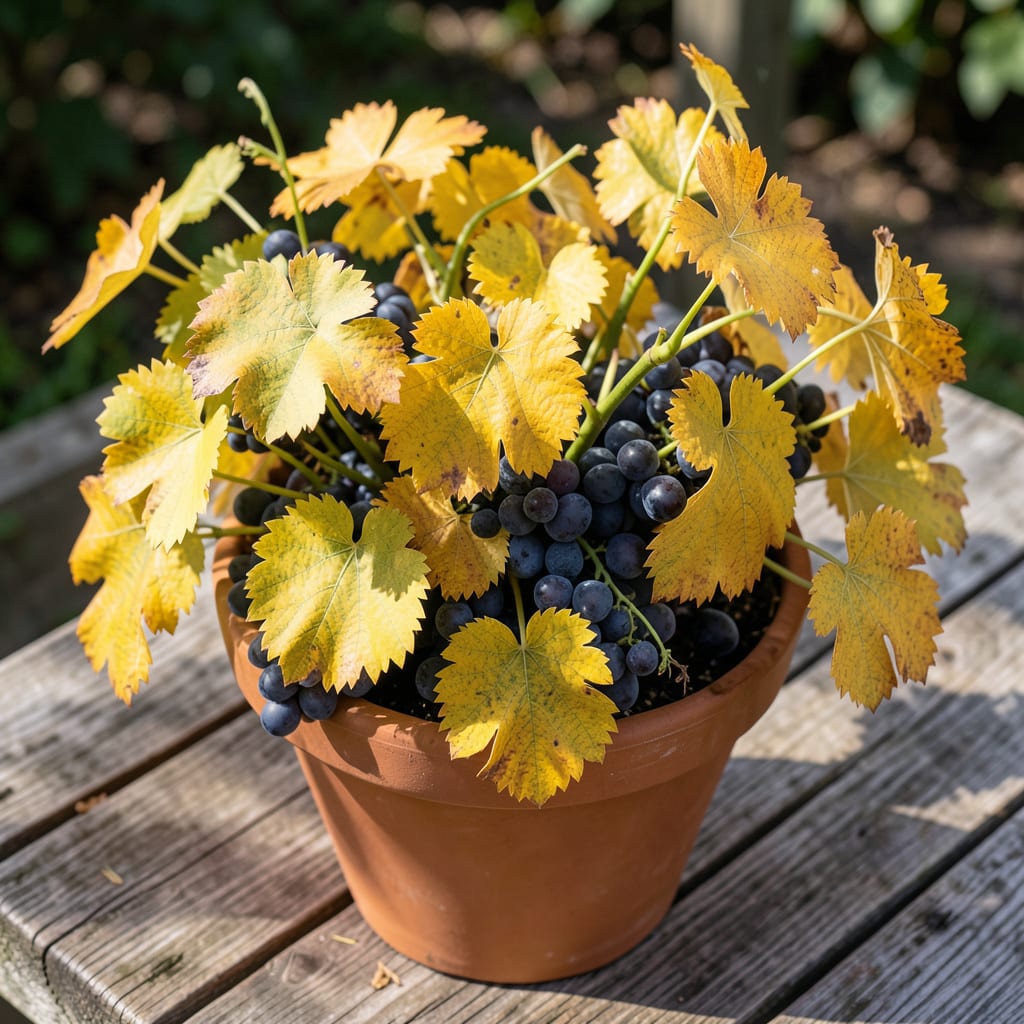
Yellow leaves on grape plants stopped me in my tracks last summer. The vines looked healthy one week, then suddenly developed that sickly pallor that signals something’s wrong.
Here’s the thing—it’s rarely just one cause. Too much water, too little light, or a nutrient imbalance can all turn leaves yellow. The pattern of yellowing often tells you which problem you’re facing.
I fixed mine in under a week by checking soil moisture and light exposure first. Most cases improve with simple adjustments to your watering routine or plant location.
Don’t panic. With the right approach, your grape plant can bounce back and produce healthy green leaves again before you know it.
Yellow leaves on grape plants, or chlorosis, typically signal an underlying issue disrupting chlorophyll production. Below are the most common causes, explained with actionable insights.
Excess water suffocates roots, preventing oxygen uptake and nutrient absorption. This leads to nitrogen deficiency, as roots can’t access soil nutrients. Grape plants in heavy clay or compacted soil are especially vulnerable. Check soil moisture 2 inches deep—if it’s soggy, reduce watering and improve drainage with perlite or sand.
Grapes require 6–8 hours of direct sunlight daily. Shade or low-light conditions slow photosynthesis, causing chlorophyll to degrade. Leaves turn yellow, often starting with lower, shaded foliage. Prune nearby plants or relocate potted grapes to sunnier spots to restore vigor.
Yellowing often points to a lack of nitrogen, iron, or magnesium:
Sap-sucking pests like spider mites, aphids, or leafhoppers drain nutrients from leaves, causing yellowing and curling. Inspect leaf undersides for webbing or tiny insects. Blast off pests with water or apply neem oil for organic control.
Pathogens such as downy mildew or Pierce’s disease (caused by Xylella fastidiosa) disrupt nutrient flow. Look for yellow spots, mottling, or leaf margin burn. Remove infected foliage, improve air circulation, and apply copper-based fungicides preventatively.
Here’s how to tackle the most common causes of yellowing leaves on your grape plant, with straightforward fixes and prevention tips to keep your vines thriving.
Fix: Let the soil dry out slightly between waterings. If the plant is in a pot, ensure it has drainage holes. For garden plants, amend heavy clay soil with compost or sand to improve drainage. Trim any black, mushy roots and repot if necessary.
Prevention: Use a moisture meter or stick your finger 2 inches into the soil—only water if it feels dry. Always use well-draining soil mixes.
Fix: Relocate potted grapes to a sunnier spot (6–8 hours of direct sunlight daily). For in-ground plants, prune nearby trees or structures casting shade. If moving isn’t an option, consider supplemental grow lights.
Prevention: Plan your grapevine placement carefully—south-facing areas or open spaces are ideal. Thin out excess foliage to allow light penetration.
Fix: Test your soil to identify missing nutrients. For nitrogen deficiency (uniform yellowing), apply a balanced fertilizer (10-10-10). For iron or magnesium (yellowing between veins), use chelated iron or Epsom salt (1 tablespoon per gallon of water) as a foliar spray.
Prevention: Fertilize grapes annually in early spring with compost or a vine-specific fertilizer. Avoid over-fertilizing, which can burn roots.
Fix: Inspect undersides of leaves for spider mites, aphids, or leafhoppers. Blast them off with water or use insecticidal soap. For severe cases, apply neem oil or horticultural oil, following label instructions.
Prevention: Encourage beneficial insects like ladybugs. Keep the garden free of debris and weeds where pests hide.
Fix: Shield plants from extreme heat with shade cloth or from cold snaps with frost blankets. Ensure consistent watering during droughts to prevent stress-related yellowing.
Prevention: Mulch around the base to retain moisture and regulate soil temperature. Choose grape varieties suited to your climate.
Water deeply 1-2 times per week, allowing the top 2 inches of soil to dry out between waterings. Overwatering can cause root rot and yellowing leaves.
Once leaves turn yellow, they usually stay that way. Focus on fixing the underlying issue to prevent new leaves from yellowing. Remove severely affected foliage to redirect energy.
For nitrogen, use a balanced fertilizer. For iron or magnesium, apply chelated iron or Epsom salt as a foliar spray. Results often appear within 1-2 weeks.
Remove only severely yellowed or damaged leaves. If most of the leaf is still green, leave it to continue photosynthesis. Always use clean, sharp pruners.
