
Beautiful Plants For Your Interior
Beautiful Plants For Your Interior
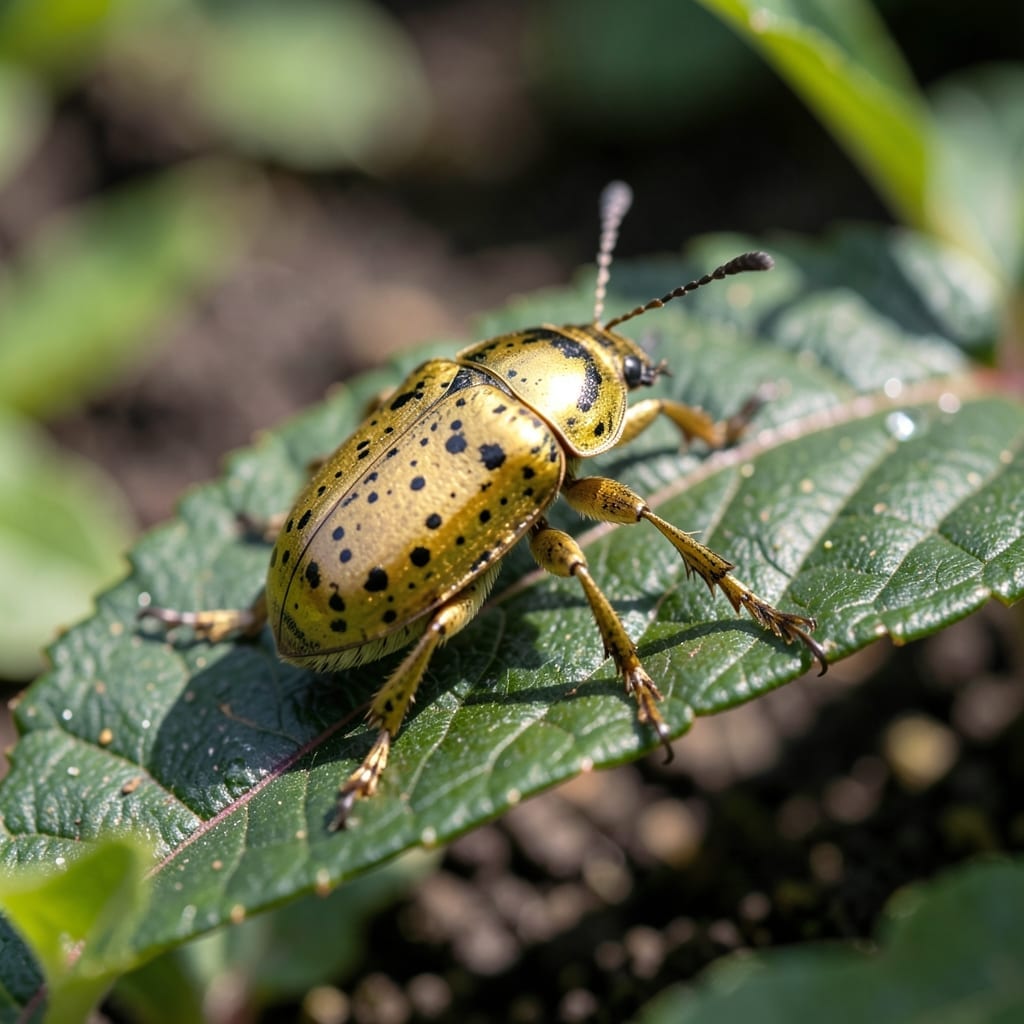
Spotted a golden beetle with black spots in your garden? I saw my first one last summer and panicked—turns out, this little invader can wreak havoc if left unchecked.
These beetles love munching on leaves, flowers, and even fruit. The damage adds up fast, but early prevention stops them before they multiply. A few simple steps now save your plants from serious harm later.
I learned the hard way: ignoring them means watching your garden get stripped bare. The good news? Natural solutions work without chemicals, keeping your space safe for pollinators and pets.
Let’s tackle this before they spread. Your plants will thank you.
The striking black spots on a golden beetle often stem from natural biological and environmental factors. Here’s a breakdown of the most common causes:
Many golden beetles develop black spots as a form of aposematism—a warning to predators. The contrast between the metallic gold and dark spots signals toxicity or bad taste, deterring birds and other threats. This adaptation evolves over generations as beetles with more visible patterns survive longer and reproduce.
Environmental conditions play a role in spot formation. In cooler, damp climates, beetles may develop darker or more pronounced spots to absorb heat more efficiently. Conversely, excessive humidity can trigger melanin production, leading to irregular spotting as a stress response.
While less common, infections can cause discoloration. Fungi like Beauveria bassiana or bacteria may alter the beetle’s exoskeleton, creating dark patches. Infected beetles often appear sluggish and may have uneven, spreading spots unlike their natural patterns.
Actionable tip: If you notice beetles with abnormal or expanding black areas, isolate them to prevent contagion in your garden.
Dealing with these shiny invaders doesn’t have to be a losing battle. Here’s how to tackle each common cause and keep your garden thriving.
If you spot adult beetles feeding on leaves, the simplest fix is manual removal. Grab a bucket of soapy water and pluck them off plants early in the morning or late evening when they’re sluggish. Prevention tip: Check undersides of leaves daily to catch them before they multiply.
For larvae in soil or eggs on foliage, a natural neem oil solution disrupts their life cycle. Mix 1 tbsp neem oil + 1 tsp dish soap + 1 quart water and spray every 5–7 days. Prevention tip: Apply in the evening to avoid harming pollinators like bees.
Grubs (beetle larvae) in the soil? Beneficial nematodes (like Heterorhabditis bacteriophora) hunt and kill them without harming plants. Apply to moist soil at dusk. Prevention tip: Water soil before and after to help nematodes move through the dirt.
Adult beetles are drawn to fermentation. Bury a shallow dish filled with beer or yeast-sugar water near affected plants. They’ll drown in the liquid. Prevention tip: Refresh traps weekly and place them away from garden edges to avoid luring more pests.
If beetles keep returning, they may be overwintering in the soil. Rotate susceptible plants (like roses or grapes) with non-host crops like garlic or onions. Prevention tip: Solarize soil in summer by covering it with clear plastic for 4–6 weeks to kill lurking larvae.
Yes, they can cause significant damage. Adults chew on leaves and flowers while larvae feed on plant roots, potentially stunting growth or even killing young plants.
The golden and black pattern serves as a warning to predators. This coloration often signals toxicity or bad taste, deterring birds and other animals from eating them.
Early morning or late evening works best. Beetles are sluggish during these times, making them easier to handpick and drop into soapy water.
It’s best to avoid them. Chemicals can harm beneficial insects and pollinators. Natural methods like neem oil or introducing nematodes are safer and equally effective.