
Beautiful Plants For Your Interior
Beautiful Plants For Your Interior
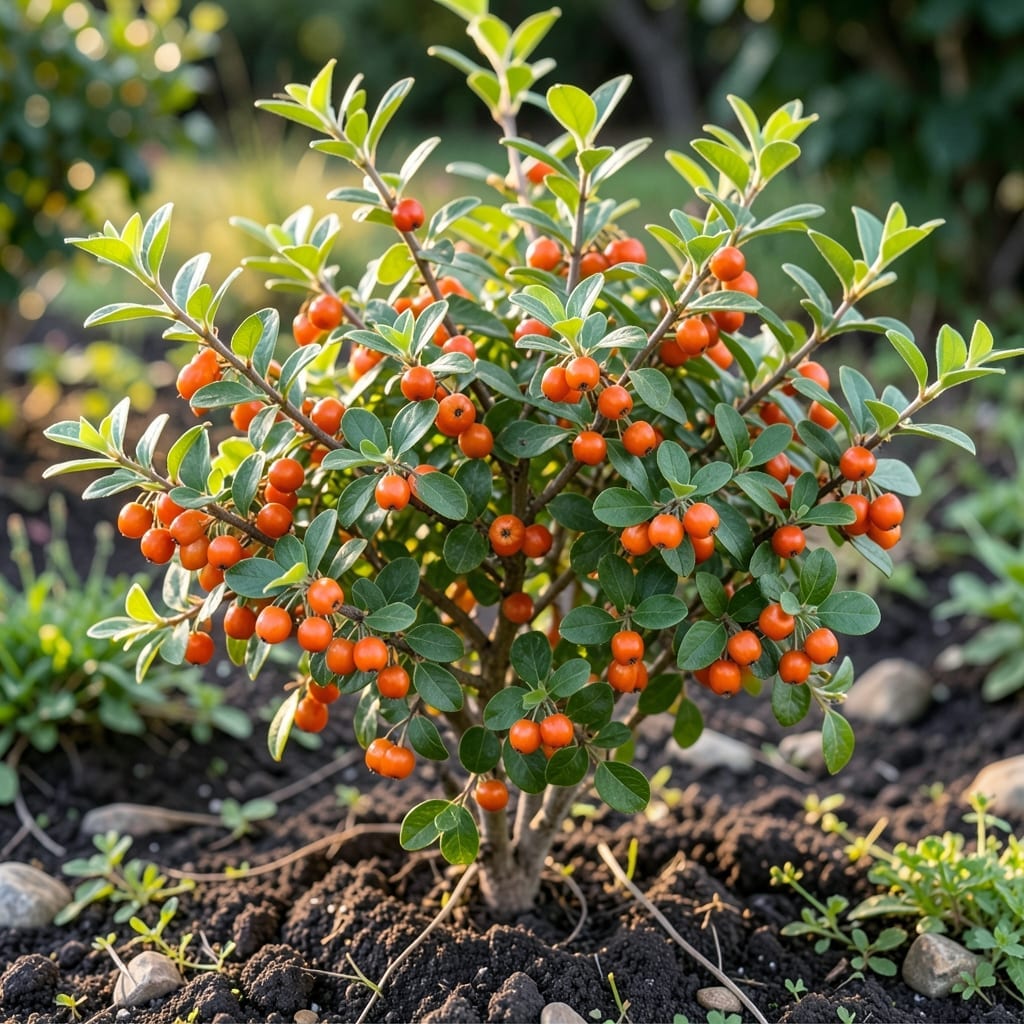
Ever stood in your garden wondering how much space that 🍇 Goji Berry Bush will actually need? Proper planning makes all the difference between a thriving plant and one that struggles to grow.
These bushes can surprise you with their growth, especially if you’re not prepared. I learned this the hard way when my first bush quickly outgrew its spot. You’ll want to know these dimensions before planting.
Discover the typical mature size and how to manage it, whether you’re working with a small balcony or a spacious backyard. Let me show you exactly what to expect.

When I first planted my goji berry bushes, I was amazed at how quickly they grew. In ideal conditions, these hardy shrubs typically reach a mature height of 8 to 10 feet tall. Their spread can be just as impressive, often stretching 6 to 8 feet wide.
the exact size depends on several factors. Soil quality, sunlight exposure, and watering habits all play a role. Wild goji plants tend to grow larger than cultivated varieties, which are often bred for more manageable sizes. 🌿
| Growth Stage | Height | Width |
|---|---|---|
| Year 1 | 2-3 ft | 2-3 ft |
| Year 2 | 4-6 ft | 4-5 ft |
| Year 3+ | 8-10 ft | 6-8 ft |
In the first year, you can expect your goji berry bush to grow 2 to 3 feet tall and wide. This moderate growth gives you time to adjust your garden layout if needed. By the second year, the bush will start to fill out more significantly.
By the third year, your plant will likely reach its full mature size. This is when you’ll see the most dramatic growth, with the bush potentially adding 2 to 4 feet in both height and width. It’s a rewarding sight for any gardener! 🌱
Keep in mind that pruning can help control the size. Regular trimming not only keeps the bush at a manageable height but also encourages bushier growth and better fruit production. I recommend pruning in early spring before new growth starts.
If you’re working with limited space, consider dwarf varieties like ‘Big Lifeberry’ or ‘Sweet Lifeberry’. These typically stay between 3 to 5 feet tall and wide, making them perfect for smaller gardens or containers.
For those in USDA zones 5-9, goji berries thrive with full sun and well-draining soil. These conditions help the plant reach its maximum size potential. If your soil is poor, amending it with compost can give your bush the boost it needs. ☀️
Watering is another key factor. Consistent moisture is important, especially during the first year. Once established, goji bushes are drought-tolerant, but regular watering will help them grow larger and produce more berries.
Finally, don’t forget that wild goji plants can grow even larger than cultivated ones. In their natural habitat, they can reach up to 12 feet tall. But in a home garden, you’re unlikely to see that kind of growth unless you have ideal conditions and plenty of space.
I’ve found that even in small gardens, you can successfully grow goji berry bushes with a few smart strategies. The key is proactive size management from the start. These plants are naturally vigorous, but they respond well to training.
One of my favorite methods is container growing. Using a large pot (at least 20 gallons) keeps the roots constrained, which naturally limits the bush’s size to about 4-6 feet in both height and width. ✂️
Top Size-Control Tips:
For in-ground plants, I recommend annual pruning in late winter. Remove about 1/3 of the oldest canes to open up the center and maintain a compact shape. This also improves air circulation and fruit production.
Dwarf varieties are another excellent option. Cultivars like ‘Sweet Lifeberry’ typically stay under 5 feet tall. They produce just as many berries as standard types but in a more manageable package. I’ve had great success with these in my own garden.
If you’re growing in containers, remember that root pruning every 2-3 years helps maintain vitality. Simply remove the plant, trim back the roots by about 20%, and repot with fresh soil. This keeps the bush healthy while controlling its size.
Finally, don’t underestimate the power of pinching. When new shoots appear, pinch back the tips to encourage lateral branching. This creates a denser, more compact plant that’s easier to manage in tight spaces. 🌱