
Beautiful Plants For Your Interior
Beautiful Plants For Your Interior
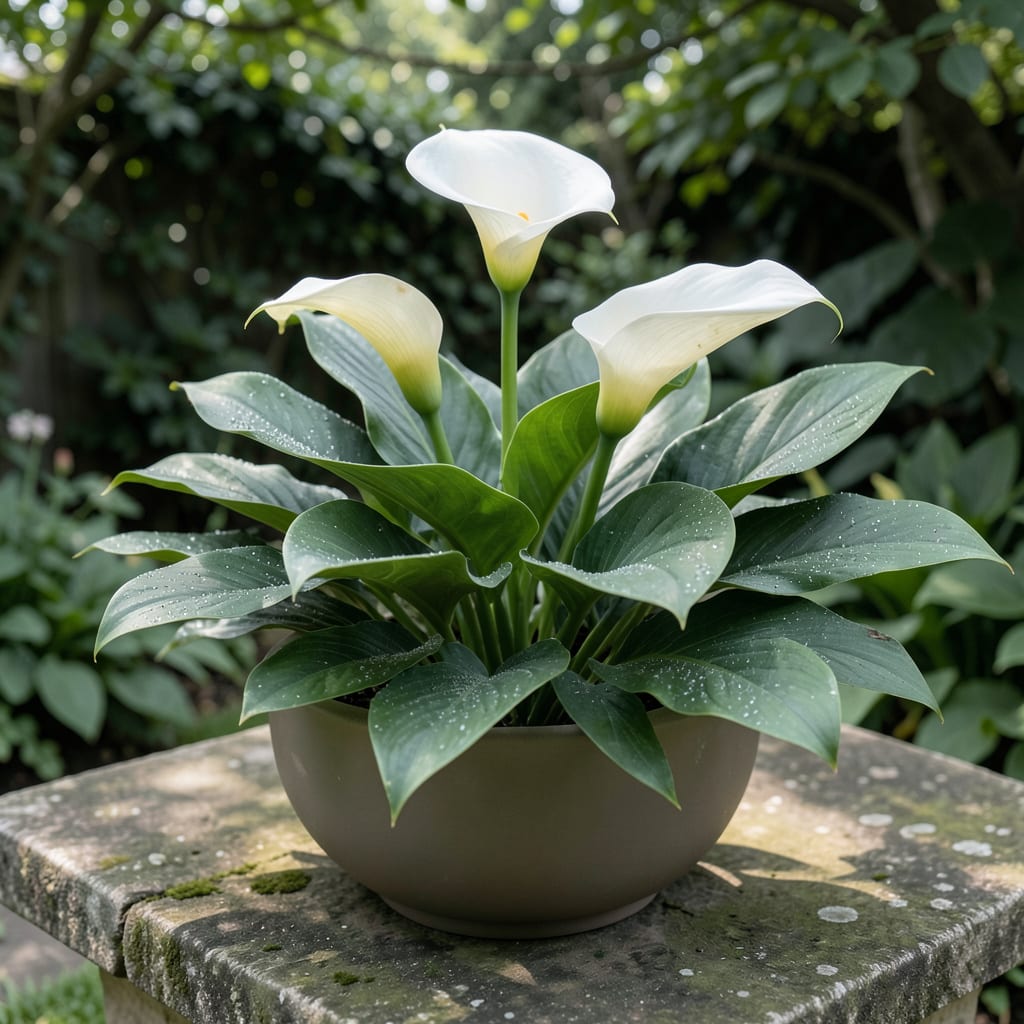
Shade gardens need drama too. I discovered giant white calla lilies after years of struggling to brighten my north-facing beds. Their glossy leaves and pure white blooms cut through the gloom like nothing else.
They’re surprisingly low-maintenance once established. Plant the rhizomes 2-3 inches deep in rich, well-draining soil, and keep them consistently moist. You’ll get 3-foot stems with elegant flowers that last for weeks.
📚 In This Guide
Here’s the method I’ve refined over seasons—it’s straightforward once you know the rhythm of these plants.
Choose a location with partial to full shade, as these callas thrive in filtered light but can tolerate morning sun in cooler climates. The soil must be well-draining yet rich in organic matter—I always amend the bed with compost to a depth of 12-18 inches to ensure proper root development.
Avoid low-lying spots where water pools after rain. Test drainage by digging a 1-foot hole, filling it with water, and checking if it drains within 2-3 hours. If it doesn’t, improve drainage with coarse sand or consider raised beds.
Plant rhizomes in spring after the last frost, when soil temperatures reach at least 60°F. Position them horizontally, 2-3 inches deep and 12-18 inches apart to allow for mature spread. The buds should face upward—this is critical for proper growth.
Cover with soil and water thoroughly to settle the bed. I’ve found that a 2-inch layer of mulch helps retain moisture and suppress weeds, but keep it a few inches away from the base of the plant to prevent rot. Expect sprouts in 2-3 weeks.
Keep the soil consistently moist but not waterlogged during the growing season. Water deeply once or twice a week, depending on rainfall, ensuring the top 1-2 inches of soil remain damp. Use your finger to test moisture—if it feels dry at that depth, it’s time to water.
Reduce watering once the plant enters dormancy in late summer, which you’ll notice when foliage begins to yellow. At this stage, let the soil dry out more between waterings to encourage the rhizomes to store energy for the next season.
Apply a balanced, water-soluble fertilizer, such as 10-10-10, every 4-6 weeks during the active growing season. I dilute it to half the recommended strength to avoid burning the rhizomes. The goal is steady, even growth—not a sudden surge that stresses the plant.
Switch to a low-nitrogen, high-phosphorus fertilizer just before blooming begins to promote larger, more vibrant flowers. You’ll see flower stalks emerge from the base of the plant—this is your signal to adjust your feeding routine.
In USDA zones 8 and above, calla lilies can remain in the ground year-round. In colder zones, dig up rhizomes after the first frost blackens the foliage. Shake off excess soil, let them dry for a day or two, and store in a cool, dark place at 50-55°F in a paper bag or peat moss.
Check rhizomes monthly for signs of shriveling or rot. Discard any that feel soft or mushy. Replant in spring once the soil warms, and they’ll reward you with another season of striking white blooms.
These insights come from seasons of hands-on experience with these elegant plants.
Soil Preparation: Real talk: the 12-18 inch compost amendment in Step 1 isn’t just a suggestion—it’s what prevents waterlogged rhizomes. I learned this the hard way after losing a bed to root rot. Take the time to work that organic matter deep into the soil, especially in clay-heavy areas.
Planting Depth Matters: In Step 2, those 2-3 inches of soil over the rhizomes are critical. Plant too shallow and you’ll get sunburned buds; too deep and they’ll rot before sprouting. I use a ruler for the first few until I developed an eye for it. The buds facing upward is non-negotiable—this is how the plant knows which way to grow.
Drainage Test: Don’t skip the 1-foot hole test from Step 1. If your hole doesn’t drain within 2-3 hours, raised beds are your best friend with these moisture-sensitive plants. I’ve seen perfectly good calla lilies drown in what seemed like well-draining soil during a heavy rain season.
Overwintering Precision: That 50-55°F storage temperature in Step 5 is the sweet spot—any warmer and they’ll sprout prematurely, any colder and you risk freeze damage. I store mine in paper bags rather than plastic to prevent moisture buildup, and check them religiously every month for soft spots.
Giant white calla lilies can reach heights of 3 to 4 feet, with large, elegant blooms that make them stand out in garden spaces. Their towering stems and glossy leaves add drama to shady areas.
Plant giant white calla lilies in spring after the last frost, or in early fall in warmer climates. They thrive in well-draining soil and prefer partial to full shade for optimal growth.
Yes! These lilies adapt well to containers. Use a large pot with good drainage, and place it in a shady spot. Ensure the soil stays moist but not soggy for healthy growth.
Lack of blooms may be due to insufficient light, over-fertilizing, or poor soil drainage. Ensure they’re planted in partial shade, use balanced fertilizer, and avoid waterlogged soil to encourage flowers.
