
Beautiful Plants For Your Interior
Beautiful Plants For Your Interior
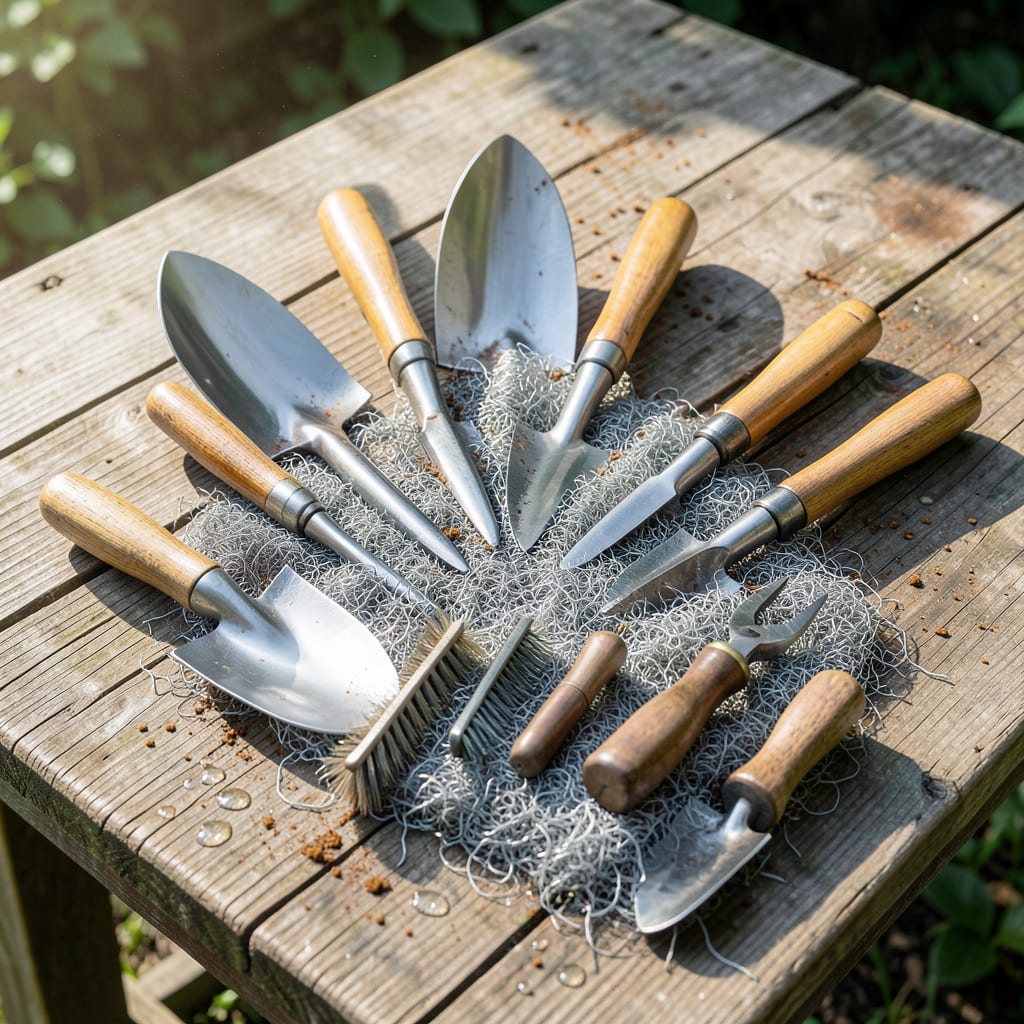
Rusty tools slow you down and spread disease in your garden. I’ve tried every method, and the natural solutions work just as well as harsh chemicals—without the safety worries.
You can restore old, neglected tools to like-new condition in an afternoon with items you already have at home. The best part? These same techniques prevent future rust from forming.
📚 In This Guide
Here’s the method I use to restore my tools without harsh chemicals.
Start by scrubbing each tool with a wire brush or steel wool to knock off loose rust and caked-on dirt. I always work outdoors or on a protected surface because rust particles can scratch wood or stain concrete. Focus on the metal surfaces, paying special attention to hinges, blades, and any crevices where moisture collects.
You’ll see the rust flake away easily where it’s surface-level, but don’t force stubborn patches yet. This initial scrub reveals the true extent of the problem and prepares the metal for deeper cleaning. A stiff-bristle brush works well for textured surfaces like shovel blades or trowel edges.
Soak the tools in white vinegar for 24-48 hours to dissolve the remaining rust. I use a plastic bucket or shallow tray large enough to submerge the metal portions completely. The acetic acid in vinegar reacts with rust (iron oxide) to create a soluble compound that wipes away easily.
For tools with wooden handles, keep the handles above the vinegar level to prevent damage. If you notice bubbling or fizzing, that’s the reaction working—more rust means more activity. After soaking, use the wire brush again to scrub off the now-loosened rust. The metal should appear noticeably cleaner and smoother.
Rinse the tools with clean water to remove all vinegar residue. Any remaining acid can continue to etch the metal or cause new rust to form quickly. I use a hose with a gentle spray setting to avoid splashing, then wipe each tool with a clean cloth to remove excess water.
Dry the tools completely with a towel, then let them air-dry in the sun for at least 2-3 hours. Moisture is the enemy of rust-free tools, so ensure every nook and cranny is bone dry. A hairdryer on low heat can speed this up for stubborn spots, but avoid high heat that might warp metal.
Once dry, apply a thin layer of mineral oil or a specialized tool oil to all metal surfaces. This creates a protective barrier against moisture. I use a clean rag to rub the oil into the metal, ensuring even coverage. Don’t overapply—excess oil will attract dust and dirt.
Store your tools in a dry, well-ventilated area, preferably hanging or on a rack to prevent contact with damp surfaces. For long-term storage, consider wrapping tools in a cloth lightly coated with oil. Check your tools every few weeks and reapply oil if you notice the finish looking dull or dry.
These practical pointers will help you achieve the best results with this natural restoration method.
Soaking Time Tip: The 24-48 hour vinegar soak in Step 2 is non-negotiable for heavily rusted tools. I learned this the hard way when I tried to rush the process with a 12-hour soak—stubborn rust remained. The acetic acid needs this full time window to fully break down the iron oxide, especially for tools that have been neglected for seasons.
Drying Technique: In Step 3, those 2-3 hours of air-drying in the sun aren’t just a suggestion. Moisture is the arch-enemy of rust prevention, and even a slightly damp tool will start re-rusting within days. Use that hairdryer on low heat for crevices where water loves to hide, but keep it moving to avoid concentrated heat on any one spot.
Wooden Handle Care: When submerging tools in Step 2, pay close attention to keeping wooden handles completely out of the vinegar. I ruined a perfectly good hoe handle by letting it soak overnight—the vinegar weakened the wood fibers, making it brittle. A simple solution is to use a bucket that’s shallow enough to lay tools at an angle, keeping handles elevated.
Oil Application: For Step 4, less is truly more with the mineral oil. I used to glob it on thinking more protection was better, but it just created a sticky mess that attracted dirt. A thin, even layer applied with a clean rag is all you need to create that protective barrier against future rust.
Yes! White vinegar is a natural rust remover. Soak tools in undiluted vinegar for 12-24 hours, then scrub with steel wool. Rinse and dry thoroughly to prevent re-rusting. It’s safe, effective, and budget-friendly!
Clean and dry tools after each use to prevent rust buildup. For long-term storage, apply a light coat of oil (like mineral oil) to create a protective barrier. Monthly checks help catch rust early.
For quick results, use a wire brush or sandpaper to scrub off surface rust. For tougher rust, a baking soda paste (mix with water) applied for 10-15 minutes works wonders. Rinse and dry afterward.
Absolutely! Lemon juice, baking soda, or even a potato (yes, really!) can help. Cut a potato in half, sprinkle salt on it, and rub it on the rust. The oxalic acid in potatoes breaks down rust naturally.
