
Beautiful Plants For Your Interior
Beautiful Plants For Your Interior
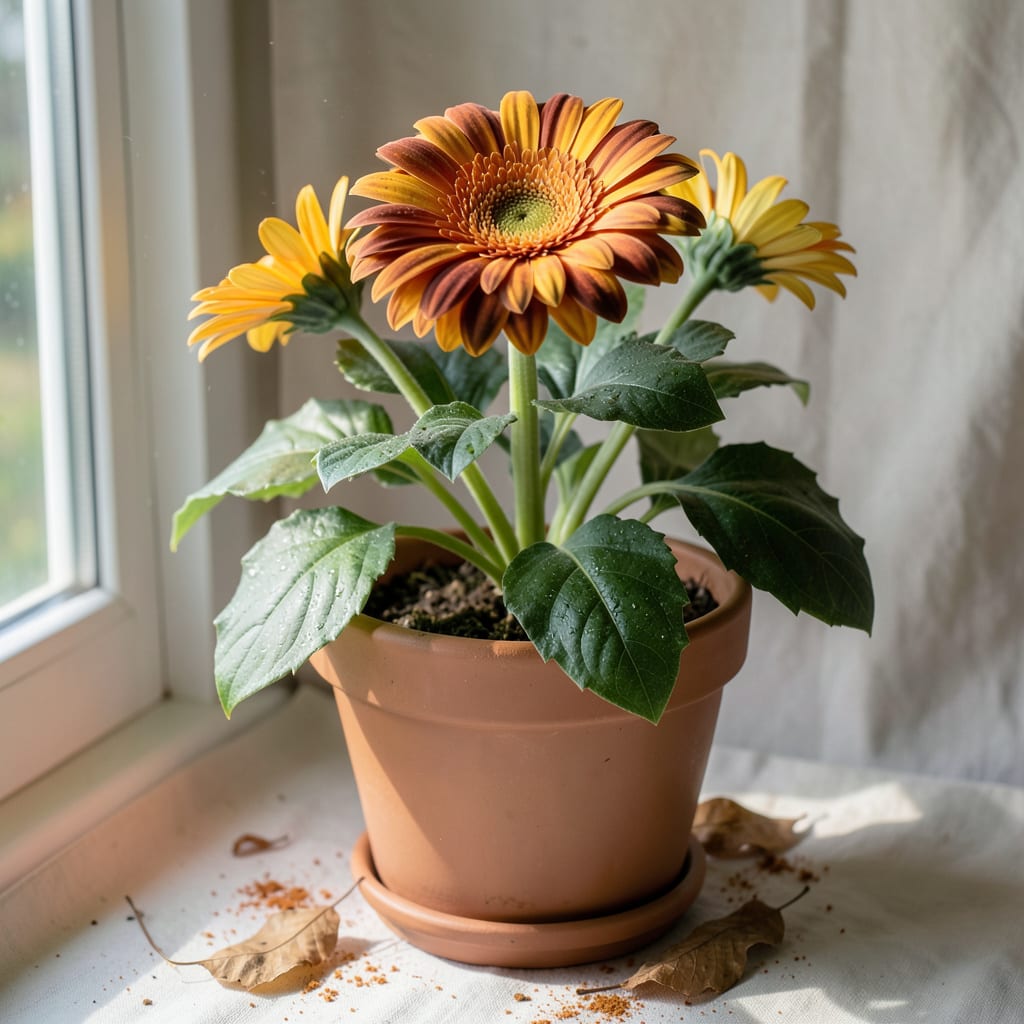
Brown leaves on your gerbera daisies aren’t the end of the world. I’ve nursed plenty back from the brink with just a few adjustments.
Most often it’s water stress—either too much or too little. The leaves crisp at the edges when parched, or turn mushy and brown with overwatering. A simple finger test in the soil tells you which problem you’re facing.
Soil pH can sneak up on you too. Gerberas hate acidic conditions, and brown spots often appear when the pH drops below 6.0. A quick test kit from the garden center gives you the answer in minutes.
Fix the water, check the pH, and you’ll see fresh green growth returning within 2-3 weeks. It’s that straightforward.
Gerbera daisies are vibrant and lively, but when their leaves start turning brown, it’s a sign that something is off. Here are the most common causes behind this issue:
Too much or too little water can stress your gerbera daisies. Overwatering leads to root rot, which prevents the roots from absorbing nutrients, causing leaves to brown. On the other hand, underwatering dehydrates the plant, leading to crispy, brown edges. Check the soil moisture—it should be damp but not soggy.
Gerbera daisies thrive in well-draining soil. If the soil retains too much water, it suffocates the roots, leading to browning leaves. Use a potting mix with perlite or sand to improve drainage and prevent waterlogging.
These plants prefer moderate temperatures. Exposure to cold drafts or excessive heat can cause leaf scorching. Keep them in a stable environment, ideally between 60–75°F (15–24°C).
Fungi like Alternaria or Powdery Mildew can cause brown spots or patches on leaves. These thrive in humid conditions with poor air circulation. Space plants properly and remove affected leaves to prevent spread.
Gerbera daisies prefer slightly acidic to neutral soil (pH 6.0–7.0). If the pH is too high or low, nutrient uptake is disrupted, leading to leaf discoloration. Test your soil and amend it with lime (to raise pH) or sulfur (to lower pH) as needed.
Don’t let brown leaves dim your gerbera daisy’s beauty. Here are practical fixes for the most common causes:
If soggy soil is the culprit, stop watering immediately and let the top 1-2 inches of soil dry out. Repot the plant in fresh, well-draining potting mix if the roots appear mushy or black. Use containers with drainage holes to prevent future waterlogging. Prevention tip: Water only when the topsoil feels dry to the touch. 💡
Revive thirsty plants by soaking the soil thoroughly until water drains from the bottom. Mist the leaves lightly in dry climates or place a tray of water with pebbles near the plant to boost humidity. Prevention tip: Check soil moisture weekly, especially in hot weather. 🌡️
Gerbera daisies thrive in slightly acidic to neutral soil (pH 6.0–7.0). Test your soil with a kit, and amend it with lime to raise pH or sulfur to lower pH as needed. Use a balanced, water-soluble fertilizer (10-10-10) every 2–4 weeks during growing season. Prevention tip: Retest soil pH every 2–3 months. ✨
Inspect leaves for spider mites, aphids, or whiteflies. Wipe leaves with a damp cloth or spray with insecticidal soap. For severe cases, use neem oil or introduce beneficial insects like ladybugs. Prevention tip: Keep the area clean and isolate new plants for 1–2 weeks. 🎯
Move plants to a spot with bright, indirect light (4–6 hours of morning sun is ideal). If leaves are crispy, trim the damaged parts to encourage new growth. Prevention tip: Rotate the pot occasionally for even light exposure. 🌞
With these targeted fixes, your gerbera daisies will bounce back to their vibrant, healthy selves!
Water when the top 1-2 inches of soil feel dry. Typically, this means every 5-7 days in warm weather, less often in cooler months. Always use containers with drainage holes.
No, once leaves turn brown they won’t recover. Trim them off to redirect energy to healthy growth. Focus on fixing the underlying issue to prevent new leaves from browning.
Use a well-draining mix with 50% potting soil and 50% perlite or sand. This prevents waterlogging while retaining enough moisture for healthy roots.
Yes, if it’s getting too much direct sun or cold drafts. Relocate to a spot with bright, indirect light and stable temperatures between 60–75°F.
