
Beautiful Plants For Your Interior
Beautiful Plants For Your Interior
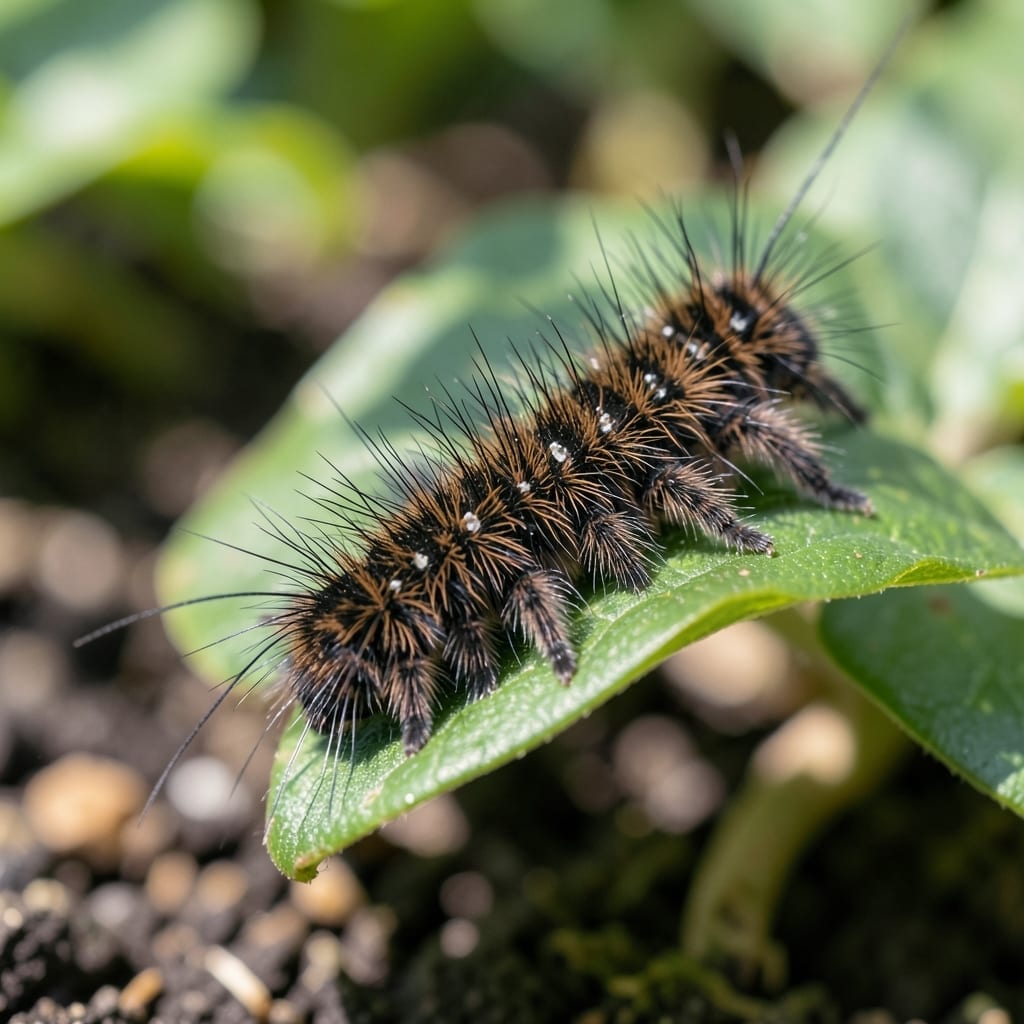
Spotted a fuzzy black and brown caterpillar in your garden? I’ve been there, staring at those distinctive markings wondering if it’s friend or foe to my plants.
These hairy visitors can be tricky—some are harmless, others can defoliate entire plants overnight. The key is learning to recognize the specific species, since their impact varies wildly from beneficial pollinators to destructive pests.
I’ll help you identify what you’re dealing with and decide whether to relocate it or take action. Most gardeners overreact and reach for pesticides when simple removal works just as well.
With the right approach, you’ll protect your garden without harming the ecosystem. This knowledge turns panic into confident action.
The fuzzy black and brown caterpillars you’re spotting are often woolly bears (Pyrrharctia isabella) or tussock moth caterpillars (Orgyia spp.), and their presence isn’t random. Here’s why they show up in your space:
These caterpillars thrive in areas with abundant host plants. Woolly bears feed on clover, dandelions, and grasses, while tussock moth caterpillars target deciduous trees like oak, maple, and birch. If your yard or garden has these plants, it’s a buffet for them.
Woolly bears emerge in fall as they prepare for winter hibernation (they’re one of the few caterpillars that survive cold months). Tussock moths, however, are most active in late summer. Mild winters or warm falls can extend their presence, leading to more sightings.
Overwatered lawns, unchecked weeds, or piles of leaf litter create ideal breeding grounds. Reducing debris and managing plant overgrowth can make your property less inviting. Additionally, outdoor lights at night attract moths, which lay eggs that hatch into these fuzzy caterpillars.
Some years, caterpillar numbers spike due to favorable weather (warm springs, rainy summers) or lack of natural predators (like birds or parasitic wasps). These booms are temporary but can feel overwhelming until predators or cold weather thin their ranks.
Dealing with a fuzzy black-and-brown caterpillar infestation? Here’s how to tackle it without harming your garden or yourself.
Put on gardening gloves (some species can irritate skin) and handpick caterpillars off plants. Drop them into a bucket of soapy water to ensure they don’t return. Best for small infestations.
Encourage birds, parasitic wasps, or lacewings—natural predators of caterpillars—by planting native flowers or setting up birdhouses. Avoid pesticides, as they can deter these helpful allies.
Use neem oil or Bacillus thuringiensis (Bt), a bacteria-based spray that targets caterpillars without harming other insects. Apply in the evening for best results.
Act early to stop damage before it spreads!
Some fuzzy caterpillars, like tussock moths, have irritating hairs that can cause skin rashes. Always wear gloves when handling them. Woolly bears are generally safe but may still cause mild irritation.
Woolly bears prefer clover and grasses, while tussock moth caterpillars target trees like oak and maple. Check these plants first if you suspect an infestation.
Remove leaf litter and debris where they might overwinter. Rotate crops and avoid overwatering to make your garden less appealing.
Most damage is temporary. Healthy plants usually recover once the caterpillars are gone. Act quickly to minimize long-term impact.