
Beautiful Plants For Your Interior
Beautiful Plants For Your Interior
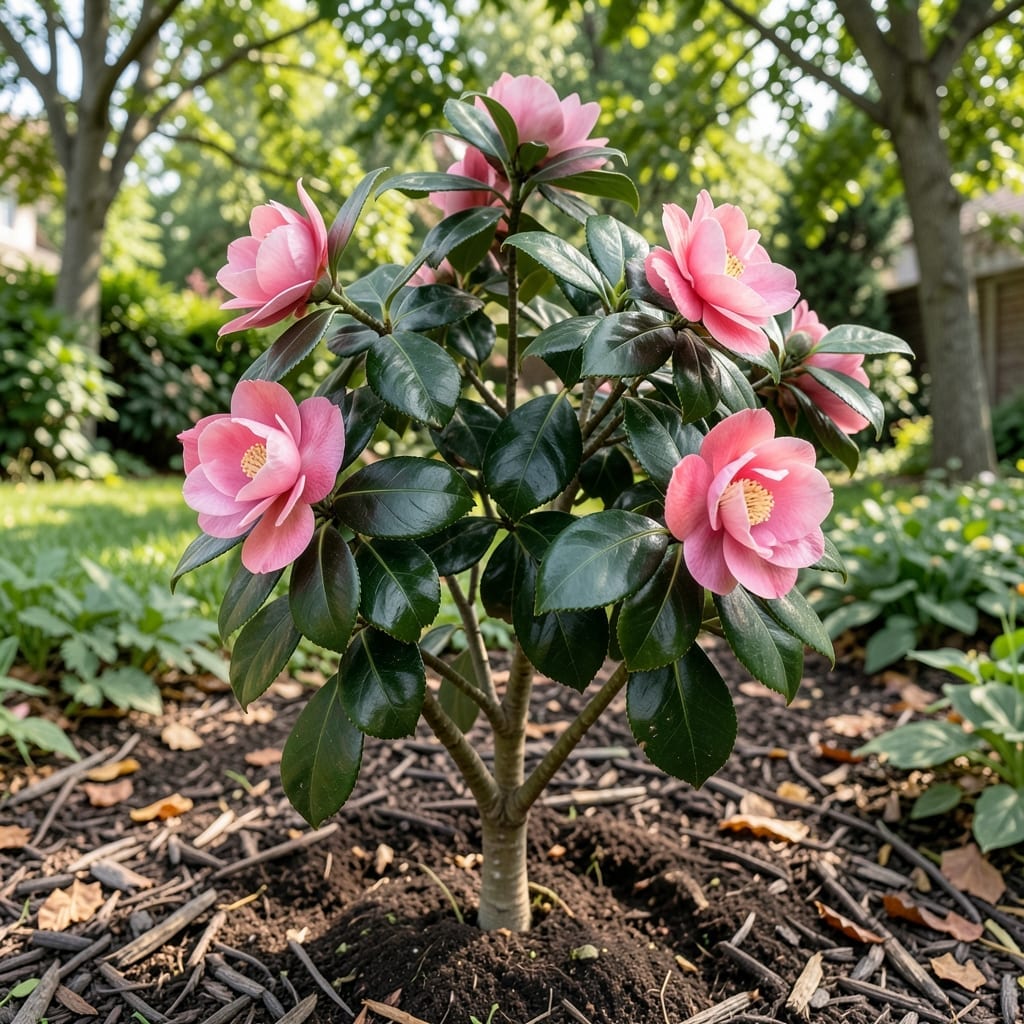
There’s something magical about watching a 🌸 Camellia transform into its mature form. Its glossy, evergreen leaves and vibrant blooms create a stunning display that few shrubs can match.
Whether you’re a seasoned gardener or just starting out, recognizing a fully grown Camellia helps you provide the best care. Its size and shape can vary, but the beauty remains constant.
I’ll walk you through the key visual traits that define this plant’s maturity, so you’ll know exactly what to expect as it grows.
A fully grown Camellia plant is a sight to behold, with its glossy evergreen leaves and vibrant blooms that can light up any garden. The leaves are typically dark green, leathery, and elliptical in shape.
Depending on the variety, a mature Camellia can reach 7 to 12 feet tall with a similar spread, creating a dense, rounded shrub. Its flowers, which bloom in fall, winter, or spring, add bursts of color.
| Trait | Description |
|---|---|
| Leaf Shape | Elliptical, glossy, evergreen |
| Leaf Color | Dark green, sometimes variegated |
| Flower Colors | Pink, red, white, or bi-color |
| Mature Height | 7-12 feet (standard varieties) |
| Growth Habit | Upright, rounded, or spreading |
| Bark Texture | Smooth, gray, or brown |
The Camellia japonica is perhaps the most well-known, with large, showy flowers that can measure up to 5 inches across. These blooms often appear in late winter to early spring.
In contrast, the Camellia sasanqua tends to have smaller flowers but makes up for it with a longer blooming season, often starting in fall and continuing through winter.
Both varieties showcase leathery leaves that are highly glossy, which is a hallmark of the Camellia family. This glossiness helps the plant retain moisture and gives it a healthy, vibrant look.
The overall shape of a mature Camellia can vary from upright and dense to spreading and open. Regular pruning can help maintain its desired form and encourage more blooms.
One of the most striking features is the flower form. Camellias can produce single, semi-double, or double blooms, each adding a unique charm to your garden. The petals are often wax-like in texture.
I always recommend observing the bark as well. Mature Camellias develop a smooth, grayish bark that can add visual interest, especially in winter when the plant is not in bloom.
To truly appreciate a fully grown Camellia, take note of its year-round appeal. Even when not in flower, its evergreen foliage provides constant color and texture to your landscape.
With the right care, your Camellia can thrive for decades, becoming a cornerstone of your garden’s beauty 🌸
Recognizing a mature Camellia means understanding its seasonal changes. Each season brings unique traits that confirm its growth stage and health.
In spring, the plant bursts with vibrant flowers, while summer highlights its lush, glossy foliage. These shifts help gardeners track maturity.
The spring blooms are perhaps the most iconic, with large, showy flowers that can last for weeks. This is when the plant’s maturity is most evident.
During summer, focus shifts to the leaves. Mature Camellias have thick, leathery leaves that resist pests and drought, a sign of full growth.
In fall, you’ll notice flower buds forming. These are a sure sign your Camellia is mature and preparing for its next blooming season.
Even in winter, a mature Camellia retains its evergreen leaves. Some varieties, like Camellia sasanqua, bloom during this season, adding color to a dormant garden.
By observing these seasonal changes, I’ve found it easier to confirm a Camellia’s maturity and ensure it thrives year-round 🌸