
Beautiful Plants For Your Interior
Beautiful Plants For Your Interior
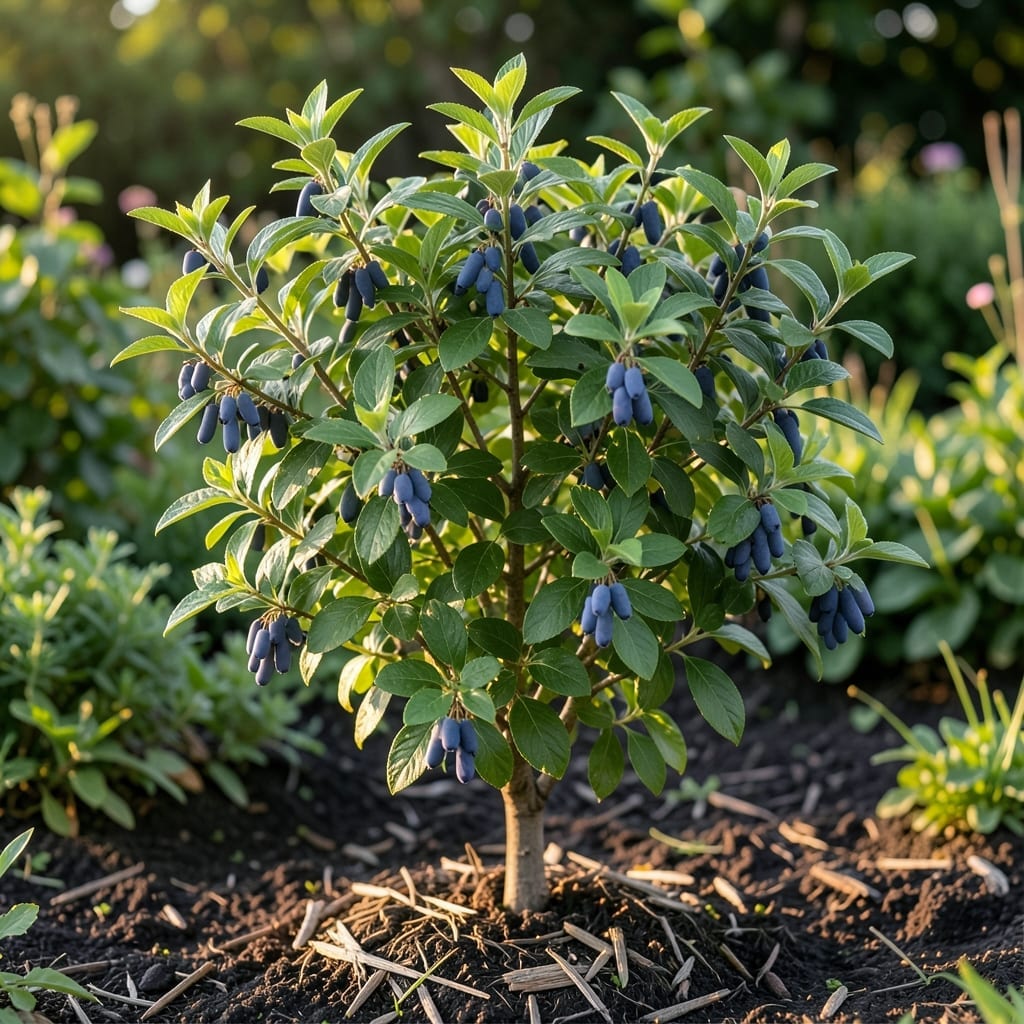
Imagine stepping into your garden and spotting a 4-6 ft Haskap Berry Bush 🫐 loaded with deep blue-purple berries. This hardy shrub transforms any landscape while delivering a bounty of antioxidant-rich fruit.
Growing a mature haskap isn’t just about planting and hoping for the best. It’s about understanding its needs from soil to sunlight. I’ve learned the most effective ways to help these bushes thrive in zones 2-7.
Let me share the essentials of size management, care routines, and harvest timing. You’ll discover how to get the biggest, tastiest berries from your haskap bush year after year.
A full grown haskap berry bush typically reaches 4-6 ft tall and 3-5 ft wide, forming a rounded, multi-stemmed shrub. Its upright growth habit makes it perfect for hedges or standalone specimens in your garden.
In ideal conditions, the bush can spread 4-6 ft at the base, so I recommend spacing plants 5-6 ft apart to allow for proper air circulation and future growth.
| Characteristic | Specification |
|---|---|
| Height | 4-6 ft |
| Width | 3-5 ft |
| Root Spread | 4-6 ft |
| Growth Rate | Moderate |
| USDA Zones | 2-7 |
The haskap’s arching branches produce 1-2 inch elongated berries in clusters along the stems. By year 3, most bushes reach near-mature size and begin bearing significant fruit.
Seasonal changes are dramatic: white flowers appear in early spring, followed by green berries that ripen to deep purple by early summer. The foliage turns golden-yellow in fall, adding three-season interest.
For container growing, choose dwarf varieties that stay 3-4 ft tall. I’ve found these do well in 20-gallon pots with proper drainage. Standard varieties need garden space to reach their full potential.
The root system is fibrous and shallow, spreading wider than the canopy. This makes haskaps drought-tolerant once established, though they prefer consistent moisture during fruiting.
In my experience, pruning in late winter helps maintain size and encourages better fruiting. Remove old wood and thin crowded branches to improve air flow and sunlight penetration.
Remember that cross-pollination is essential for fruit set. Plant at least two different varieties within 50 ft of each other for optimal berry production.
The bush’s compact size makes it ideal for small gardens or urban landscapes. With proper care, a single mature plant can produce 5-10 lbs of berries annually, providing plenty for fresh eating and preservation. 🌿
I’ve found that a full grown haskap berry bush thrives with consistent care. Start with well-draining soil that’s slightly acidic, around pH 5.5-6.5. This creates the perfect foundation for healthy growth.
For watering, I recommend 1-2 gallons weekly during the growing season, increasing to twice weekly in hot weather. Always water in the early morning to reduce evaporation and fungal risks.
Pruning is crucial for maintaining your bush’s shape and productivity. I always prune in late winter, removing old wood and thinning crowded branches. This improves air circulation and sunlight penetration.
For fertilization, use a balanced 10-10-10 every 4-6 weeks during the growing season.
Mulching with 2-3 inches of organic material helps retain moisture and suppress weeds. I prefer wood chips or straw for this purpose, keeping mulch away from the trunk.
Watch for common issues like powdery mildew in humid conditions. Good air circulation and proper spacing between plants can prevent most fungal problems. With these care tips, your haskap will reward you with abundant, delicious berries for years. 🌿