
Beautiful Plants For Your Interior
Beautiful Plants For Your Interior
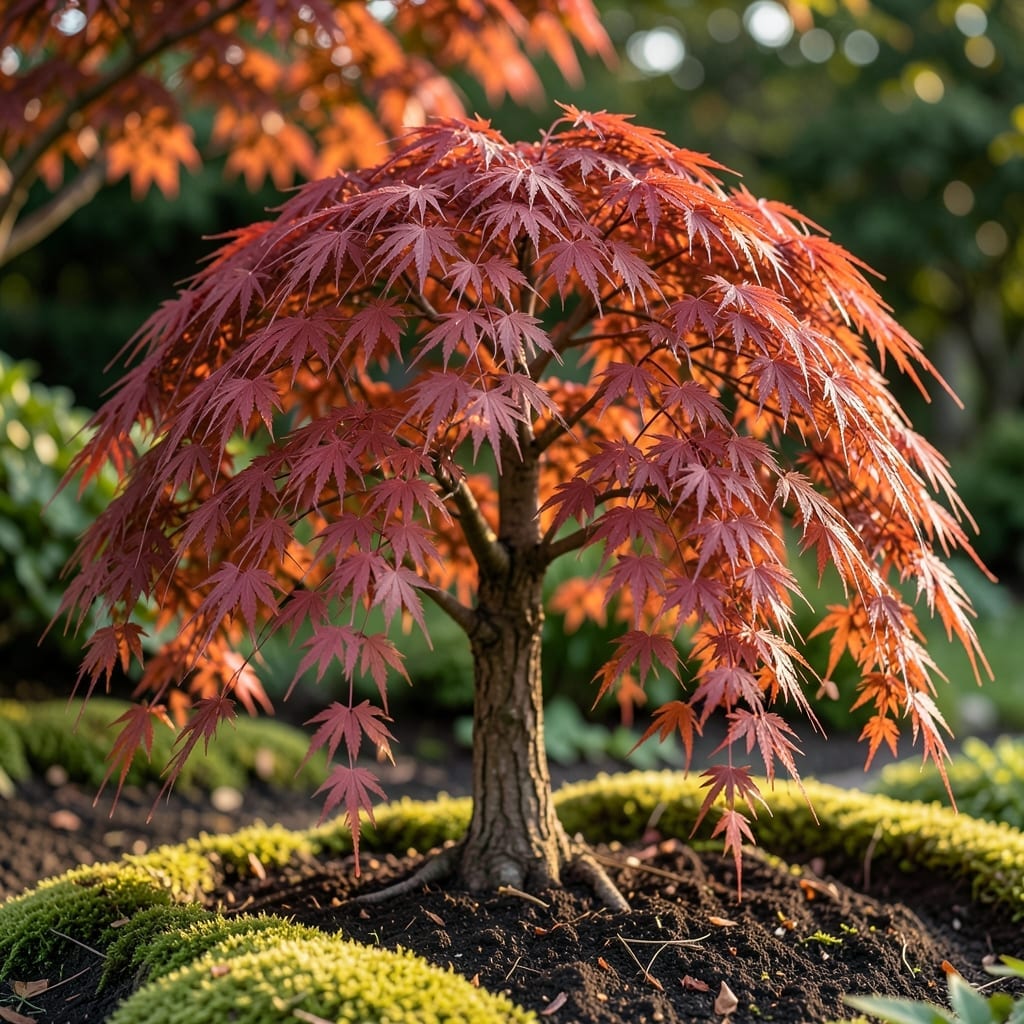
There’s something magical about watching a 🌳 Crimson Queen Japanese Maple transform your garden with its cascading branches and deep red leaves. This elegant tree isn’t just beautiful – it’s a statement piece that can elevate any landscape.
But to truly make it shine, you need to understand its full-grown needs and characteristics. From planting to pruning, every detail matters for this stunning variety.
Discover how to help your Crimson Queen Japanese Maple reach its 8-10 foot potential while maintaining its vibrant color and graceful form all year long.
When fully mature, the Crimson Queen Japanese Maple reaches a stunning 8-10 feet tall with a 10-12 foot spread. Its weeping form creates a graceful, cascading silhouette that adds drama to any landscape.
This elegant tree’s deep red foliage turns even more vibrant in fall, transitioning to fiery crimson. The delicate, lacy leaves maintain their color best with morning sun and afternoon shade. 🌳
| Characteristic | Specification |
|---|---|
| Mature Height | 8-10 ft |
| Mature Spread | 10-12 ft |
| Growth Habit | Weeping |
| Leaf Color | Deep red to crimson |
| USDA Zones | 5-8 |
| Seasonal Interest | Spring to Fall |
The Crimson Queen grows relatively slowly, adding about 6-12 inches per year under ideal conditions. This makes it perfect for small gardens where you want impact without overwhelming space.
Its pendulous branches create a natural umbrella shape, making it ideal as a specimen plant or near patios. The tree’s size at maturity means it works well in both residential landscapes and container gardens.
In spring, you’ll notice the new growth emerges a bright red before deepening to its characteristic crimson. The color holds well through summer, especially with consistent moisture and proper soil conditions. 🌿
This maple thrives in well-draining, slightly acidic soil. While it tolerates clay, amending with organic matter will improve its performance. The tree’s shallow root system benefits from a layer of mulch to retain moisture.
For best results, plant your Crimson Queen where it gets 4-6 hours of sunlight daily. Too much hot afternoon sun can scorch the leaves, while deep shade may cause the color to fade to greenish-red.
The tree’s fall color is particularly spectacular, with leaves turning brilliant scarlet before dropping. Even in winter, its graceful branching provides architectural interest to the garden.
Whether used as a focal point or in a mixed border, the full grown Crimson Queen Japanese Maple offers year-round beauty. Its manageable size means it fits well in most garden designs without requiring extensive space. ✂️
To keep your Crimson Queen Japanese Maple healthy, start with the right soil conditions. It thrives in well-draining, slightly acidic soil with plenty of organic matter. I always amend clay-heavy spots with compost before planting.
This elegant tree prefers partial shade, especially protection from hot afternoon sun. Aim for 4-6 hours of morning sunlight to maintain that stunning deep red foliage without risk of leaf scorch. 🌳
For watering, I recommend a deep soak once weekly, increasing to twice weekly during hot summers. Always water at the base to keep foliage dry and prevent disease. Morning watering is ideal.
The shallow root system benefits from a 2-3 inch mulch layer, but keep it 3 inches away from the trunk. This prevents rot while conserving moisture. I use shredded bark for best results.
Prune your Crimson Queen in late winter to shape it before new growth starts. Remove any dead or crossing branches first, then thin out crowded areas to improve airflow. Avoid heavy pruning – this tree looks best with its natural form.
Fertilize with a balanced 10-10-10 in early spring, then lightly again in summer if needed. Over-fertilizing can reduce the vibrant color. Always follow package instructions for application rates. 🌿