
Beautiful Plants For Your Interior
Beautiful Plants For Your Interior
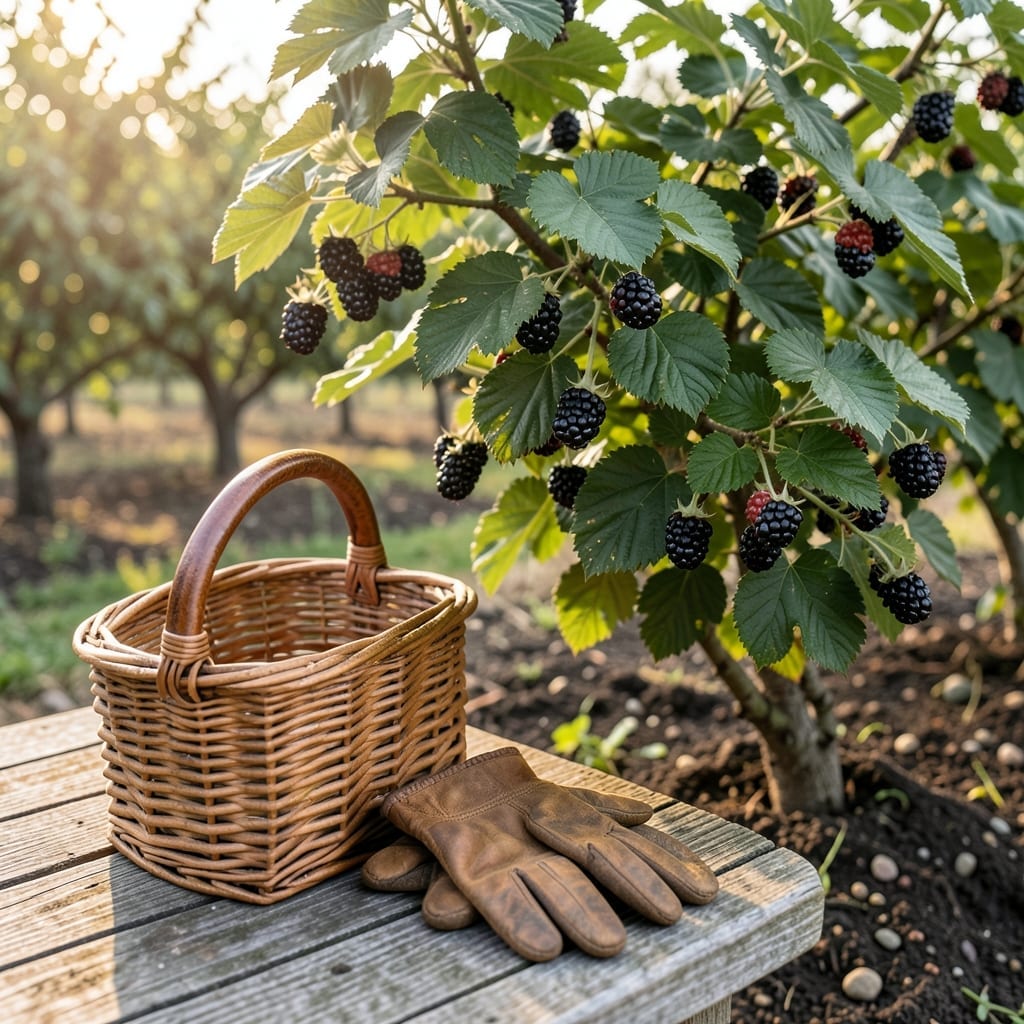
A full grown blackberry tree can transform your garden into a thriving fruit haven, but its size and care requirements often surprise new growers. Understanding its mature dimensions and needs is key to a bountiful harvest.
The 🫐 Blackberry, thriving in zones 5-10, demands space to reach its 4-8 ft height. Without proper planning, its sprawling canes can overwhelm your garden layout.
I’ll walk you through what to expect from planting to maturity, so you can enjoy sweet, juicy berries without the guesswork. Let’s get started.
A full grown blackberry tree typically reaches a height of 4-8 feet with a similar spread, depending on the variety. Erect types like ‘Natchez’ grow tall and upright, while trailing varieties such as ‘Marion’ can sprawl up to 10-15 feet if unsupported.
Semi-erect varieties like ‘Triple Crown’ fall somewhere in between, needing trellises for support. Without proper pruning, these plants can quickly become unruly, so planning your space is essential for easy maintenance and harvest. 🌿
| Variety | Height | Spread | Support Needed |
| Erect (Natchez) | 6-8 ft | 4-6 ft | Minimal |
| Trailing (Marion) | 3-5 ft | 10-15 ft | Trellis required |
| Semi-Erect (Triple Crown) | 5-7 ft | 6-8 ft | Trellis recommended |
I’ve found that erect varieties are ideal for small gardens because they take up less space. They grow straight up and form a hedge-like structure, making them perfect for borders or property lines.
Trailing blackberries, on the other hand, are perfect for arches or pergolas. Their long canes can be trained along wires or fences, creating a beautiful vertical garden feature while maximizing space. ✂️
Semi-erect types offer a balance, with canes that grow upward but eventually arch over. These need some support but are more versatile than trailing varieties. I recommend using a T-post and wire system for the best results.
Pruning plays a huge role in controlling size. I always remove old canes after harvest to make room for new growth. This keeps the plant productive and prevents it from becoming a tangled mess.
Remember, blackberries spread via suckers and runners. If left unchecked, they can take over nearby areas. I use landscape fabric and regular edging to keep them in bounds.
For container growing, dwarf varieties like ‘Baby Cakes’ are your best bet. They stay compact at 3-4 feet tall and wide, making them perfect for patios or balconies. 🌱
The growth rate of blackberries is quite impressive. In ideal conditions, new canes can grow 6-10 feet in a single season. This rapid growth means you’ll need to stay on top of training and pruning.
Finally, consider the mature canopy of your blackberry plant. A well-pruned tree will have an open center, allowing for better air circulation and sunlight penetration, which are crucial for fruit production and disease prevention.
To thrive, a full grown blackberry tree needs full sun for at least 6-8 hours daily. Without enough light, you’ll get fewer berries and weaker growth. I always plant mine in the sunniest spot possible. 🌿
The soil should be well-draining with a pH of 5.5-6.5. Blackberries hate soggy roots, so I amend heavy clay with compost. A simple soil test kit can help you nail this down.
USDA zones 5-10 are ideal for blackberries. In colder zones, choose hardy varieties like ‘Chester’ or provide winter protection. In hotter areas, afternoon shade can prevent berry scorch. ☀️
Companion plants like beans or marigolds can deter pests naturally. Avoid planting near tomatoes or potatoes, as they share diseases like verticillium wilt.
Wind can damage canes, so I plant mine near a fence or use a windbreak. For trailing varieties, a sturdy trellis system is a must to support their long, heavy canes.
Mulching with straw or wood chips helps retain moisture and suppress weeds. I apply a 2-3 inch layer annually, keeping it a few inches away from the base to prevent rot.
Lastly, consistent watering is key, especially during fruit development. I water deeply 1-2 times weekly, adjusting for rain. Drip irrigation works best to keep foliage dry and prevent disease. 💧