
Beautiful Plants For Your Interior
Beautiful Plants For Your Interior
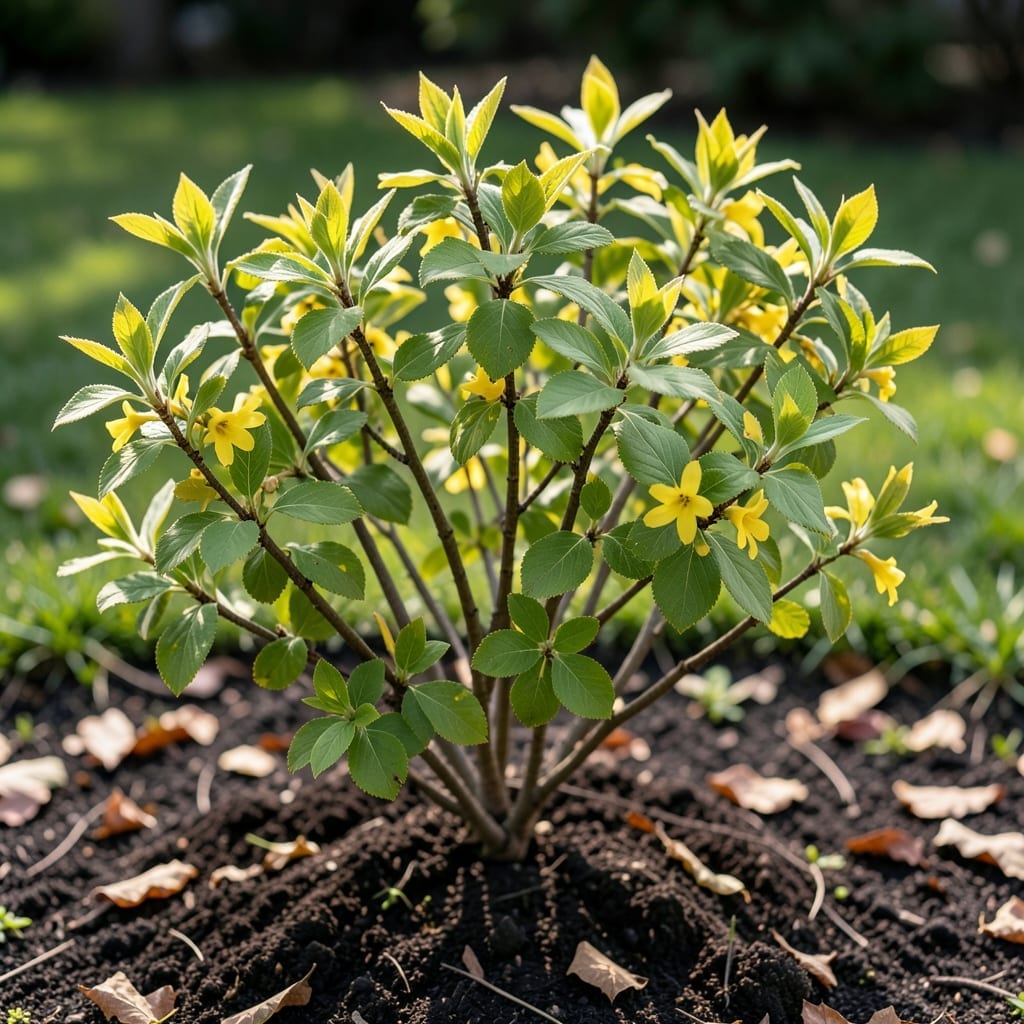
Forsythia should burst with green leaves before those bright yellow blooms appear. When they don’t, it’s usually a sign of stress—whether from soil, water, or something sneaking in uninvited.
I’ve nursed my share of sad forsythia back to health by fixing the basics: drainage, sunlight, and the right nutrients. A little attention now means vibrant green growth that sets the stage for next year’s spectacular display.
📚 In This Guide
Here’s my proven approach to keeping your forsythia foliage vibrant and healthy throughout the growing season.
Begin by testing your soil’s pH level, as forsythia thrives in slightly acidic to neutral soil (pH 6.0-7.0). I use a simple soil test kit to check this. If your soil is too alkaline, amend it with elemental sulfur or peat moss to lower the pH gradually.
Check soil drainage by digging a 1-foot deep hole and filling it with water. If it drains slower than 1 inch per hour, your forsythia’s roots may be suffocating. Improve drainage by working in 2-3 inches of organic compost to loosen heavy clay soil.
Forsythia prefers consistent moisture but cannot tolerate waterlogged roots. Water deeply once weekly during dry spells, providing 1-1.5 inches of water per session. The goal is to moisten the soil to a depth of 6-8 inches where the majority of roots reside.
I check soil moisture by inserting my finger 2 inches deep—if it feels dry at that depth, it’s time to water. Morning watering is ideal as it allows foliage to dry before evening, reducing disease risk. Avoid overhead watering to prevent fungal issues that can cause yellowing.
Apply a slow-release, balanced fertilizer (10-10-10) in early spring as new growth emerges. I use 1 pound per 100 square feet of garden bed. This provides consistent nutrition without the risk of burning that comes with quick-release products.
For established plants, a light application of compost tea every 4-6 weeks through the growing season maintains soil fertility. Watch for signs of nutrient deficiency—yellowing between leaf veins often indicates iron deficiency, which requires chelated iron treatment.
Prune your forsythia immediately after flowering, typically in late spring. Remove one-third of the oldest stems at ground level to encourage new growth. This rejuvenation pruning prevents the plant from becoming woody and improves air circulation.
I also thin out any crossing branches and open up the center of the shrub to allow light and air to penetrate. This reduces humidity around the leaves, which can lead to fungal problems. Always sterilize pruning tools with rubbing alcohol between cuts to prevent disease spread.
Inspect your forsythia regularly for common pests like aphids or spider mites, which can cause leaf yellowing. I look for telltale signs: aphids leave a sticky residue called honeydew, while spider mites create fine webbing on the undersides of leaves.
At the first sign of infestation, blast pests off with a strong stream of water. For severe cases, apply horticultural oil or insecticidal soap, following label instructions carefully. Early morning or late evening applications are most effective and least harmful to beneficial insects.
Small adjustments in your care routine can prevent yellowing and keep foliage lush all season long.
Soil pH Precision: The pH range of 6.0-7.0 mentioned in Step 1 isn’t just a suggestion—it’s critical for nutrient uptake. I’ve found that soil outside this range often leads to chlorosis, where leaves turn yellow between veins. Test annually, as pH can drift over time.
Watering Depth Matters: In Step 2, the 6-8 inch soil moisture depth isn’t arbitrary. Shallow watering encourages surface roots that are more vulnerable to drought stress. Use a moisture meter or your finger to verify depth—dry soil at 2 inches means it’s time to water deeply.
Pruning Timing Insight: The late spring timing in Step 4 is deliberate. Pruning at any other time removes the flower buds that form on last year’s growth. I mark my calendar for immediately after blooming ends to ensure I don’t accidentally sacrifice next year’s display.
Pest Prevention Strategy: For Step 5, early morning inspections are most effective because pests are less active then, making them easier to spot and treat. The honeydew from aphids can also attract sooty mold, which compounds yellowing problems.
Forsythia leaves naturally turn green in spring/summer for photosynthesis. Yellowing typically signals stress (overwatering, poor soil, or pests). Ensure well-drained soil and balanced sunlight for vibrant green foliage.
Prune right after flowering (early spring) to avoid cutting new growth. This timing promotes lush green leaves and prevents stress. Avoid late-summer pruning, as it can encourage weak, pest-prone foliage.
Check soil moisture—overwatering or drought causes yellowing. Test pH (ideally 6.0–7.0) and add compost for nutrients. Trim damaged leaves and treat pests (like aphids) with neem oil.
Yes! Forsythia’s dense, green summer foliage makes a great hedge. For consistent color, plant in full sun to partial shade and prune annually to maintain shape and health.
Try abelia, boxwood, or privet for evergreen options. These shrubs offer similar structure with less seasonal color change and lower maintenance.