
Beautiful Plants For Your Interior
Beautiful Plants For Your Interior
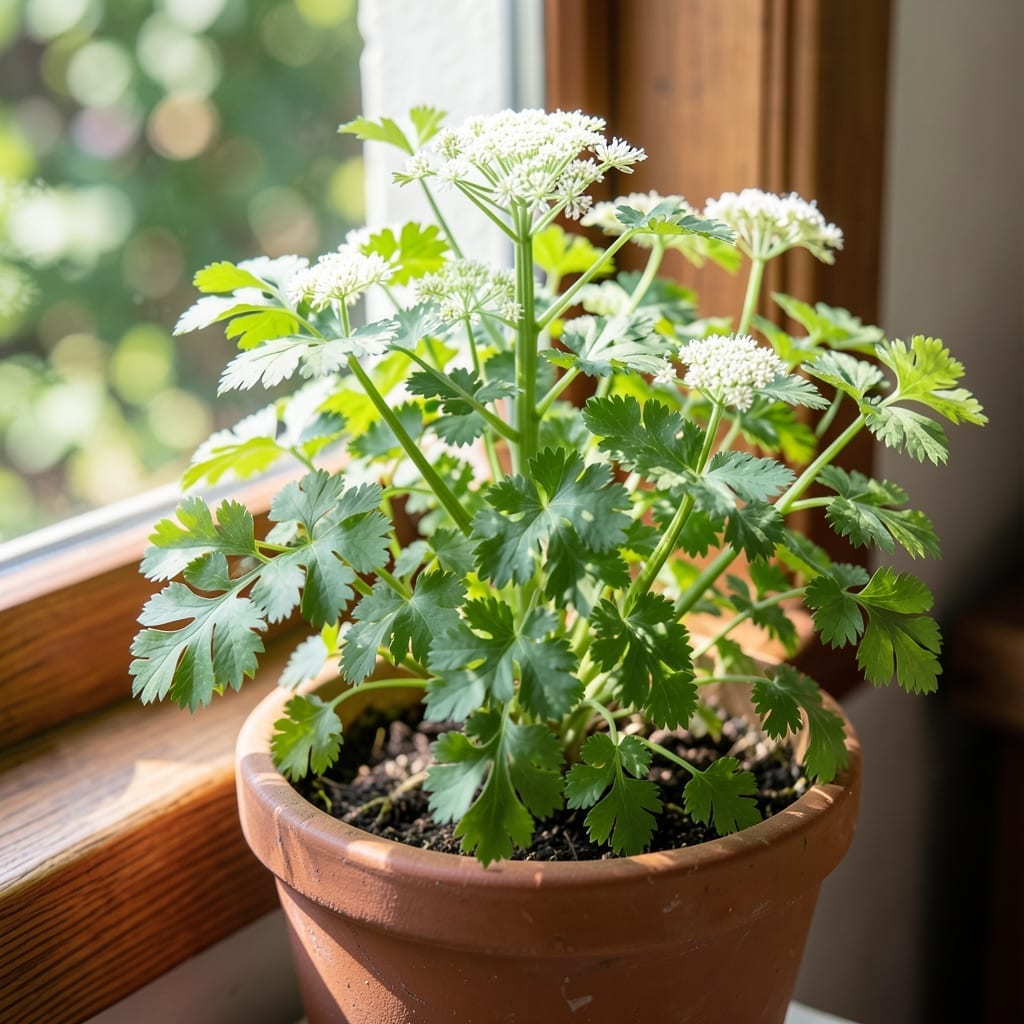
Noticing flowers on your 🌿 cilantro can spark confusion—is this a good or bad sign? I get it, because this stage often catches gardeners off guard.
What you’re seeing is actually a natural part of cilantro’s life cycle. It’s not failing; it’s evolving, and how you respond makes all the difference.
Let me walk you through what these flowers mean for your harvest and exactly what to do next. The choice is simpler than you might think.

When I see white cilantro flowers appearing, I know my plant is entering its bolting phase. This is cilantro’s way of transitioning from leaf production to seed development.
The primary trigger is heat stress, though plant age and day length also play roles. Once temperatures consistently hit 75°F or higher, the plant shifts gears.
🌱 Why It Happens
Cilantro bolts when stressed by heat, producing white umbrella-shaped flowers that lead to coriander seeds. This is its natural reproduction cycle.
This change affects your leaf harvest in two ways. First, the leaves become smaller and sparser. Second, their flavor turns more bitter and soapy for many gardeners.
The cilantro flowers themselves are edible and have a milder taste than the leaves. Some gardeners use them as a garnish or in salads for a subtle cilantro note.
From a botanical standpoint, this is completely normal. Cilantro is an annual herb, meaning it completes its life cycle in one growing season. Flowering is just part of that journey.
If you’re growing cilantro for leaf production, you’ll want to act before this stage. But if you’re interested in coriander seeds, these flowers are your first step toward that harvest.
The flowering cilantro plant will eventually produce seeds that can be used as coriander spice or saved for next season’s planting. This dual-purpose nature makes it valuable at every stage.
In my experience, preventing bolting requires consistent care. Regular watering, afternoon shade, and successive planting every 3-4 weeks can extend your leaf harvest window.
Remember that cilantro flowers attract beneficial insects like pollinators and predatory wasps. So even if you’re not harvesting seeds, they serve an ecological purpose in your garden.
Understanding this phase helps you plan your garden better. You might decide to let some plants flower for seeds while keeping others pruned for leaves, giving you the best of both worlds.
Deciding whether to let your cilantro flowers grow or prune them depends on your goals. If you want more leaves, I recommend pruning early to delay bolting and extend harvest time.
However, if you’re interested in coriander seeds, letting the flowers mature is essential. The plant will naturally shift from leaf to seed production, giving you a new harvest opportunity.
✅ Letting Flowers Grow
❌ Pruning Flowers
For leaf production, I prune flower stems as soon as they appear. Use clean pruning shears and cut just above a leaf node to encourage bushier growth.
If you choose to let flowers grow, be patient. The seed development process takes about 2-3 weeks after flowering begins. The seeds will turn brown when ready for harvest.
Another approach is to stagger your planting. Sow new seeds every 2-3 weeks to ensure a continuous supply of both leaves and eventual seeds throughout the season.
In my garden, I often do both—let some plants flower for seeds while pruning others for leaves. This way, I enjoy fresh cilantro and homegrown coriander without interruption. ✂️